U2 Window AC
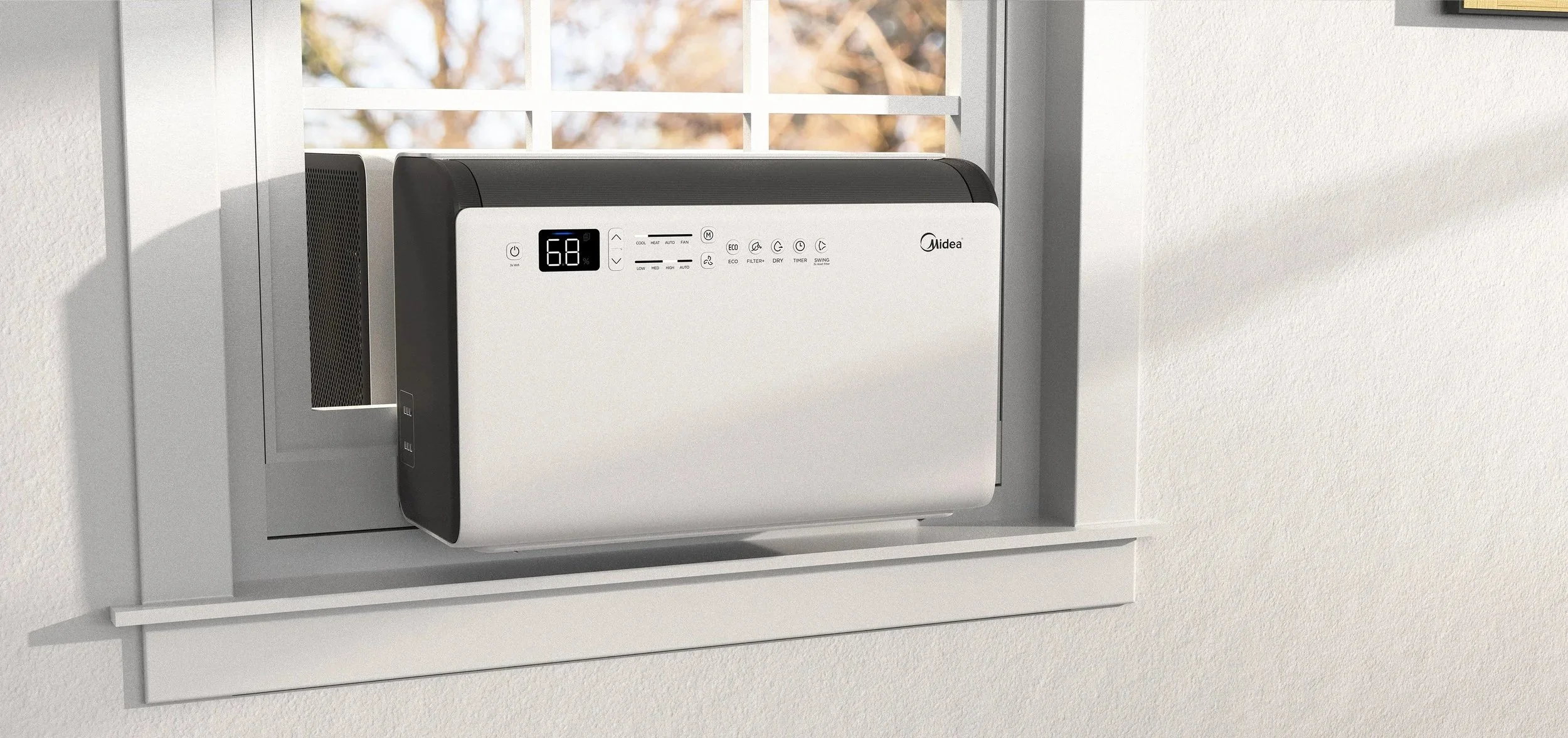
At Midea American Research Center, I led the industrial design of U2. It is amongst the first heat pump window air conditioners on the market and a second generation of Midea’s flagship U-shaped window AC platform.
Info:
Industrial Designer Midea American R&D Center 2024 - 2025, 7 months
Supervisor/Teammate
Wyman Mastin Seth Jenkins
Lead the design of appearance, CMF, UI, and air outlet experience of the unit.
Tools:
Solidworks; Figma; 3D Printing; Model Making
Role:
Project Context
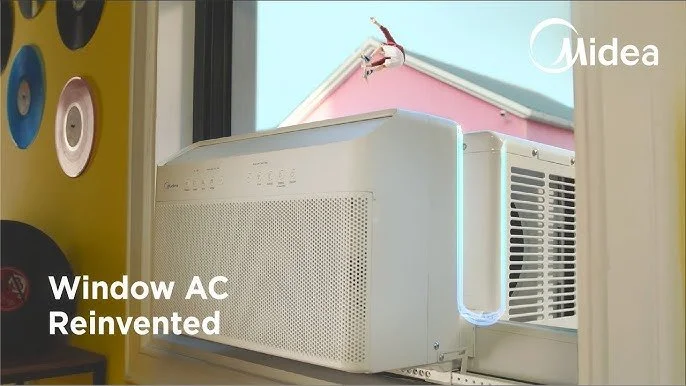
Midea’s U-shaped window AC is an iconic product known for its window saving U shape that allowed users to open the window while the unit is installed. As Midea transitions from a predominantly OEM brand to a stronger OBM presence in the U.S. market, U2 plays a critical role in elevating Midea’s brand perception through superior performance and more premium user experience. It is positioned to replace U1 at the high end of the portfolio, graduating U1 an entry-level product.
Design Objective
A minimal, premium design that preserves the iconic U-shape and visually connects U2 to Midea’s broader heat-pump ecosystem.
Visually breaks down U2’s volume, disappearing it into the interior.
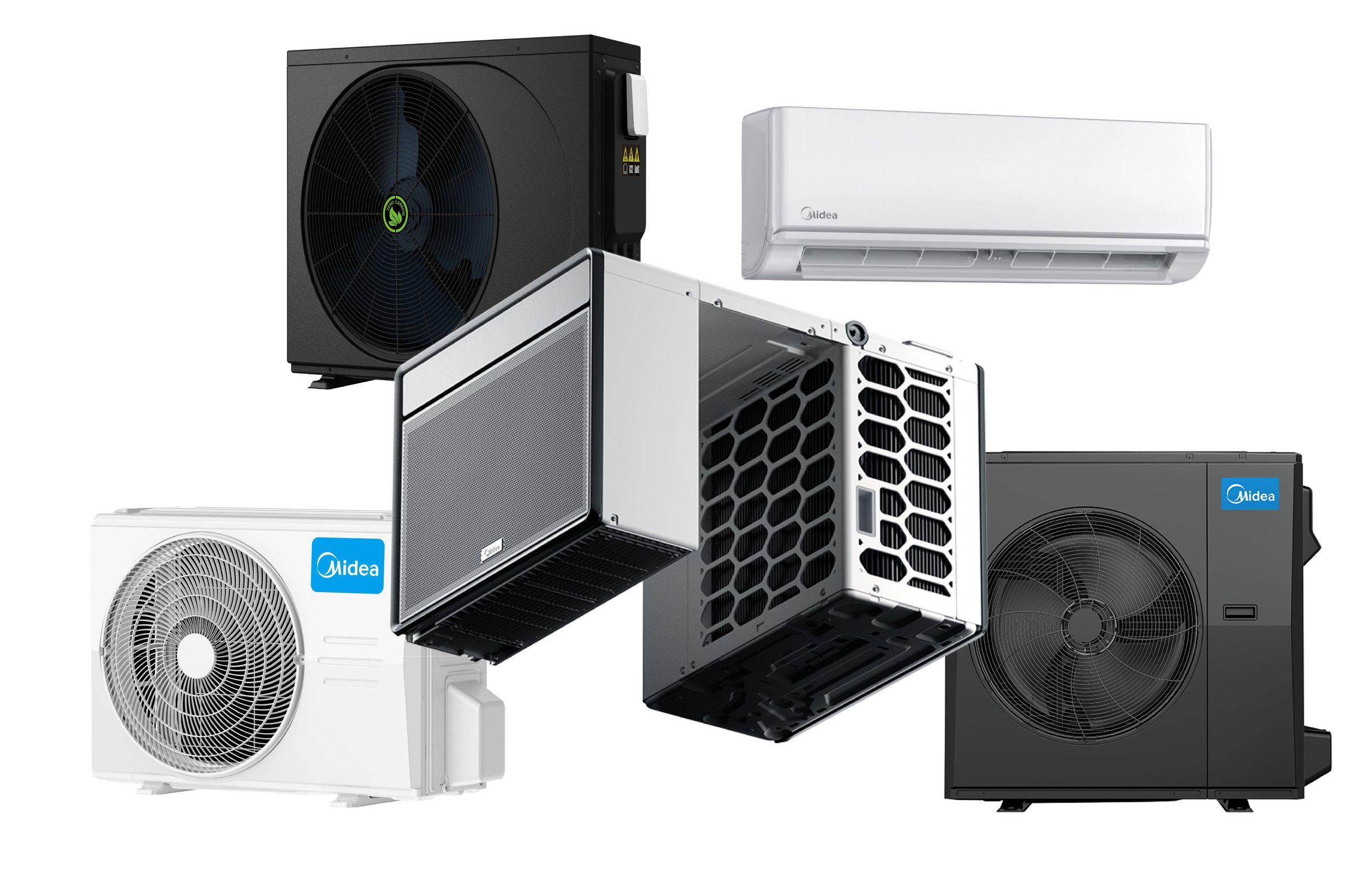
Establish a cohesive heat pump brand language aligned with Midea products such as PWHP and mini-split outdoor units.
Create a streamlined control experience that is simple, but at the same time allow users to fully explore the advanced features U2 offers
Engineering Innovation
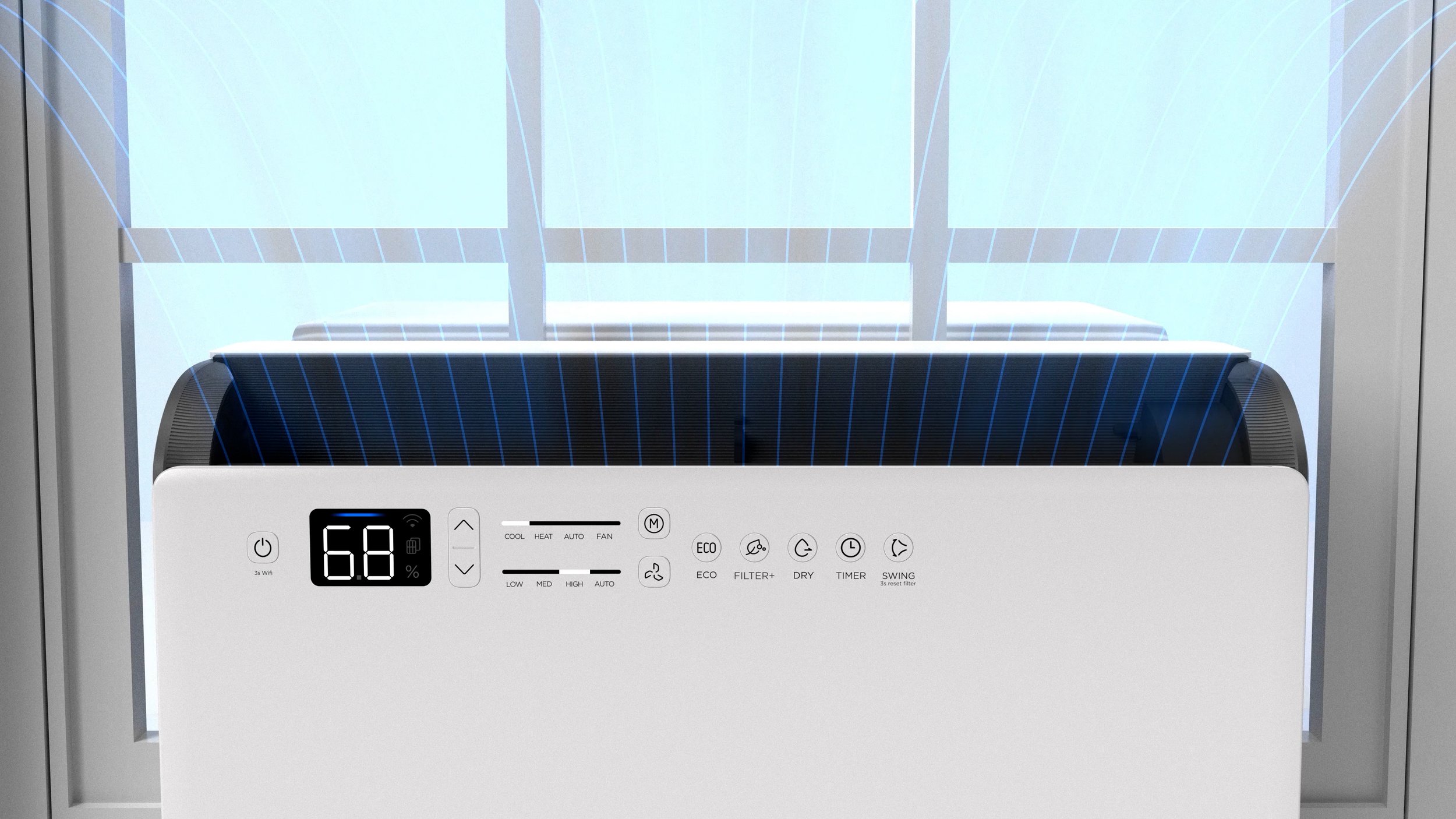
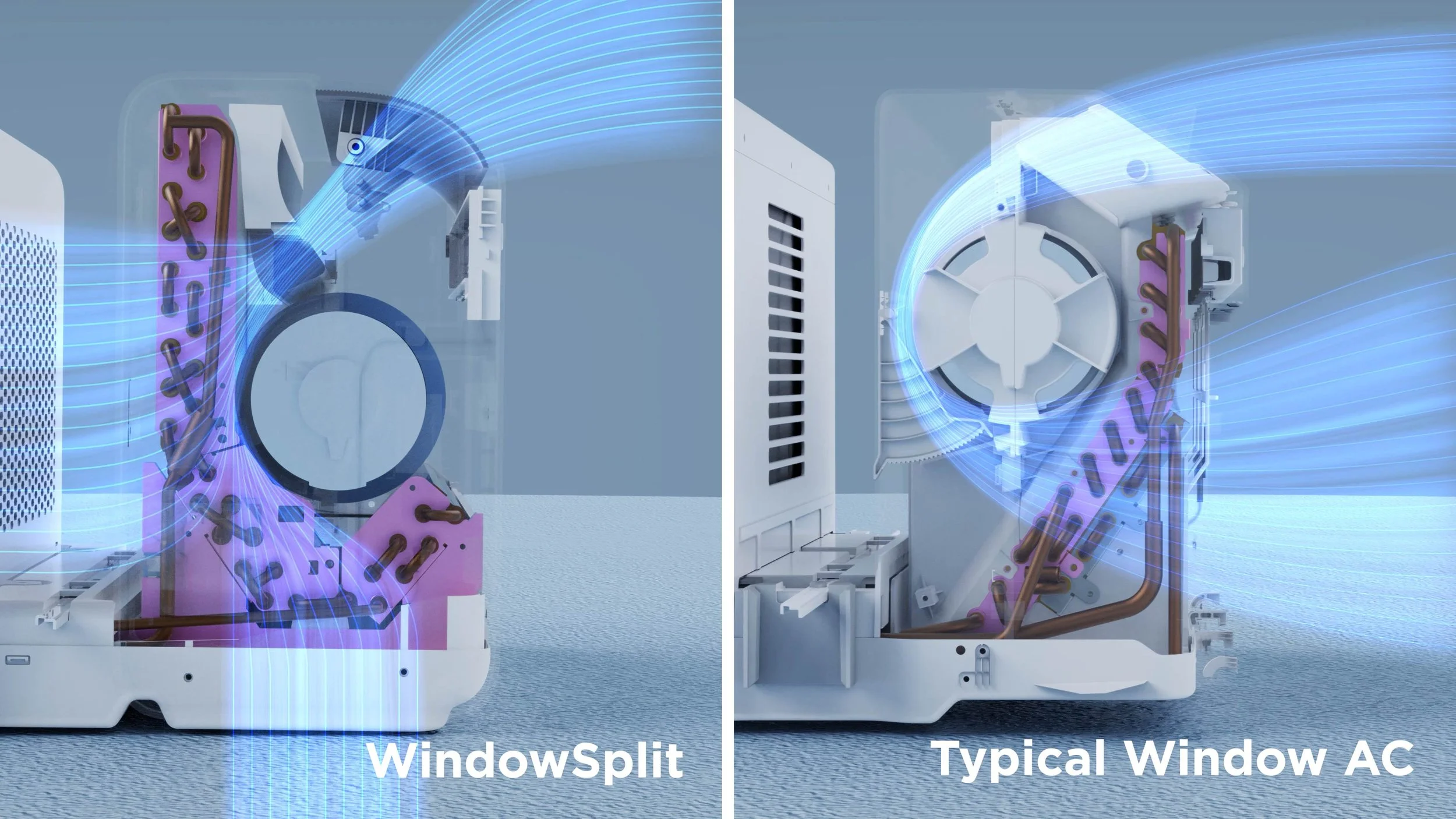
It heats, it cools. built for extreme cold, it operates reliably in temperatures as low as 5°F (-15°C), ensuring year-round comfort without the need for separate systems.
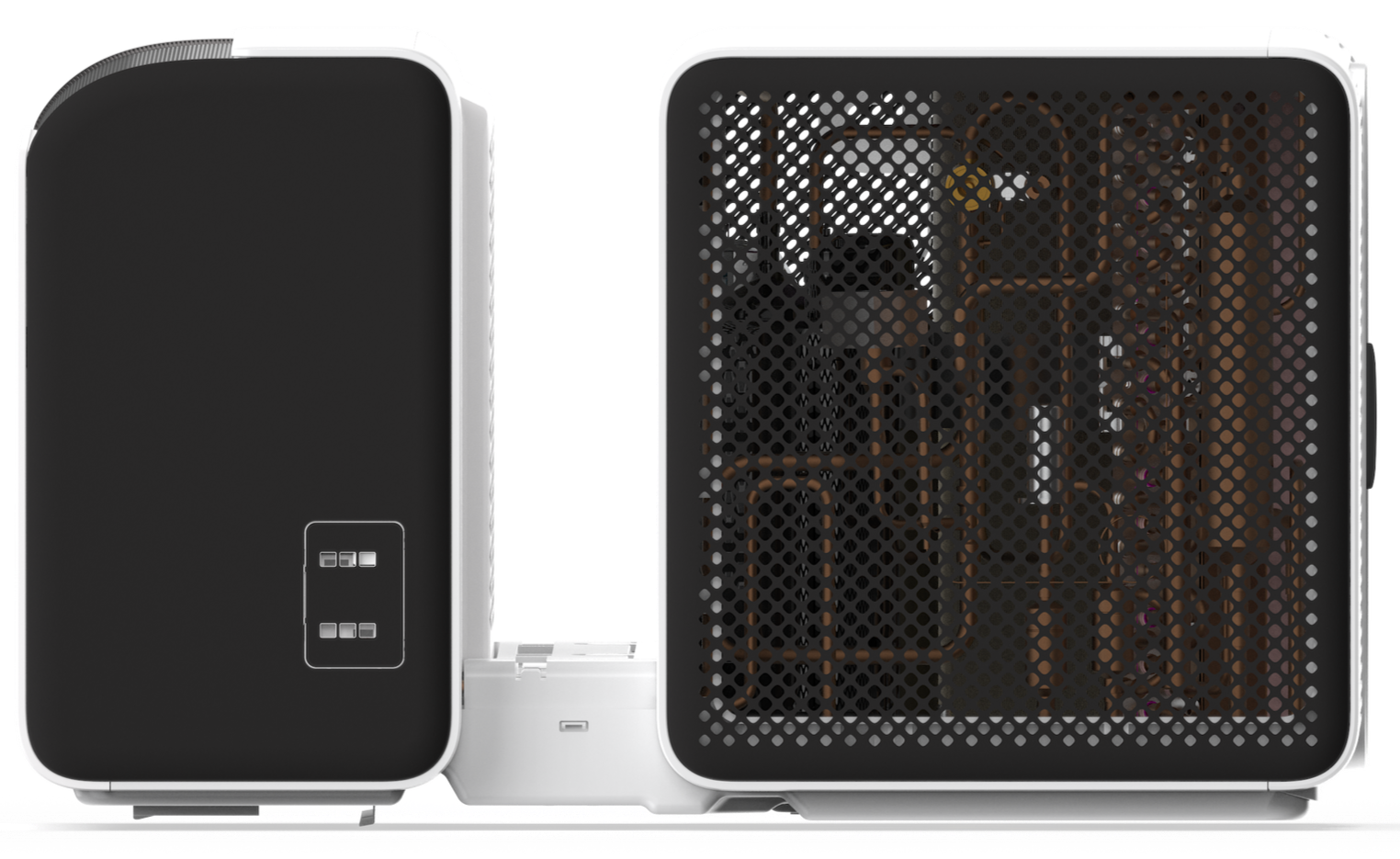
The rear air intake design maximizes internal space within a compact footprint, allowing for a larger refrigerant coil, drastically increasing the performance.
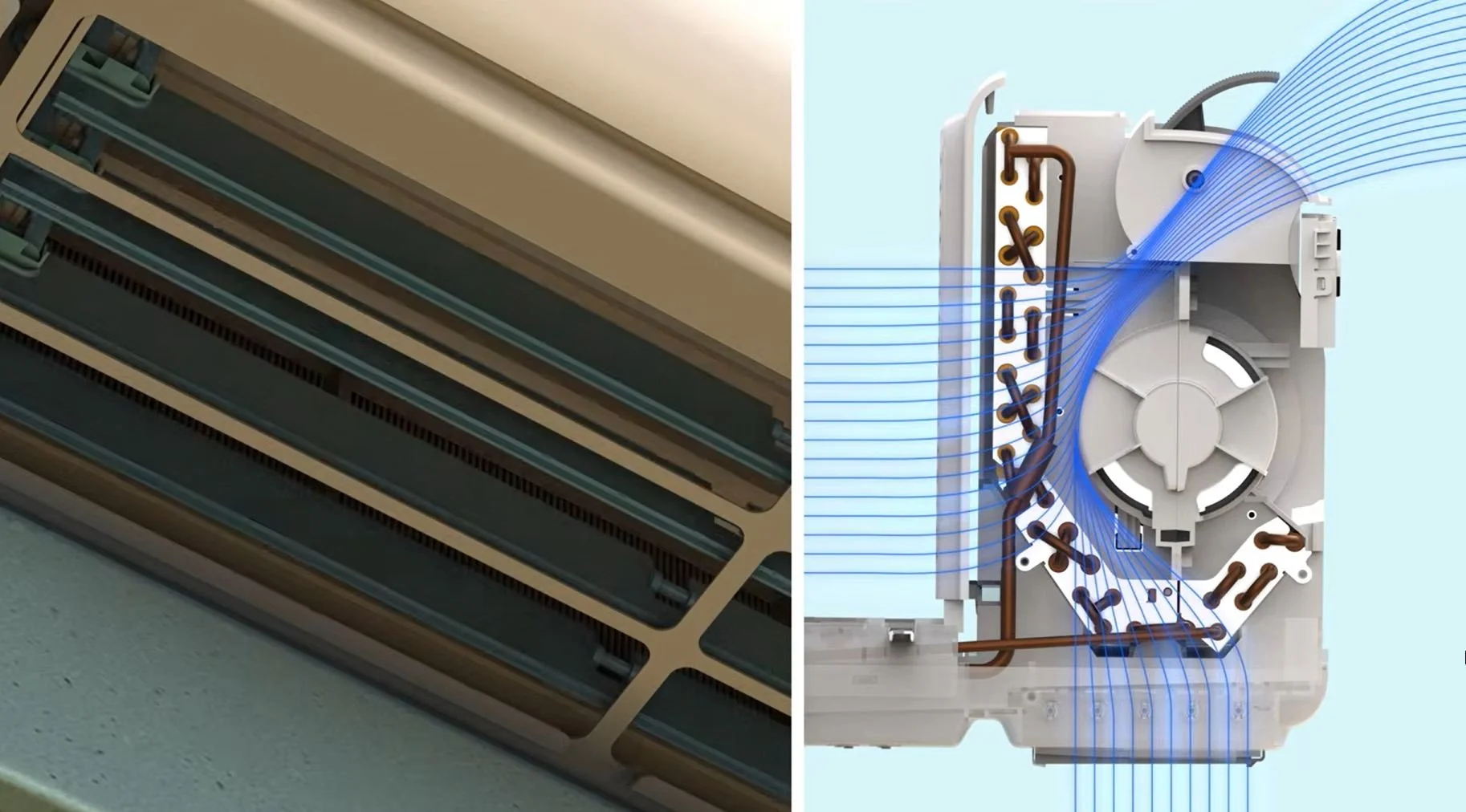
The customizable airflow maximizes filtration by directing air through the back or both the back and bottom of the unit.
Design Innovation

Design Innovation 1
Uniform Front Panel
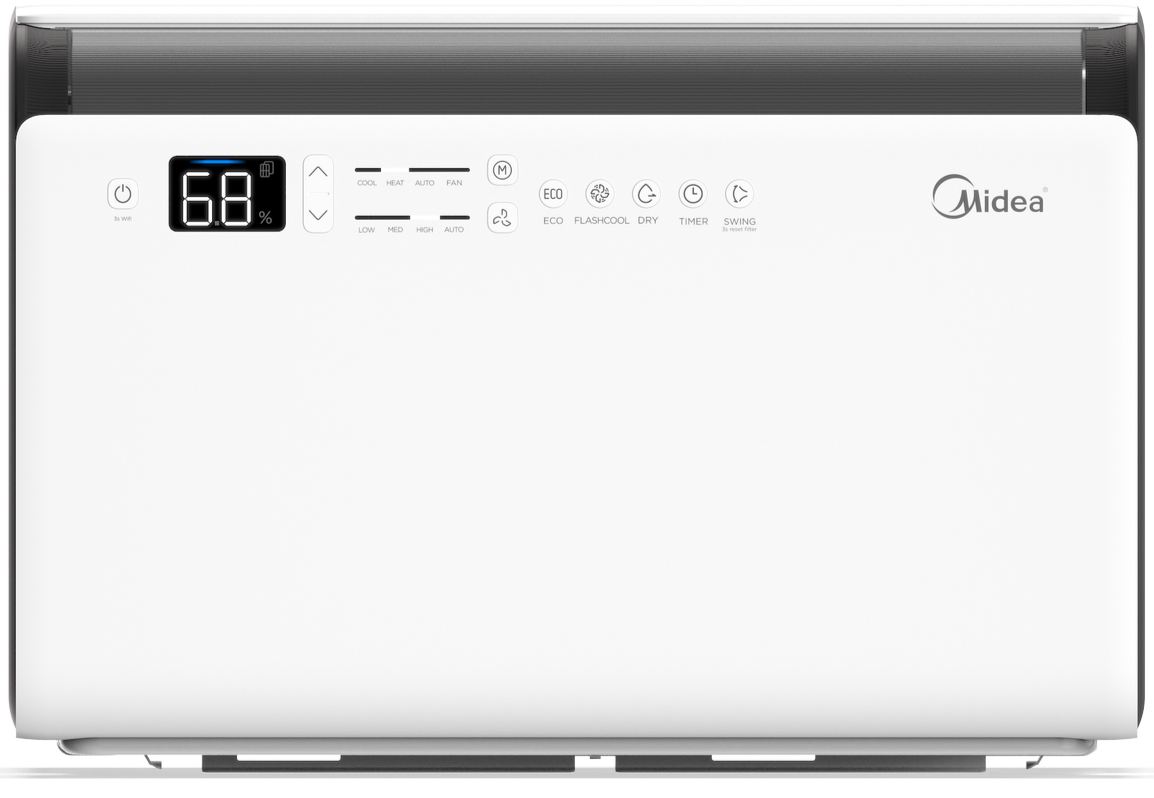
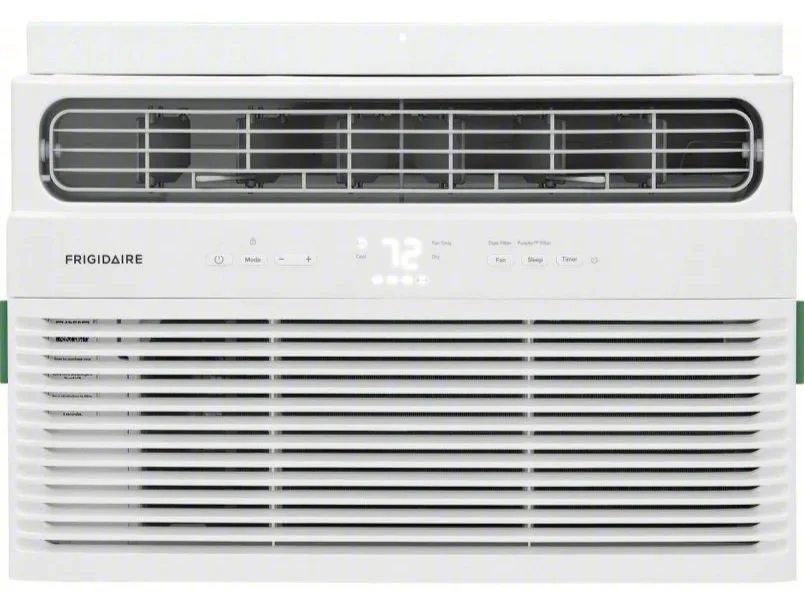
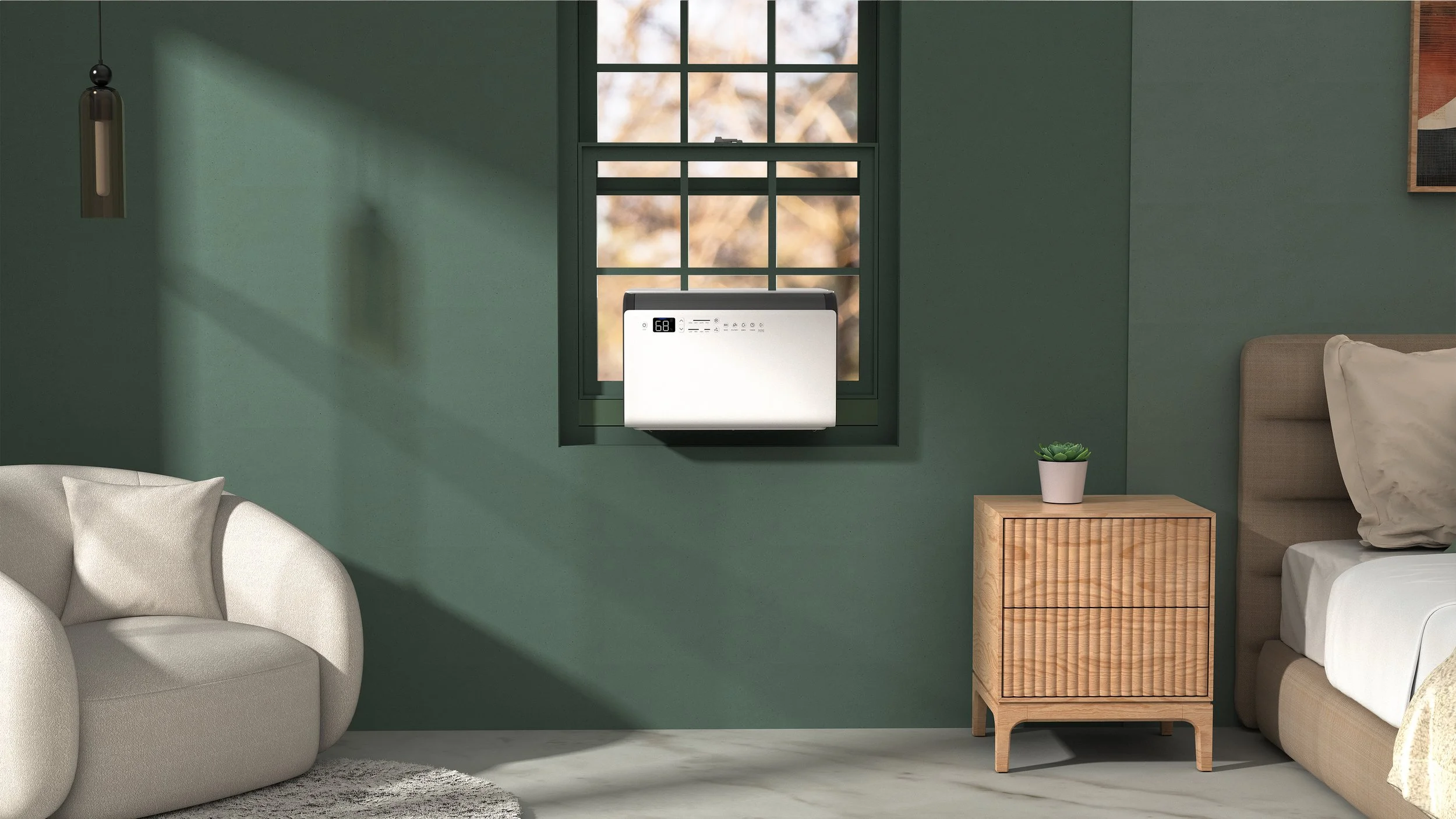
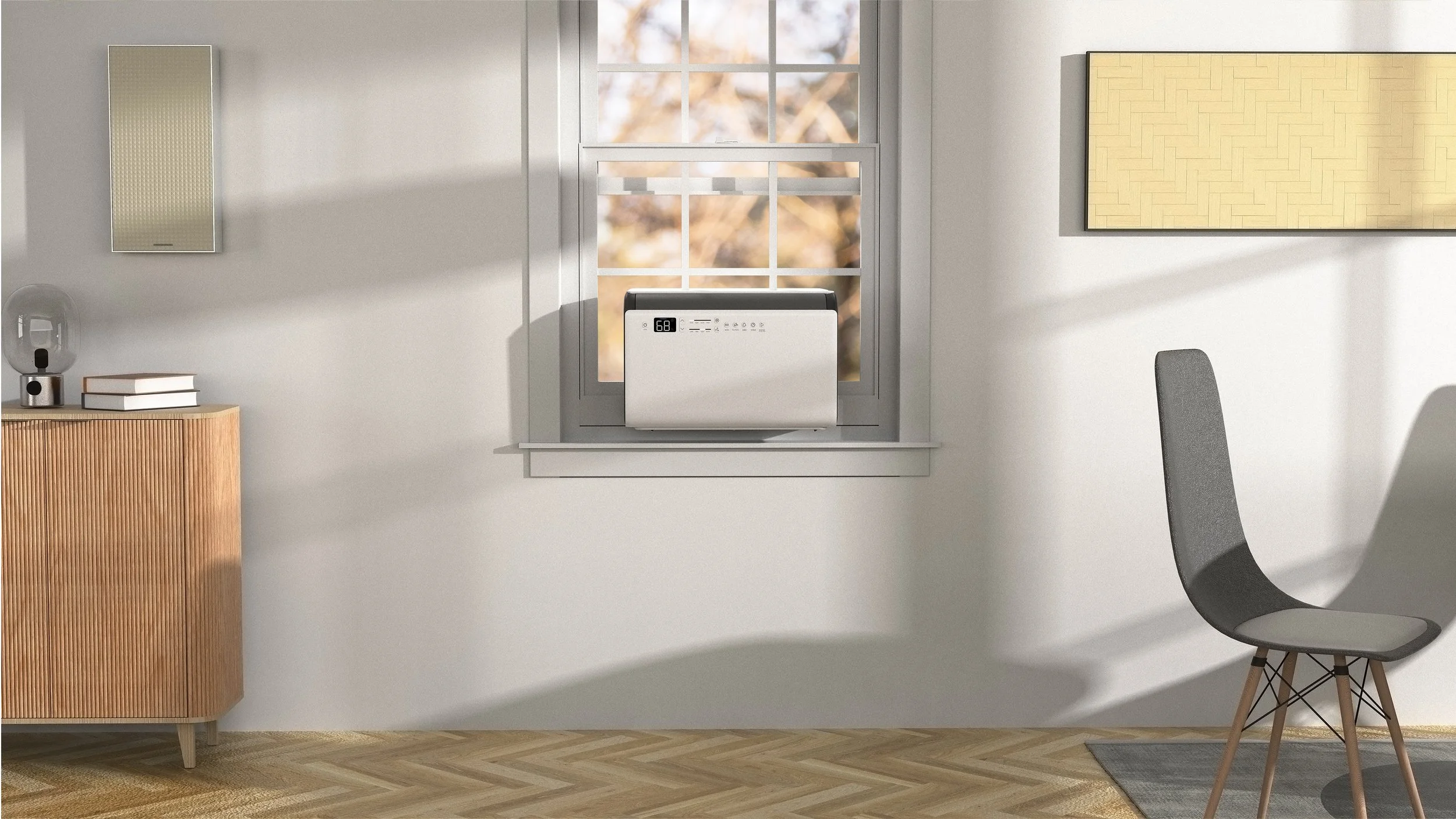
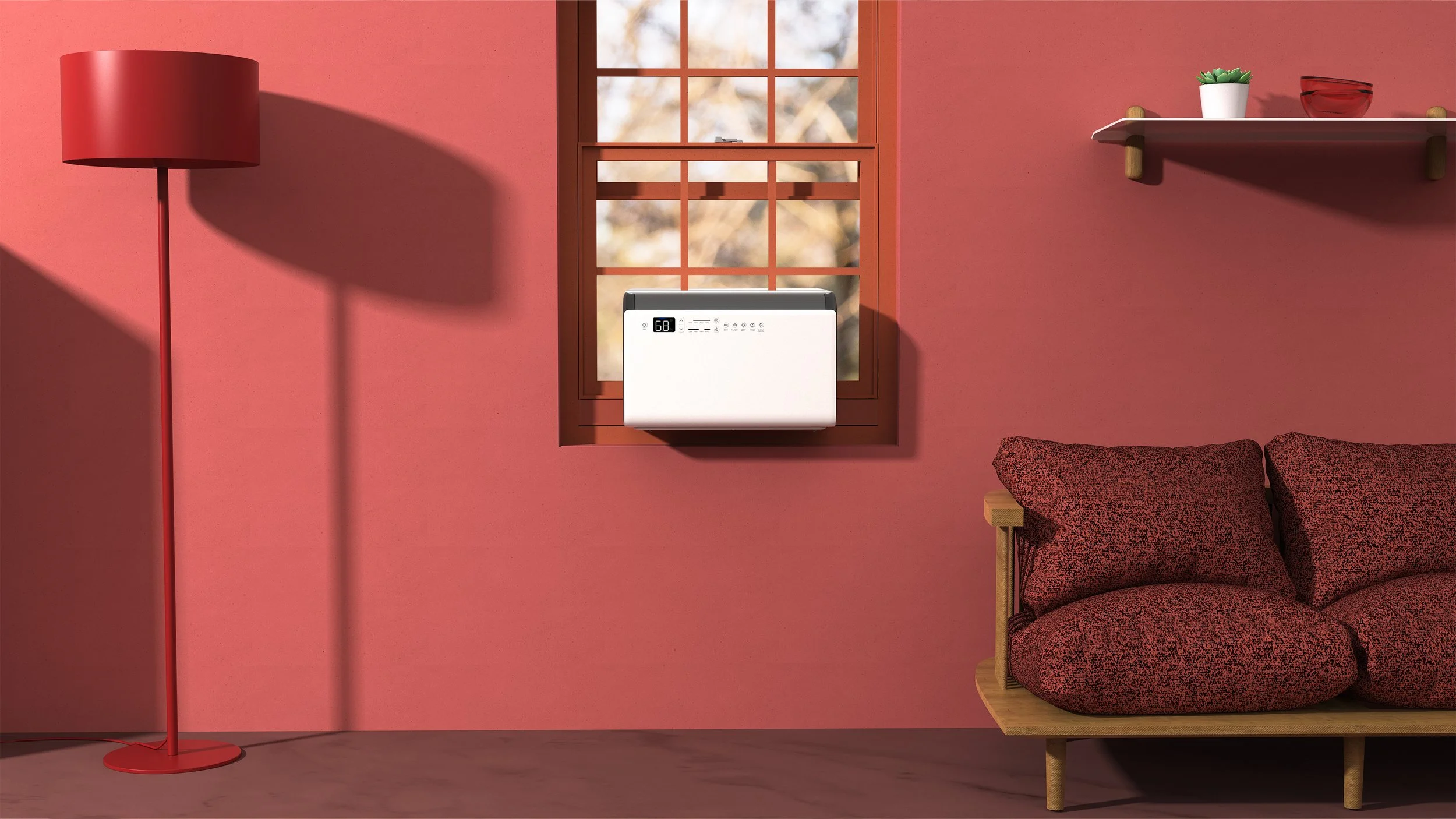
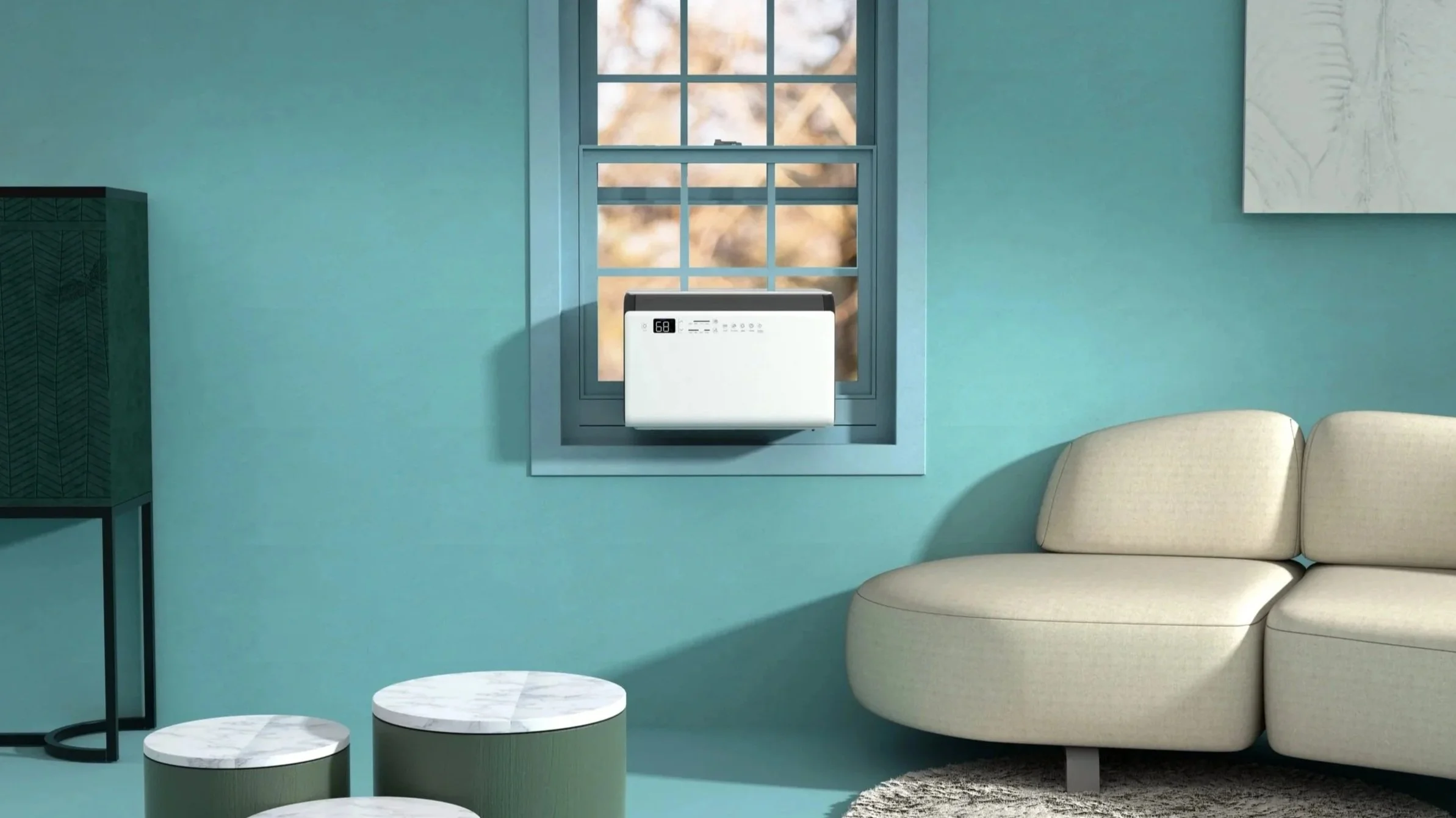
The front grille is an iconic visual cue of traditional window ACs. U2’s unique architecture intakes air from the back, allowing for a minimal, solid front panel that integrates more seamlessly with the interior. Its minimal approach differentiates U2 from conventional window ACs on the market. It enables a cleaner, more premium design language—closer to mini-splits and other heat pump products.
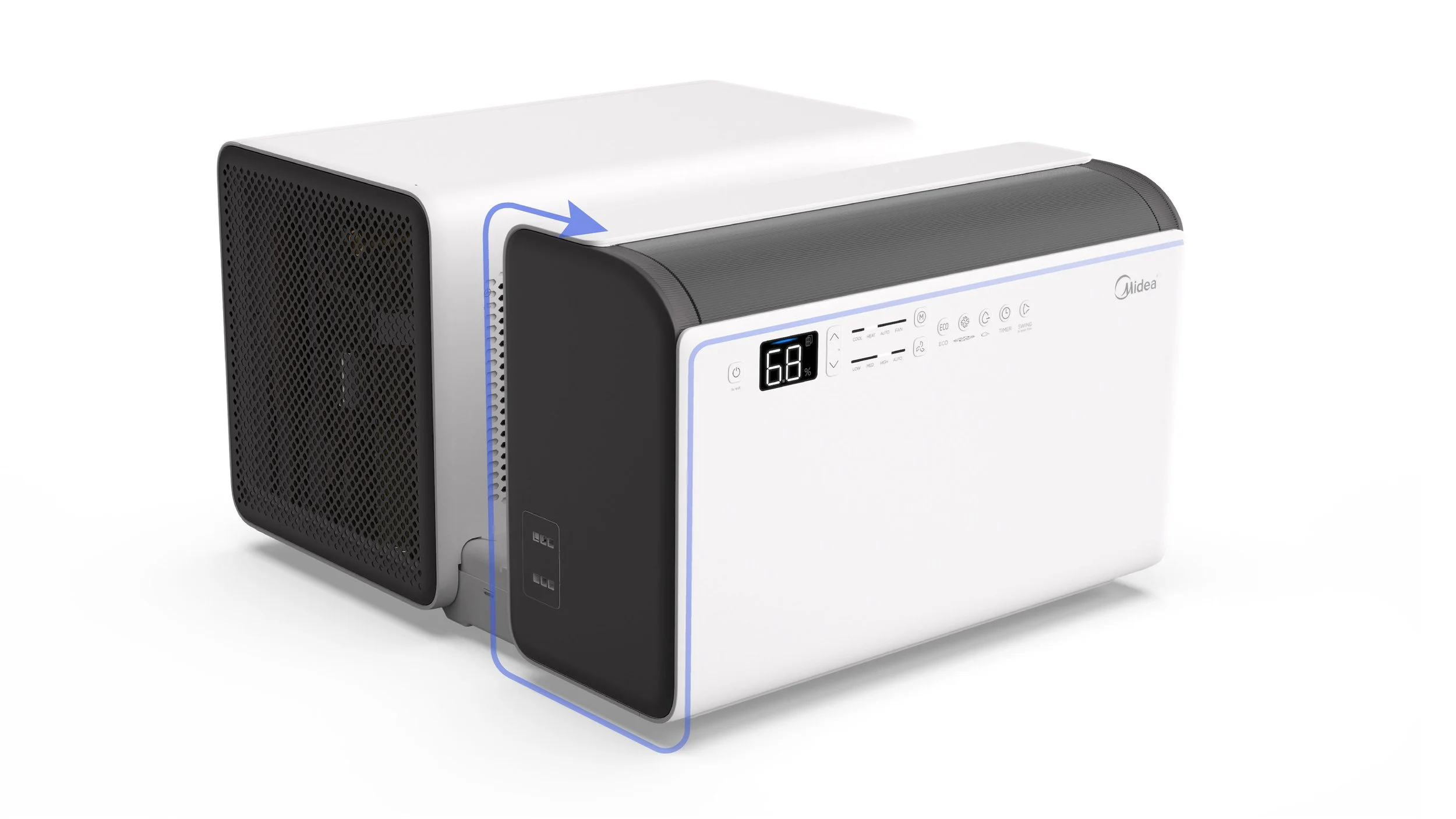
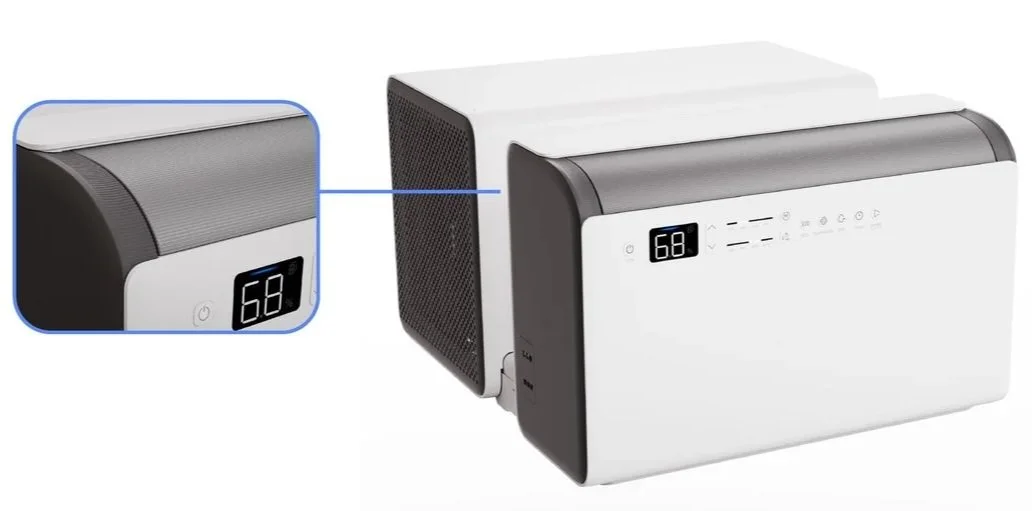
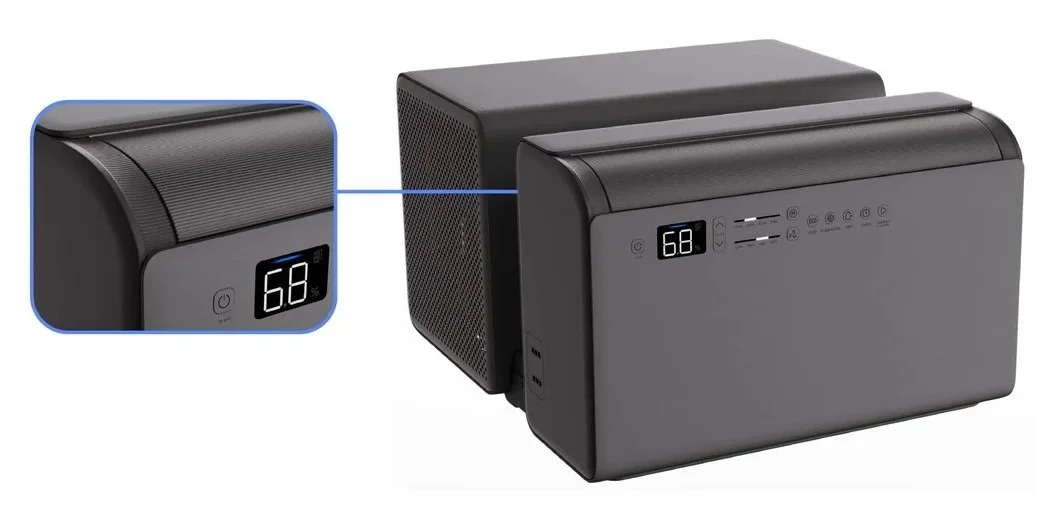
The outer panel elegantly wraps around the indoor and outdoor unit, highlighting the iconic U-shape. The thin and planar envelope visually lightens the form, making the unit feel refined and slim. The subtle curvature along the edge makes the overall unit feel approachable, creating a subtle transition between the wrap and the main body and softens the color contrast with the darker louver.
How did we arrive here?
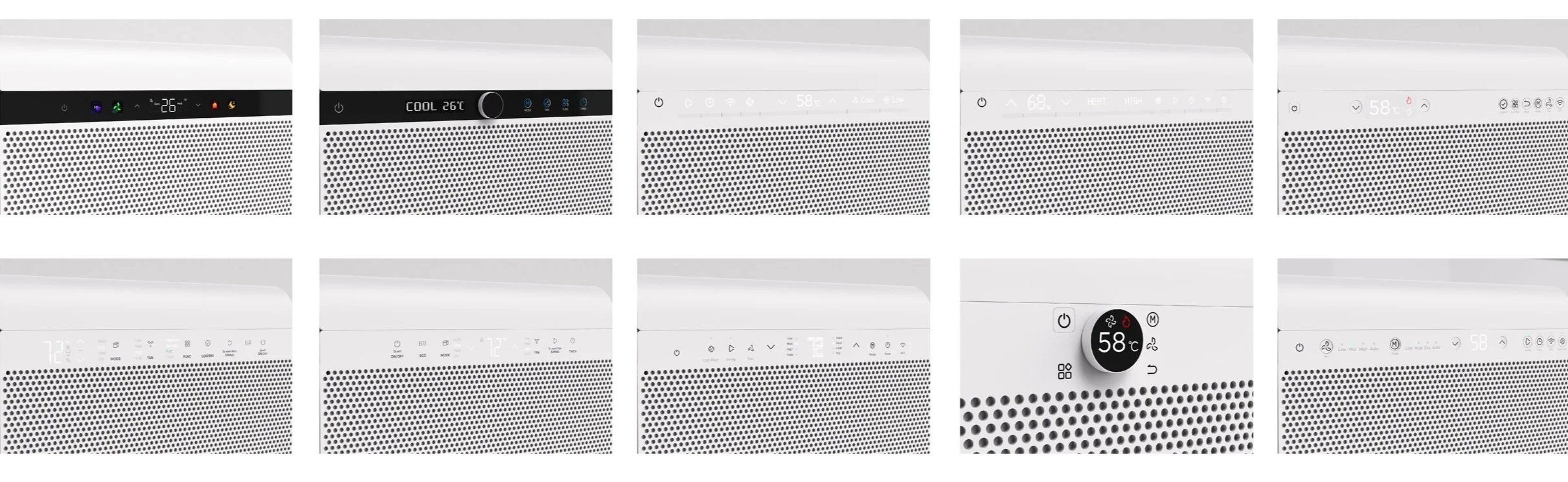
Down Selection

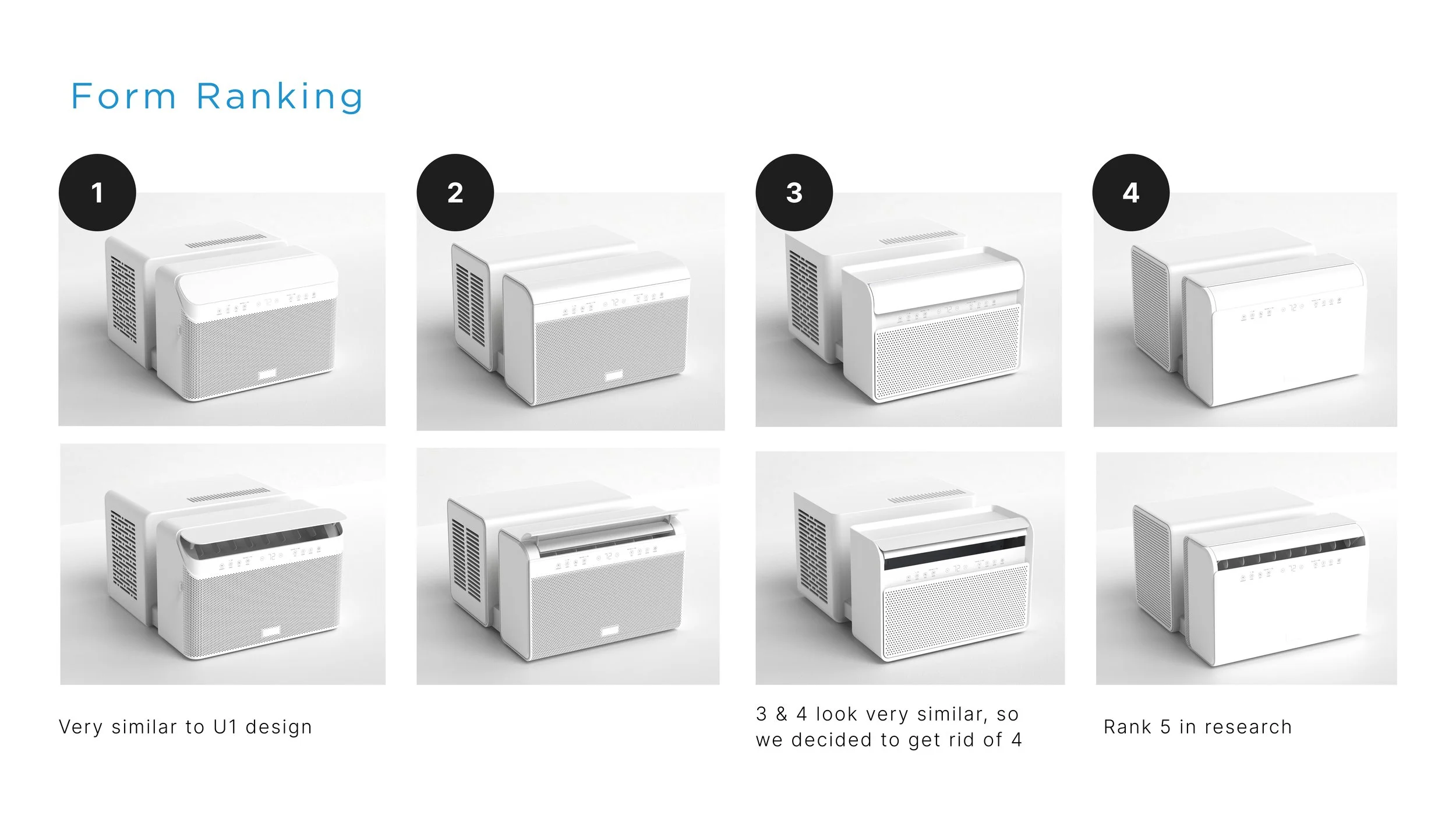
The chosen form concepts aligned with our hypothesis. They effectively complemented the ways in which the louver opens while maintaining simplicity and proportional balance. What helped us narrow down eventually was assessing their structural feasibility, differentiation potential for OEM brands, and compatibility with UI designs.
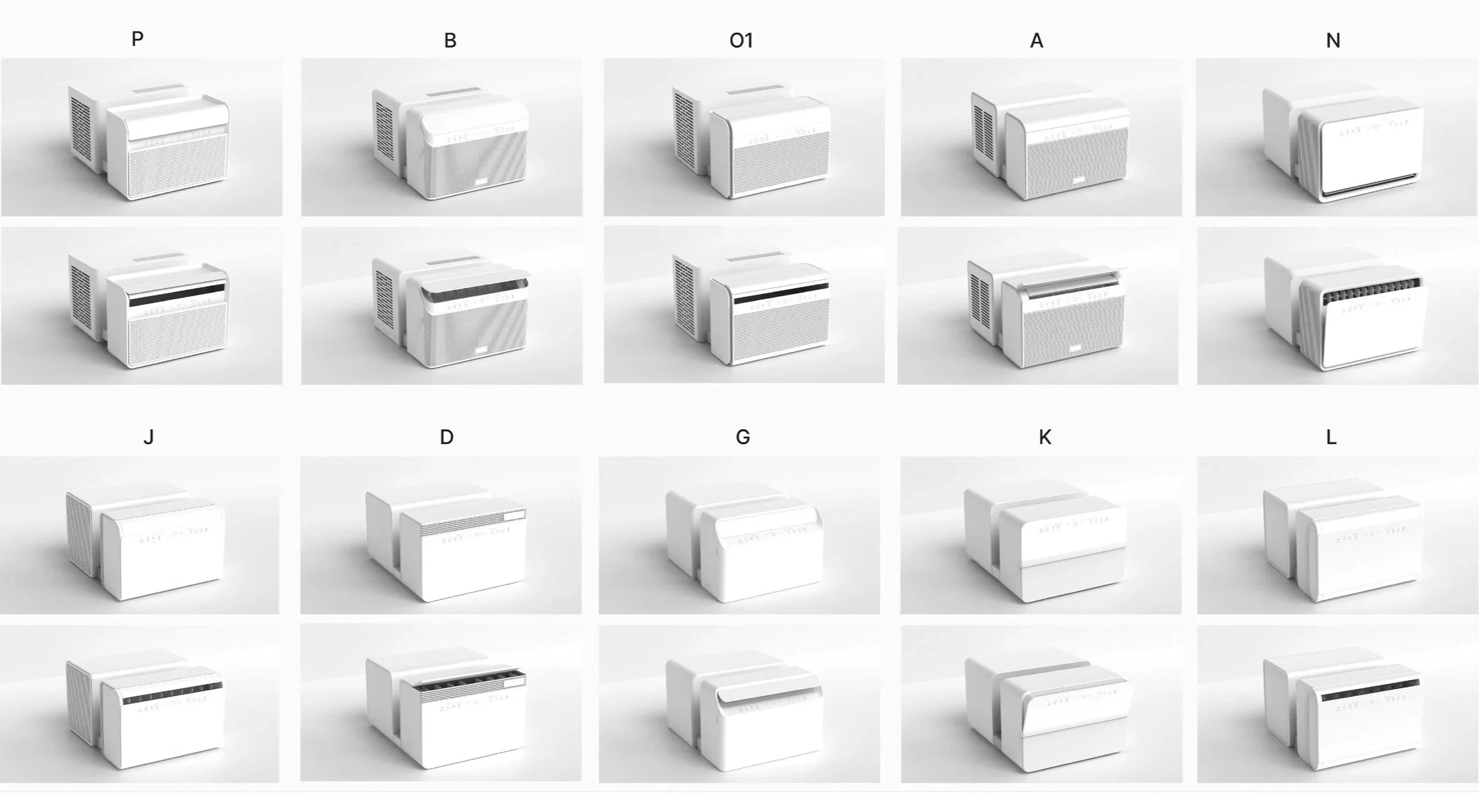
The overall form of the indoor unit is largely informed by the mechanical design of the air outlet and the placement of the user interface. I had several louver and UI concepts at my disposal. While assessing their feasibility, I conducted a MaxDiff study showcasing a series of isolated forms, air outlets (all rendered in plain white) and UI concepts. Separating these components allowed me to assess their visual impact in a controlled way. I learned which designs are more favorable, and which are more polarizing.
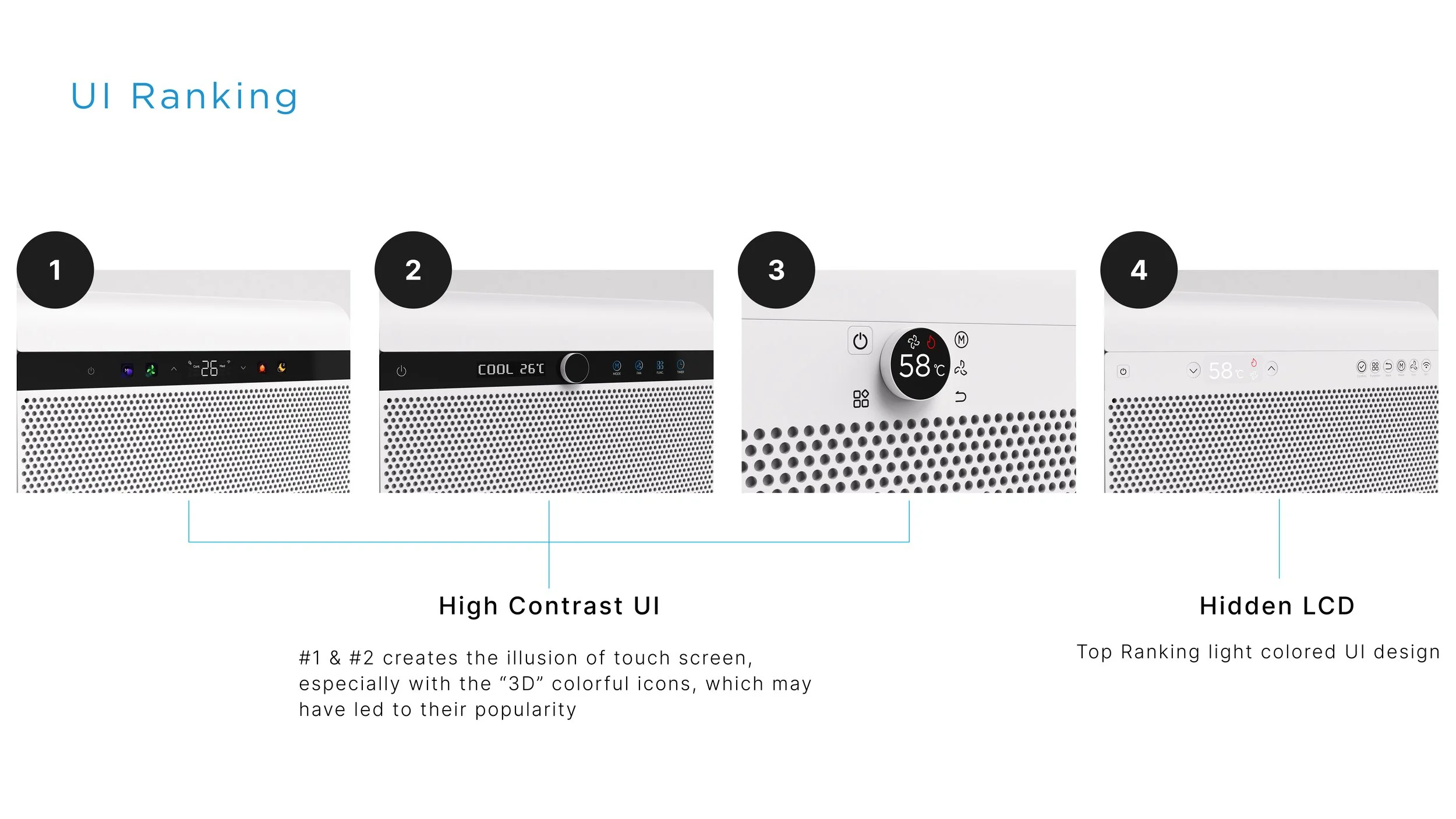
UI ranking, on the other hand, was surprising. Users unanimously picked the high contrast displays that simulated a touch screen. Hidden segment display, though most common among window AC, was not picked. This led us to focus on assessing the user experience of LCD and integration of high contrast displays with the chosen forms.
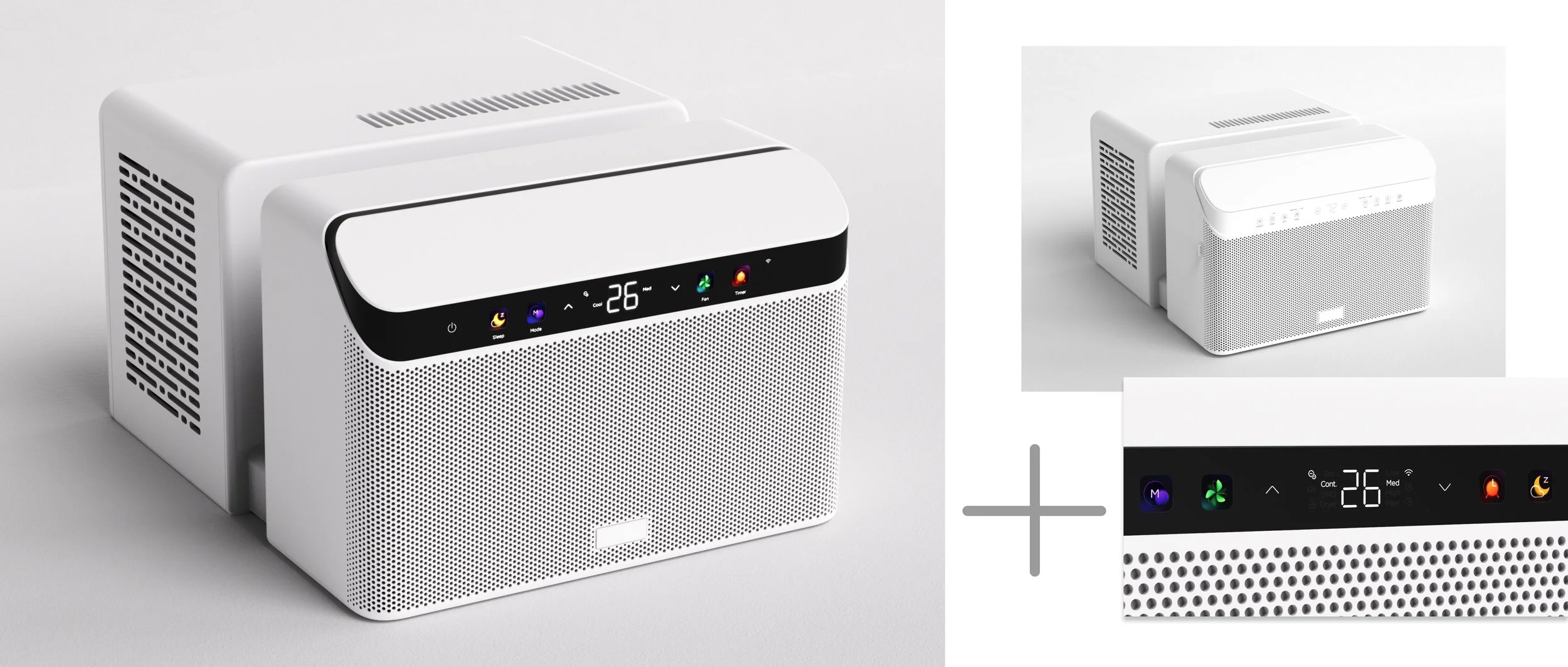
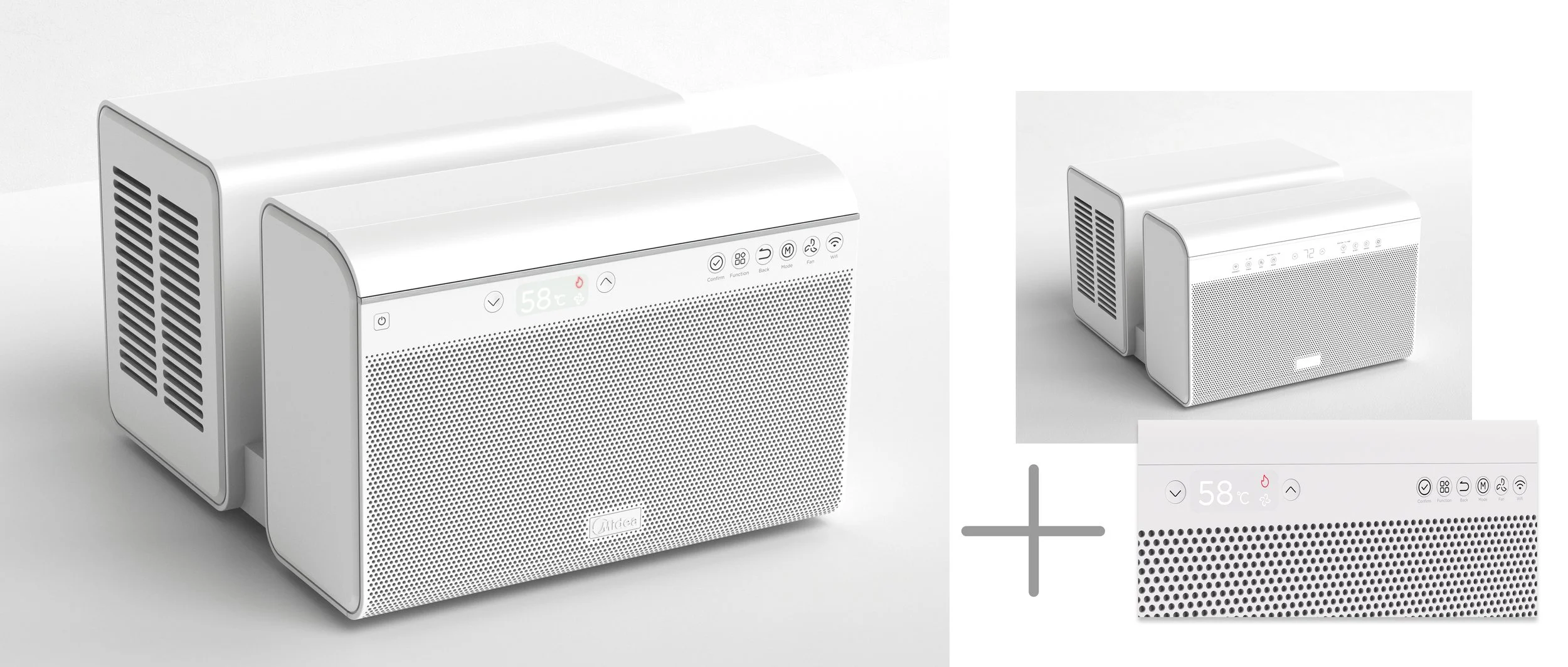
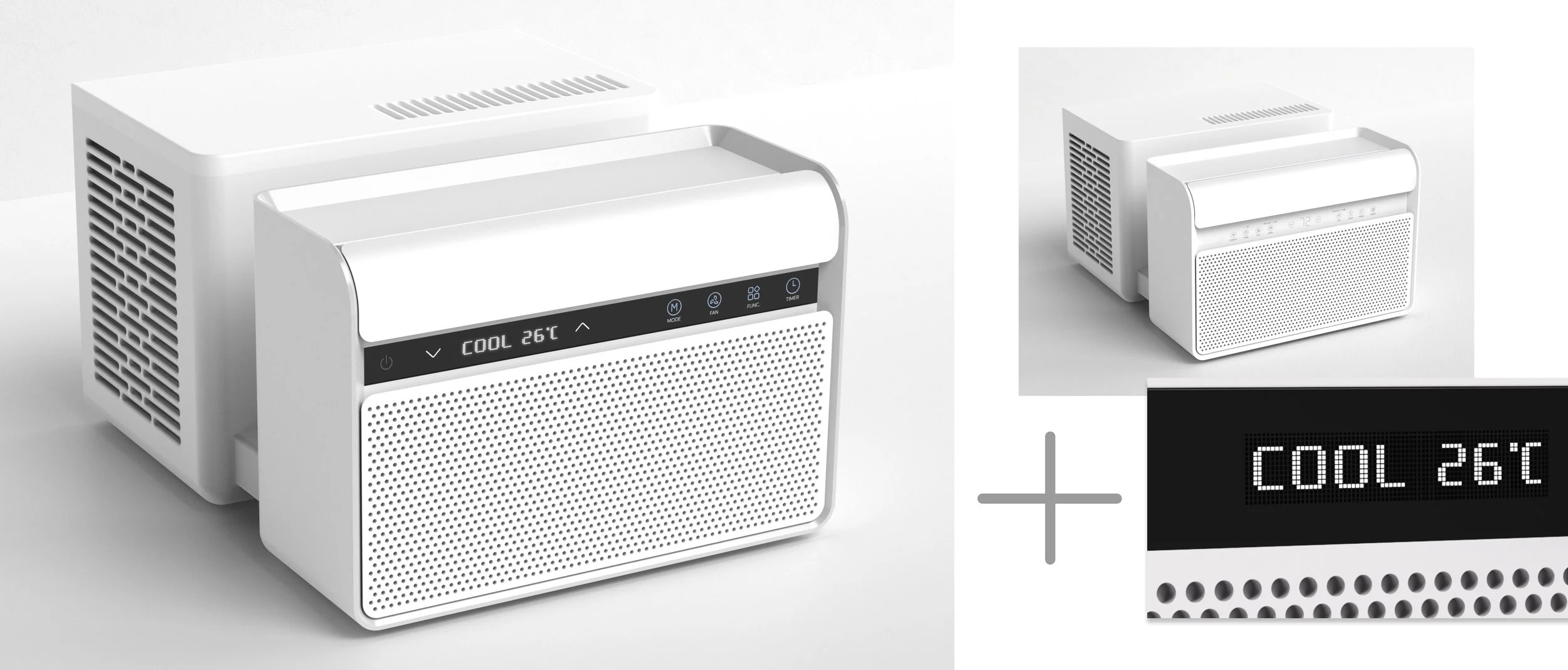
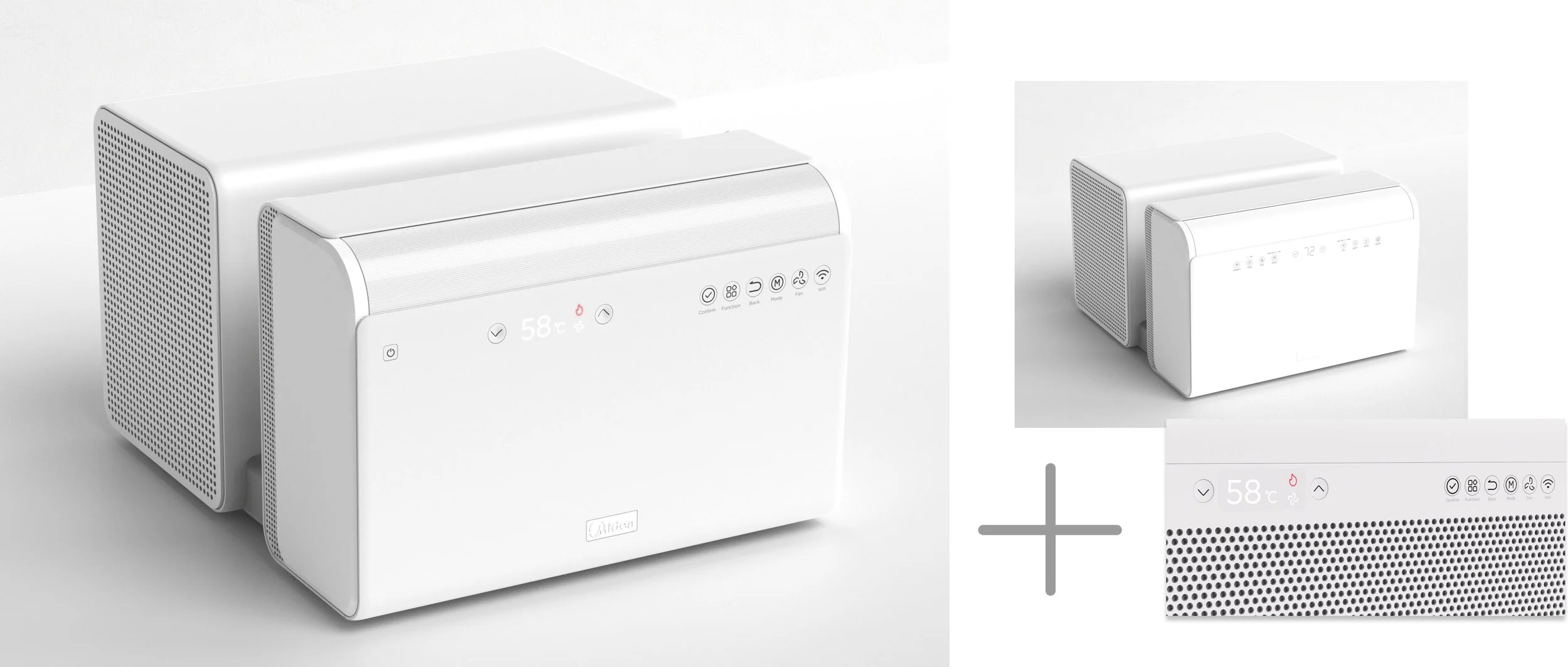
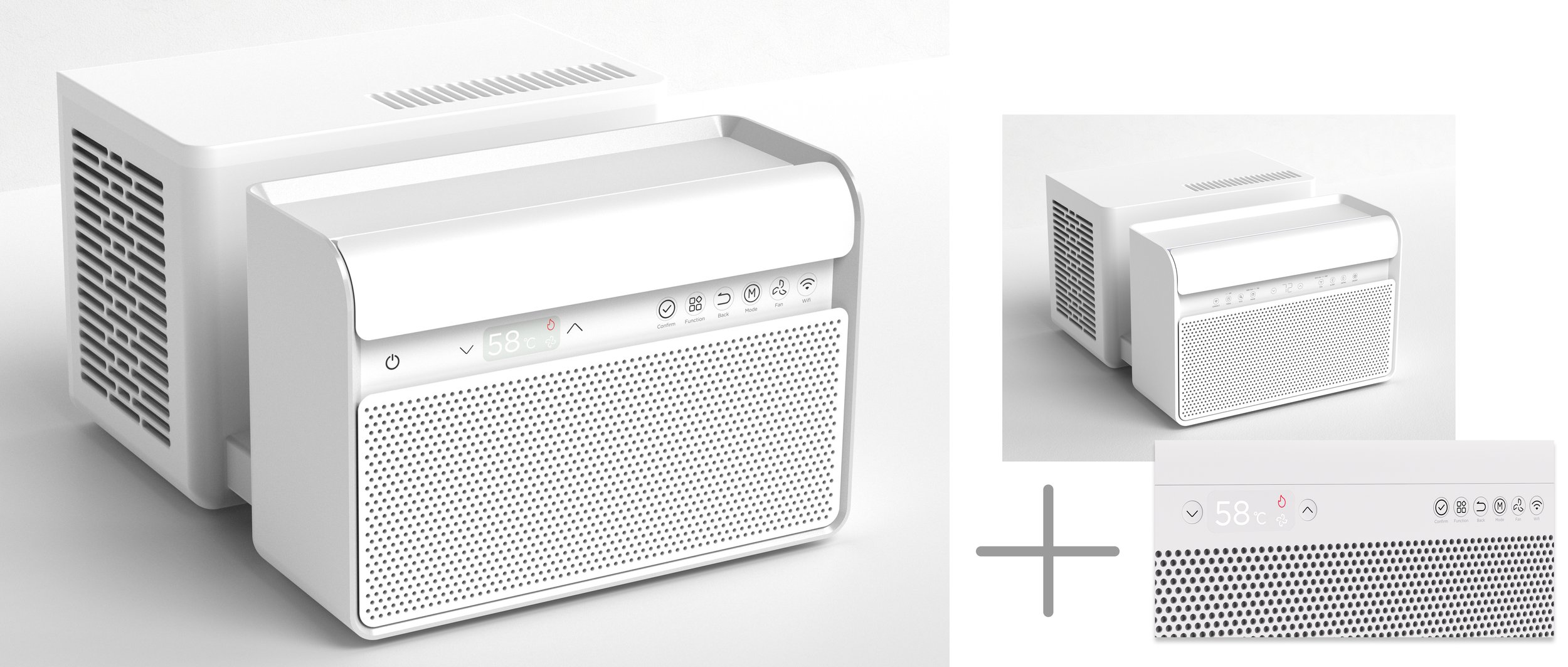
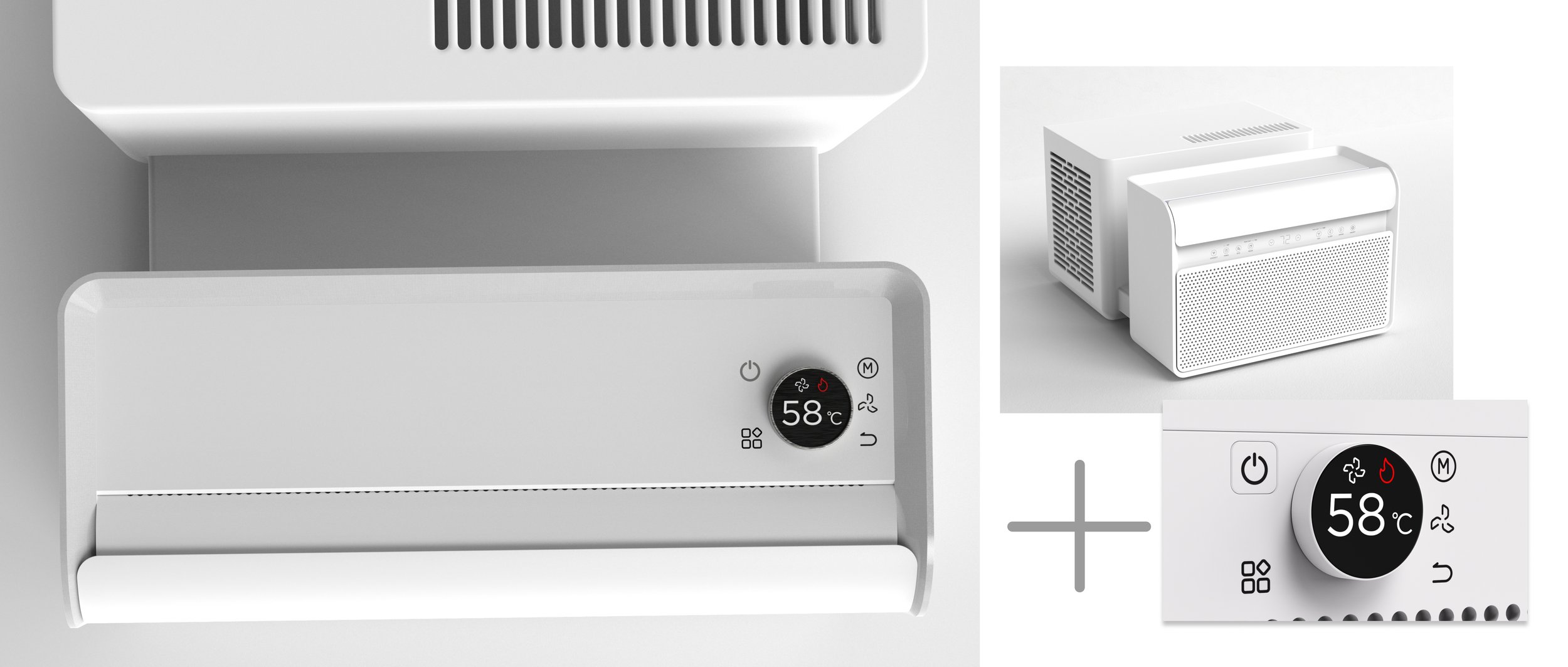
I combined the leading form concepts with the UI, and Design J (highlighted in blue) was ultimately selected for its visual versatility. It features a highly minimal front panel that pairs well with a wide range of UI options. The design remains visually strong both with and without a front grill, offering flexibility as a potential point of differentiation. While it subtly references U1, it establishes its own distinct identity. A continuous outer shell unifies the form, while the air outlet applies different form/texture treatment that break up the form and prevent it from feeling flat or overly enclosed.
Design Innovation 2
Convection Louver
Air outlet louver is a simple and direct feature of differentiation for air conditioners. U1 has a very basic louver that pivots around its center. When I first got on the project, the team was exploring louver designs that would better leverage the convection principles for more efficient heating and cooling.
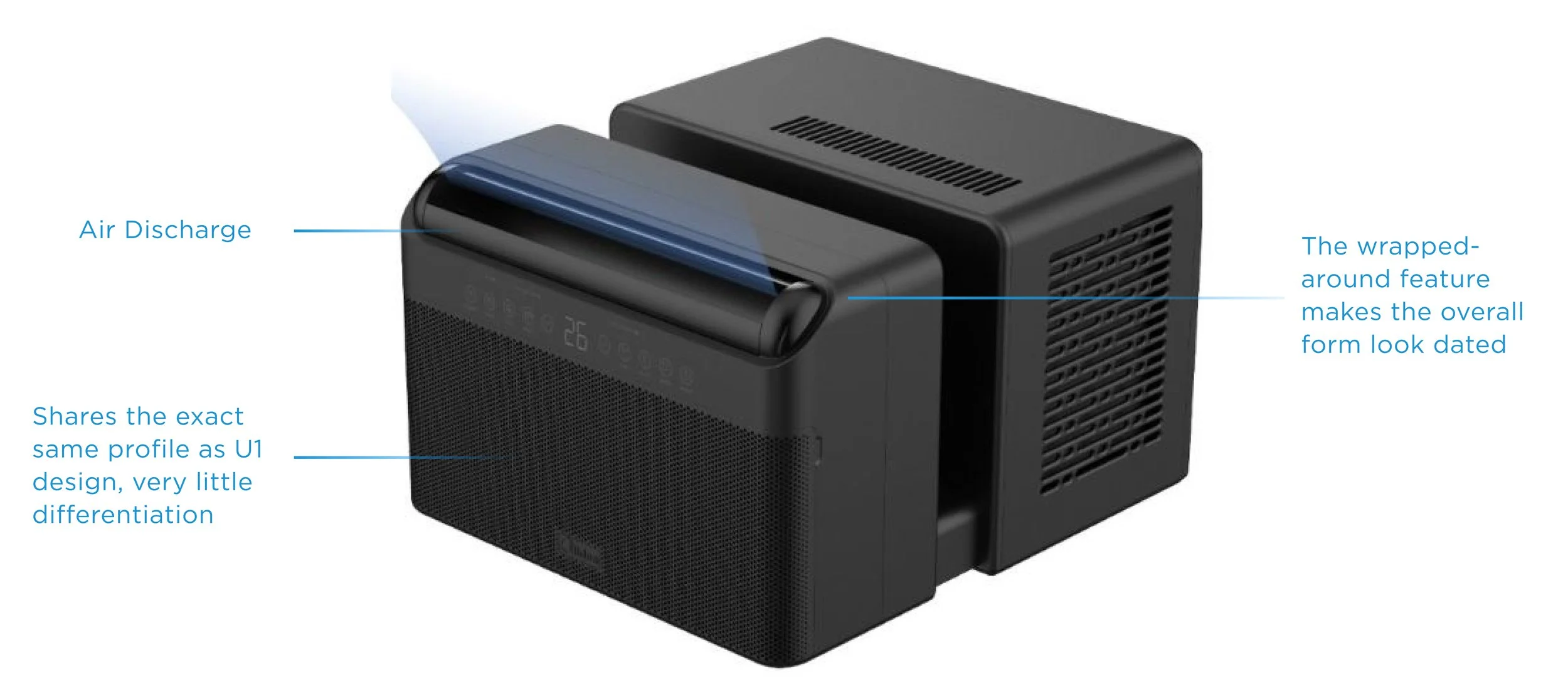
Design 2 has a cylindrical air outlet that was crudely shoved into a form very similar to U1. The transition between the cylinder and the housing gave it a dated look. So I explored alternative form concepts that would make the louver more visually modular and celebrate it as a unique design feature.
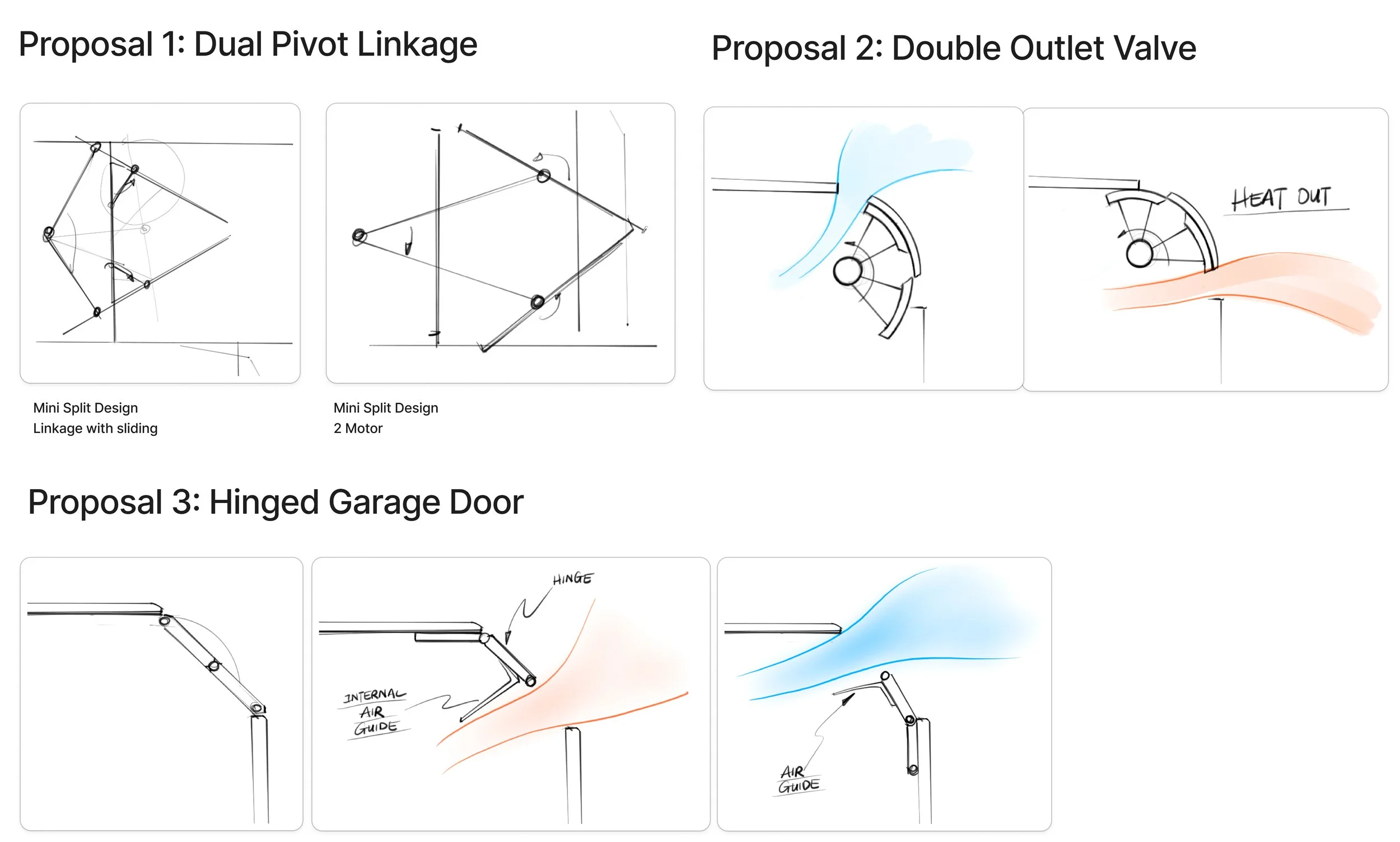
I looked for a more integrated solution that help maximize air outlet range and customize the air flow experience.
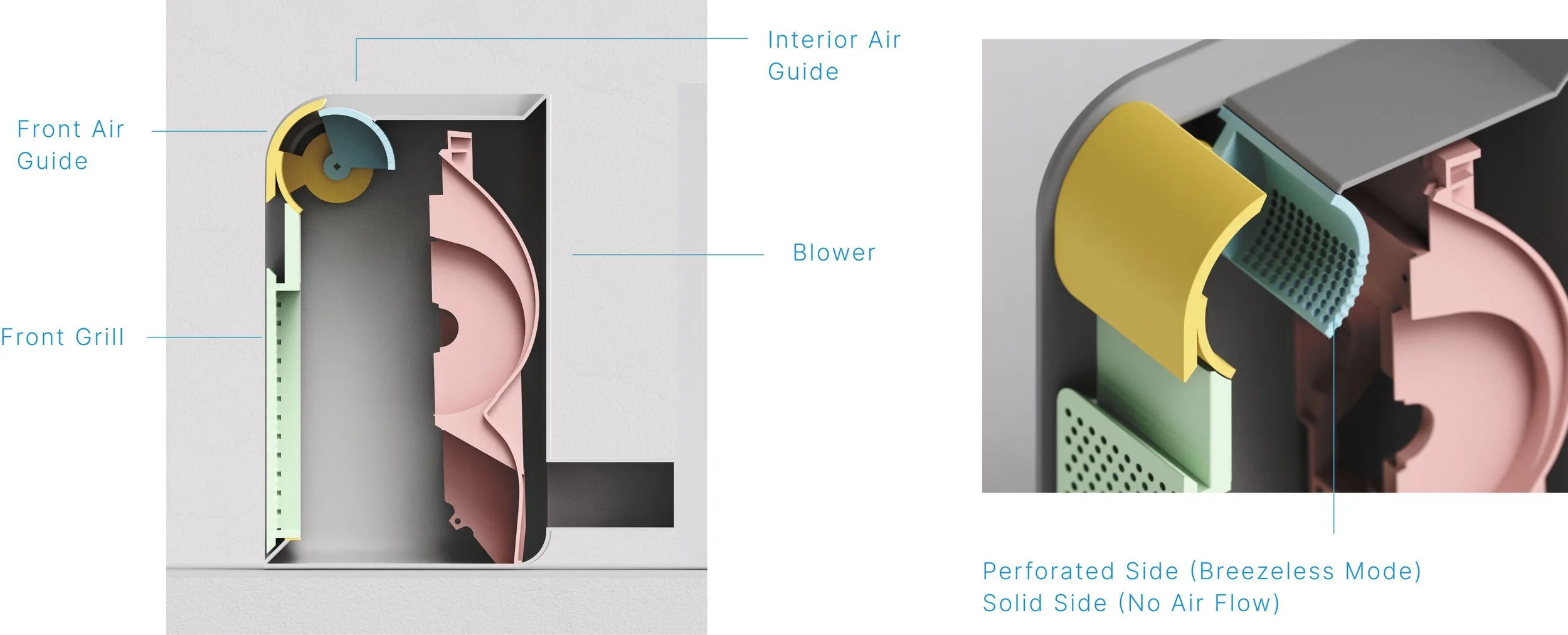
I looked for ways of combining the form factor of the cylinder idea with the convection principle of the mini split louver to create a more efficient and customizable airflow that is unique visually, simple & robust mechanically.
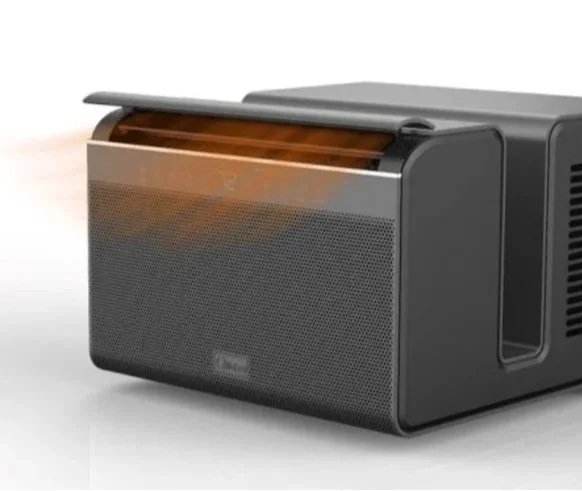
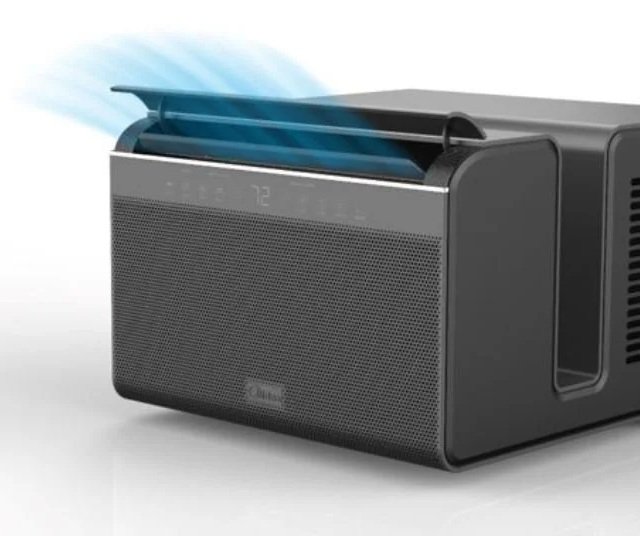
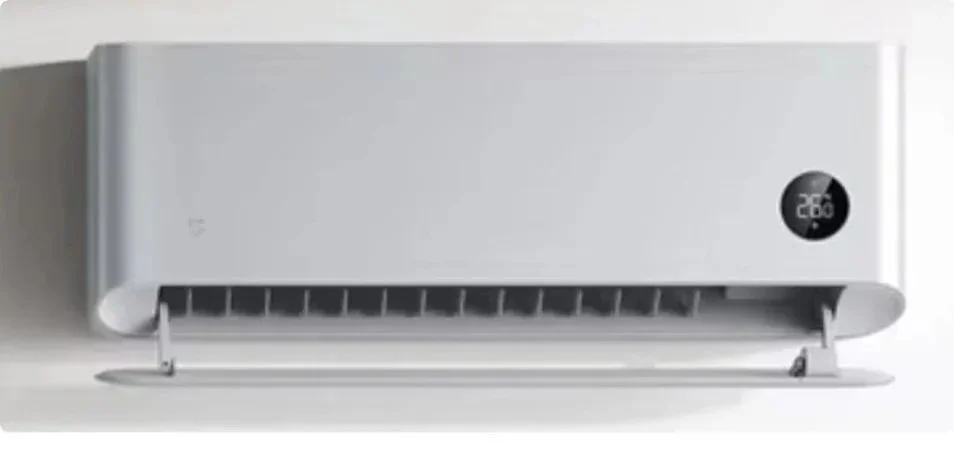
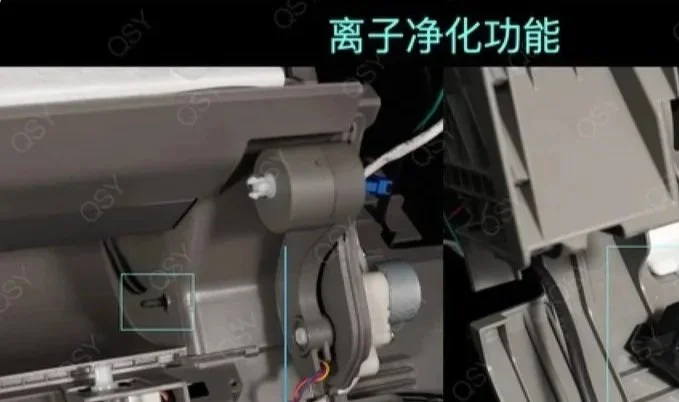
Design 1 was very similar to many new-to-market mini splits. The louver, during pivoting, fully sticks out of the main body and requires two motors for effective convection. However, mini splits are hung high up on the wall, and window ACs are a lot more accessible to users, making this design easy to break from mishandling.
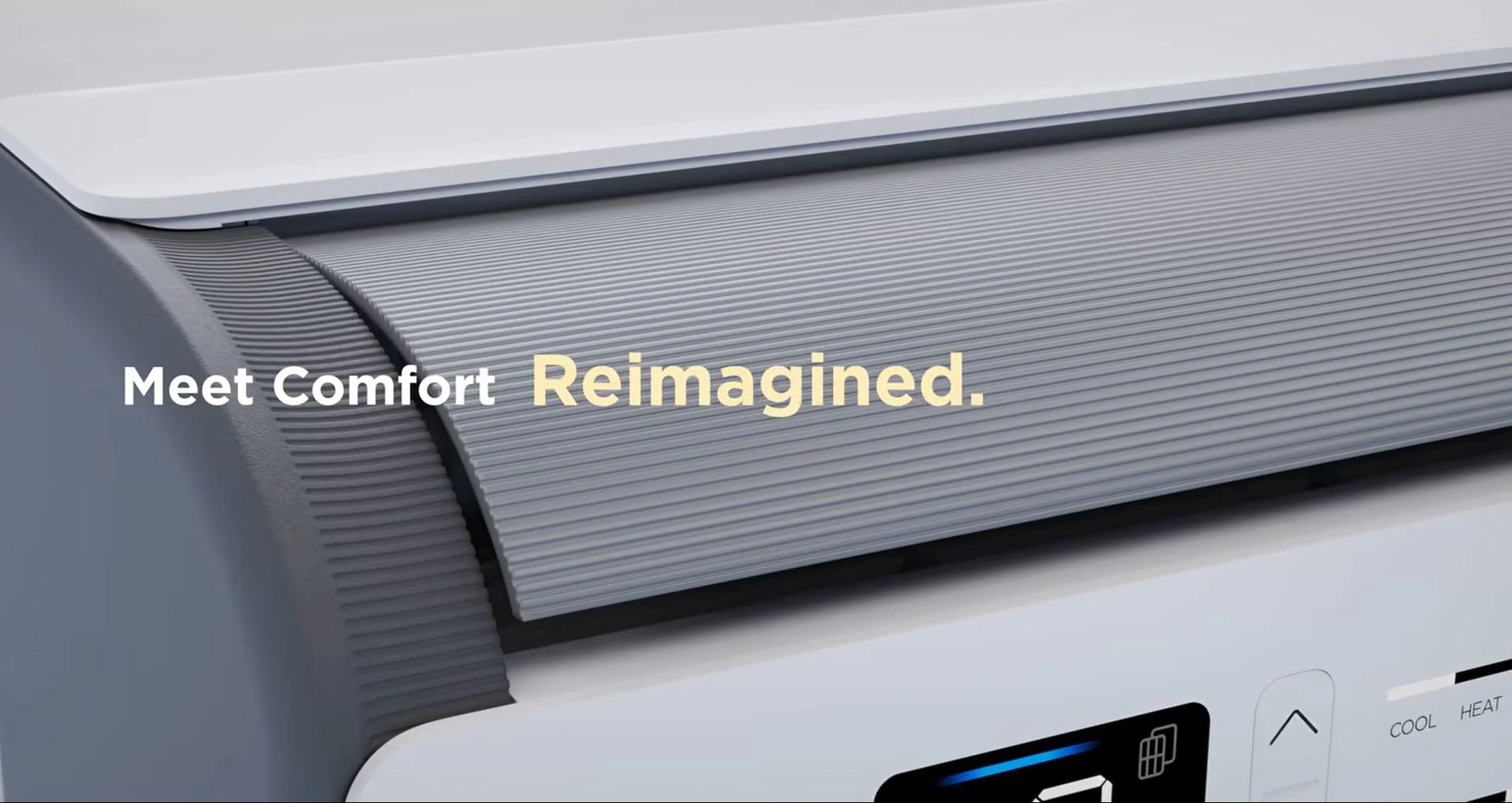
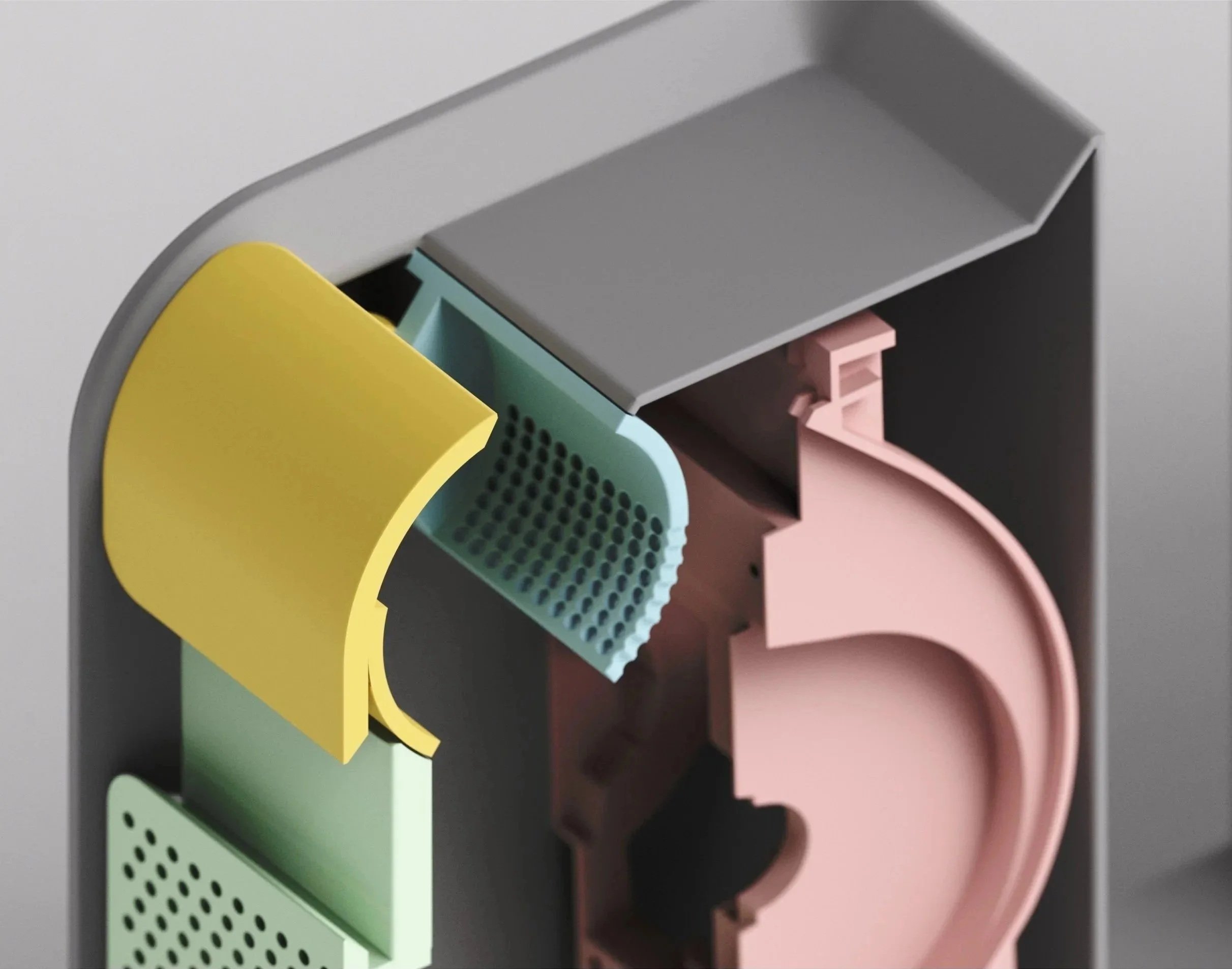
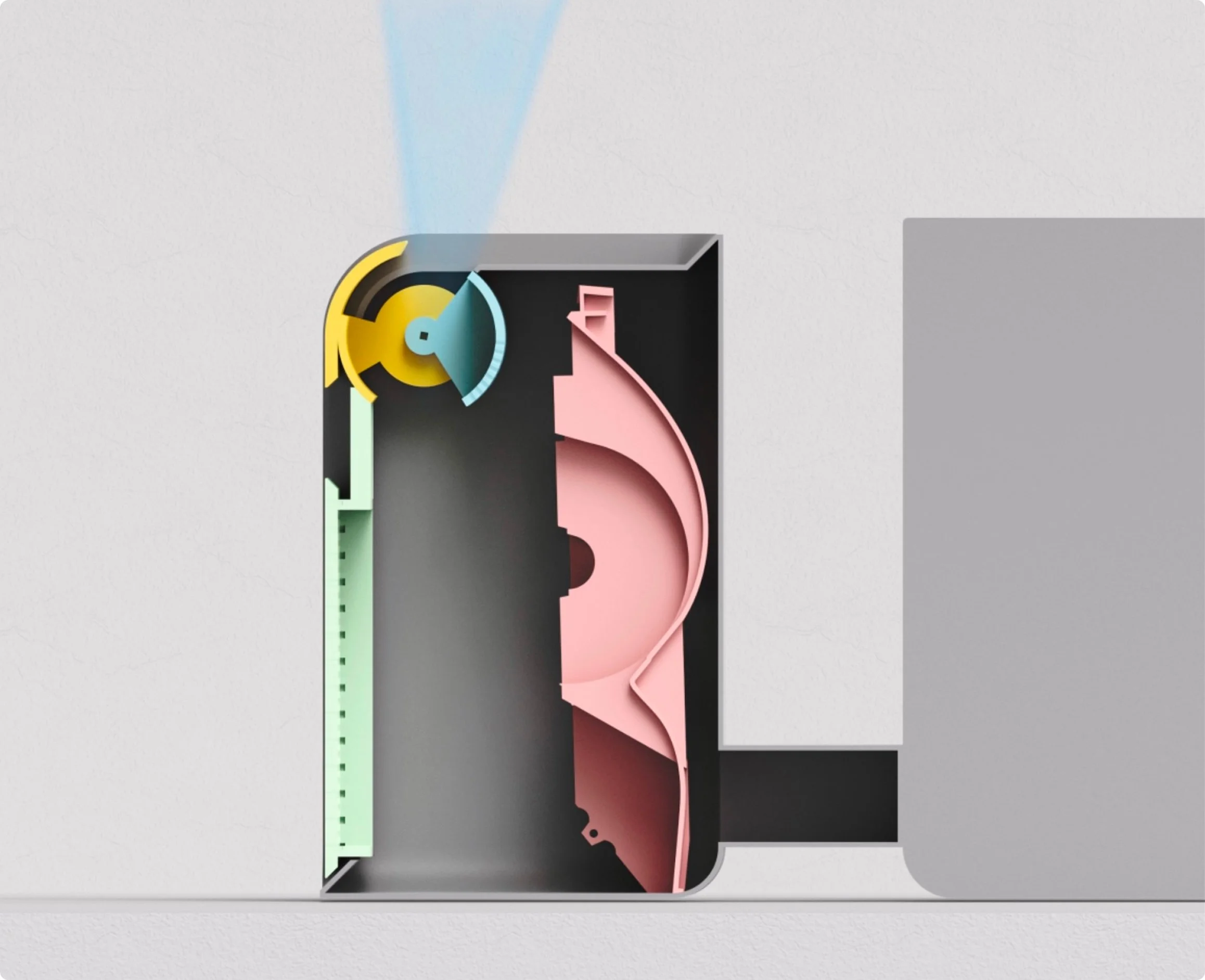
Leveraging the cylinder concept, I created a double layer louver system with a combination of solid louvers and breezeless louver (with density hole patterns). It utilizes two embedded motors on the left and right, depending on which one is activated, the unit has four different modes of air experience.
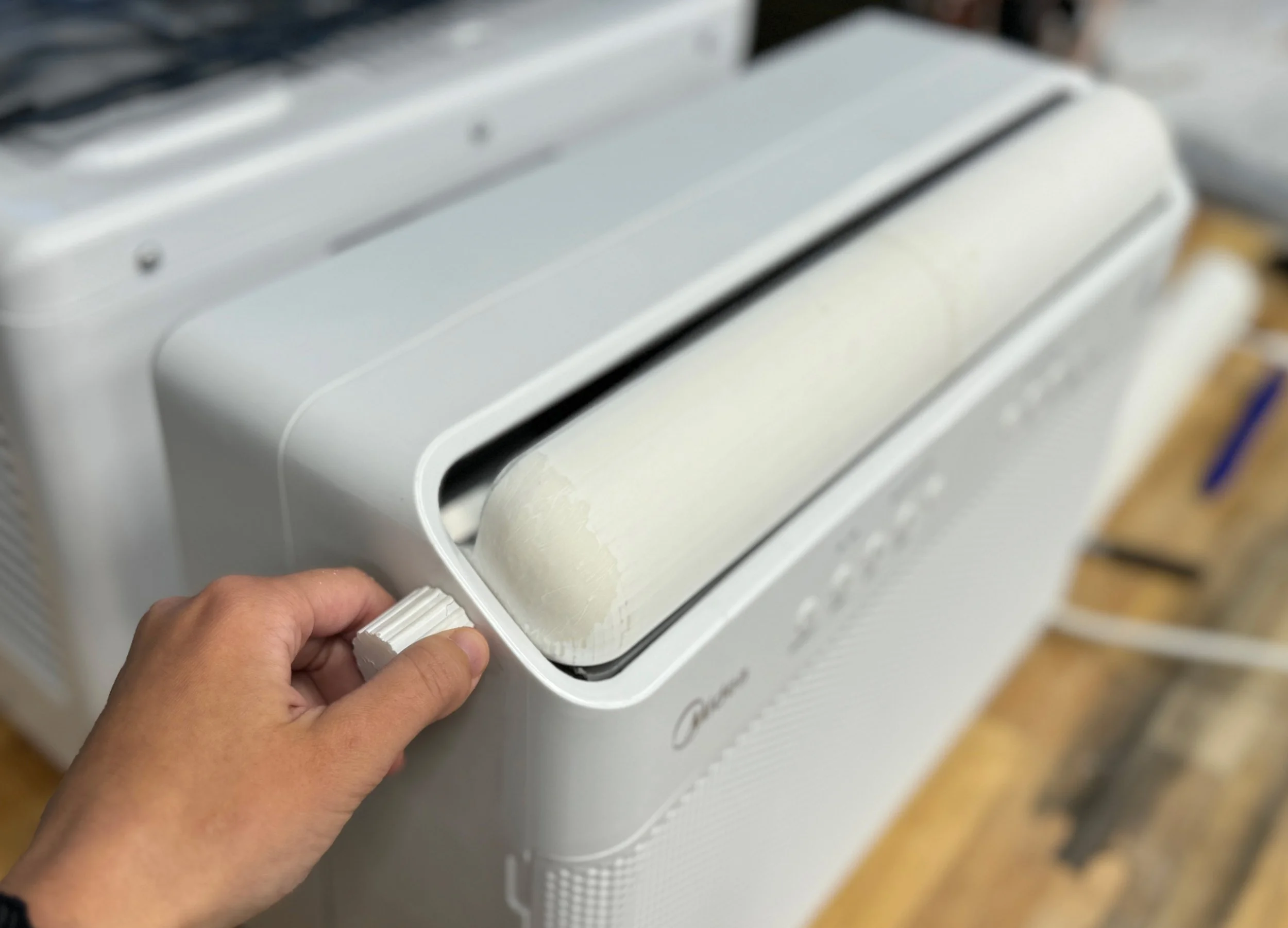
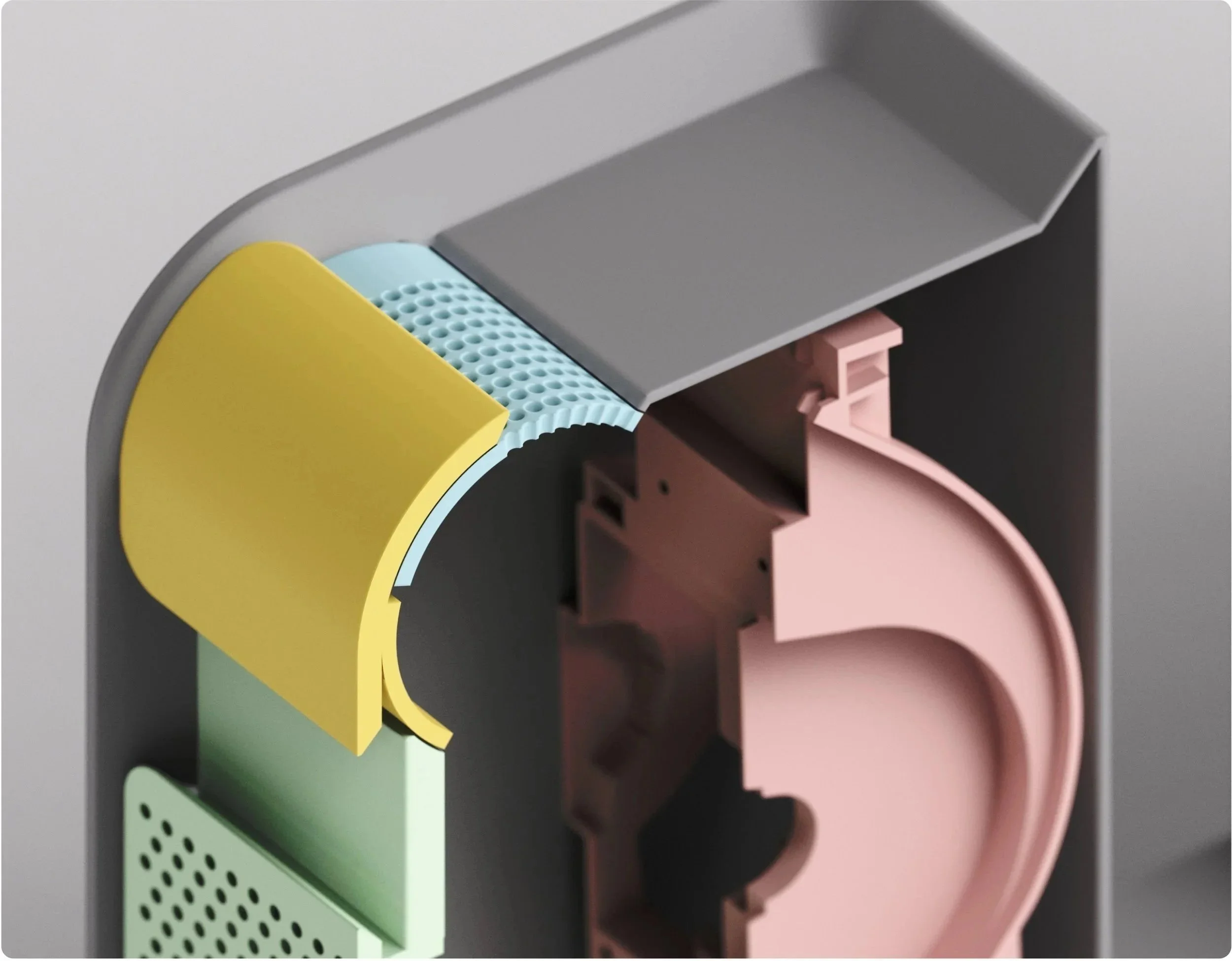
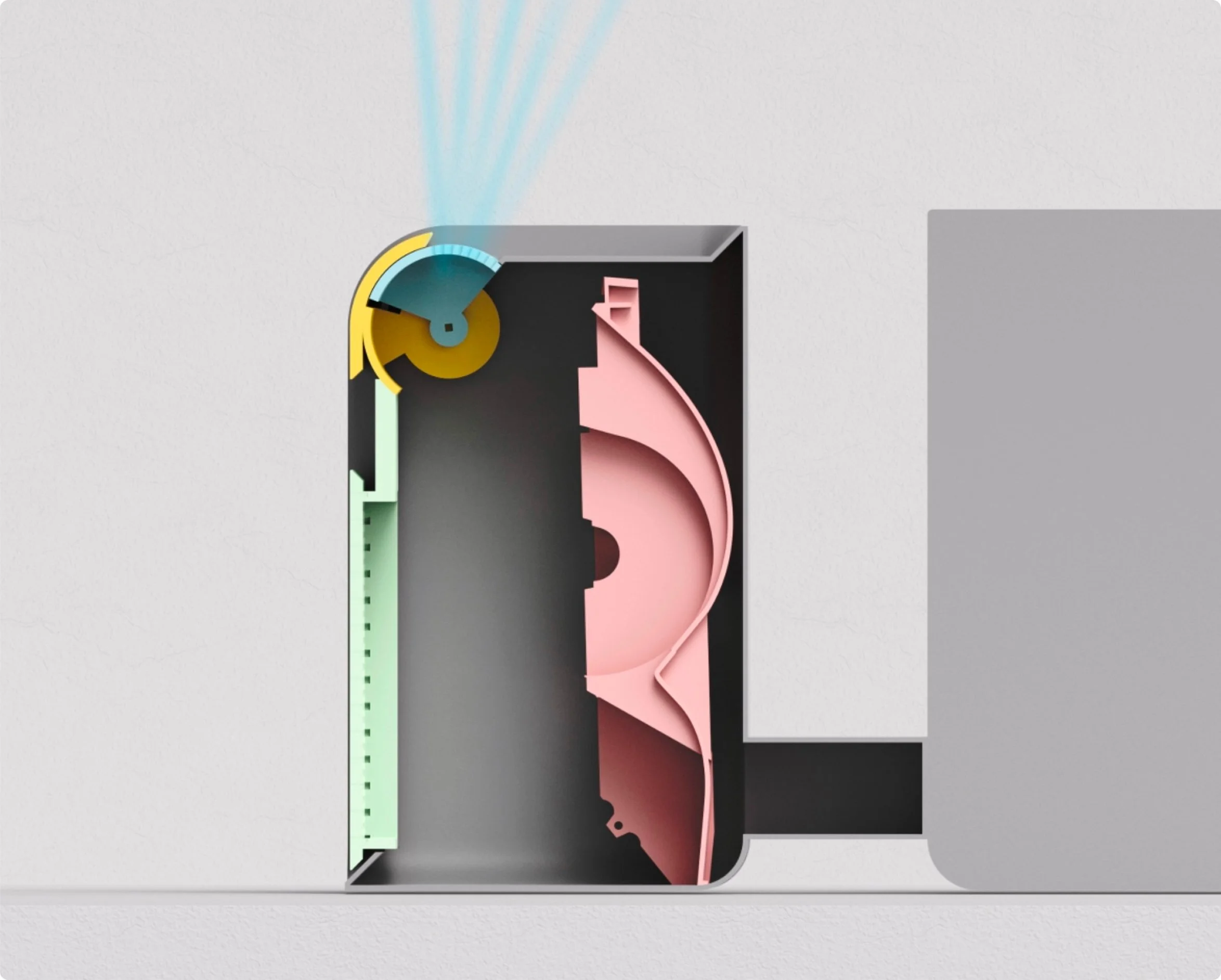
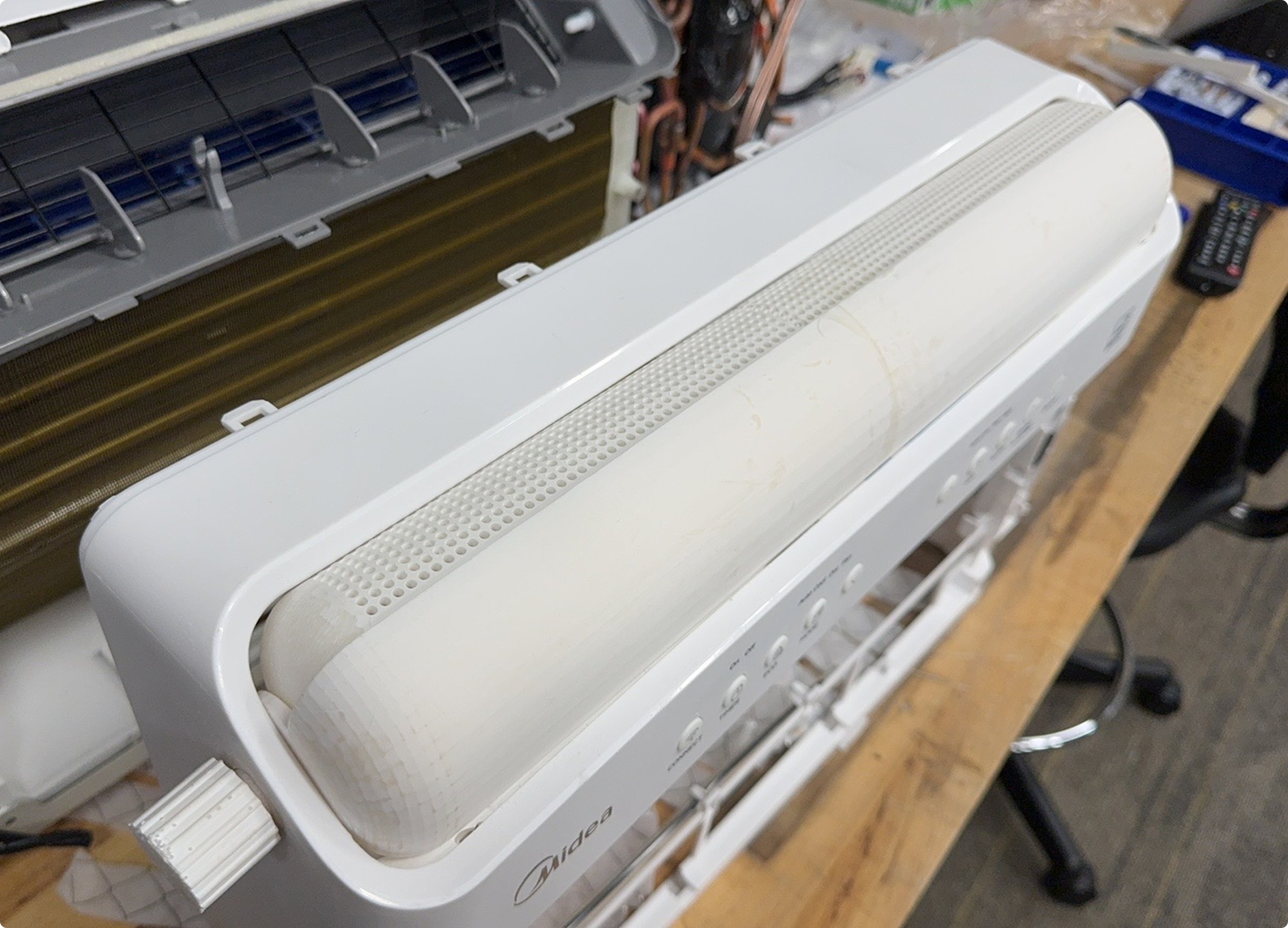
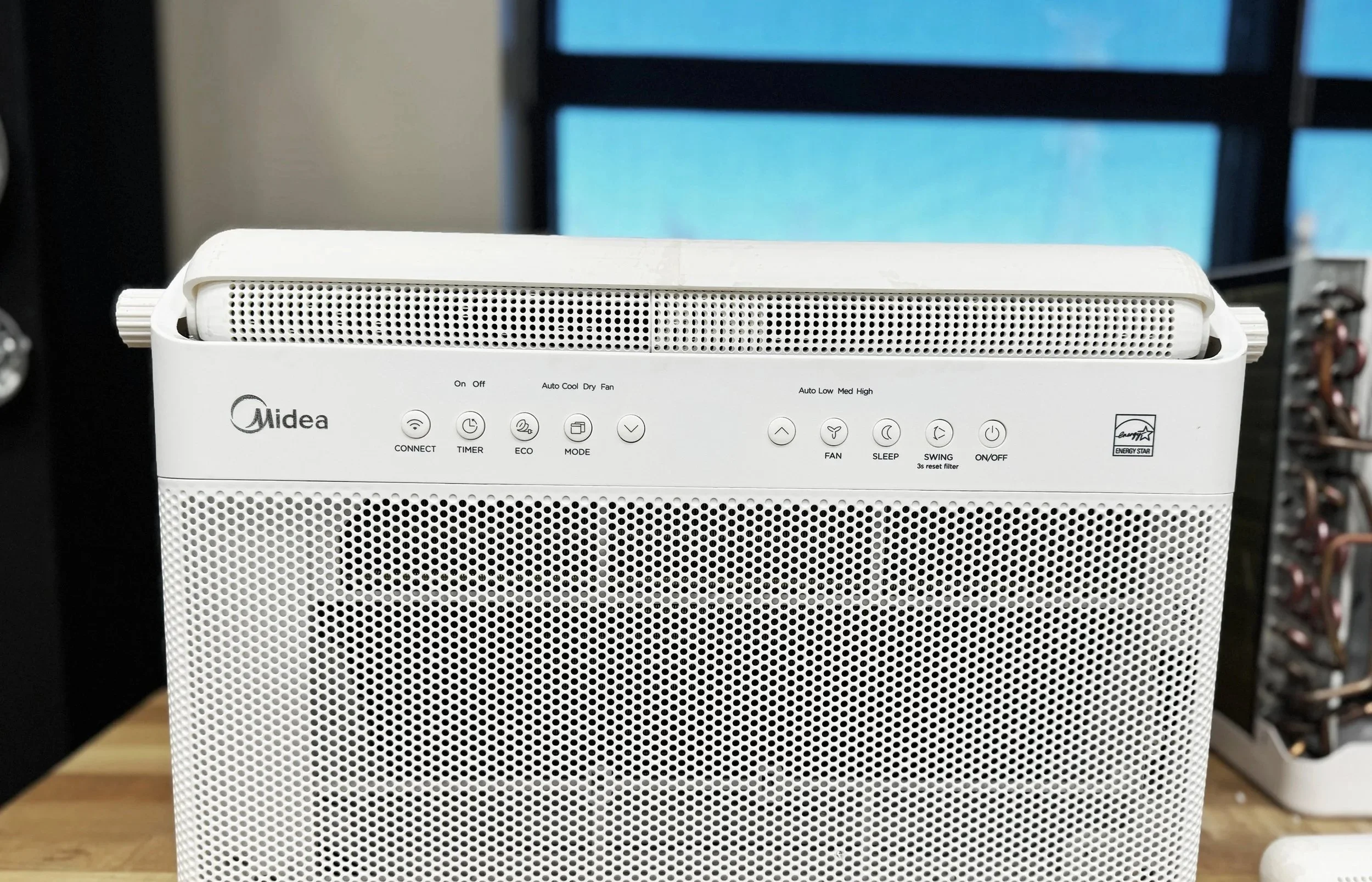
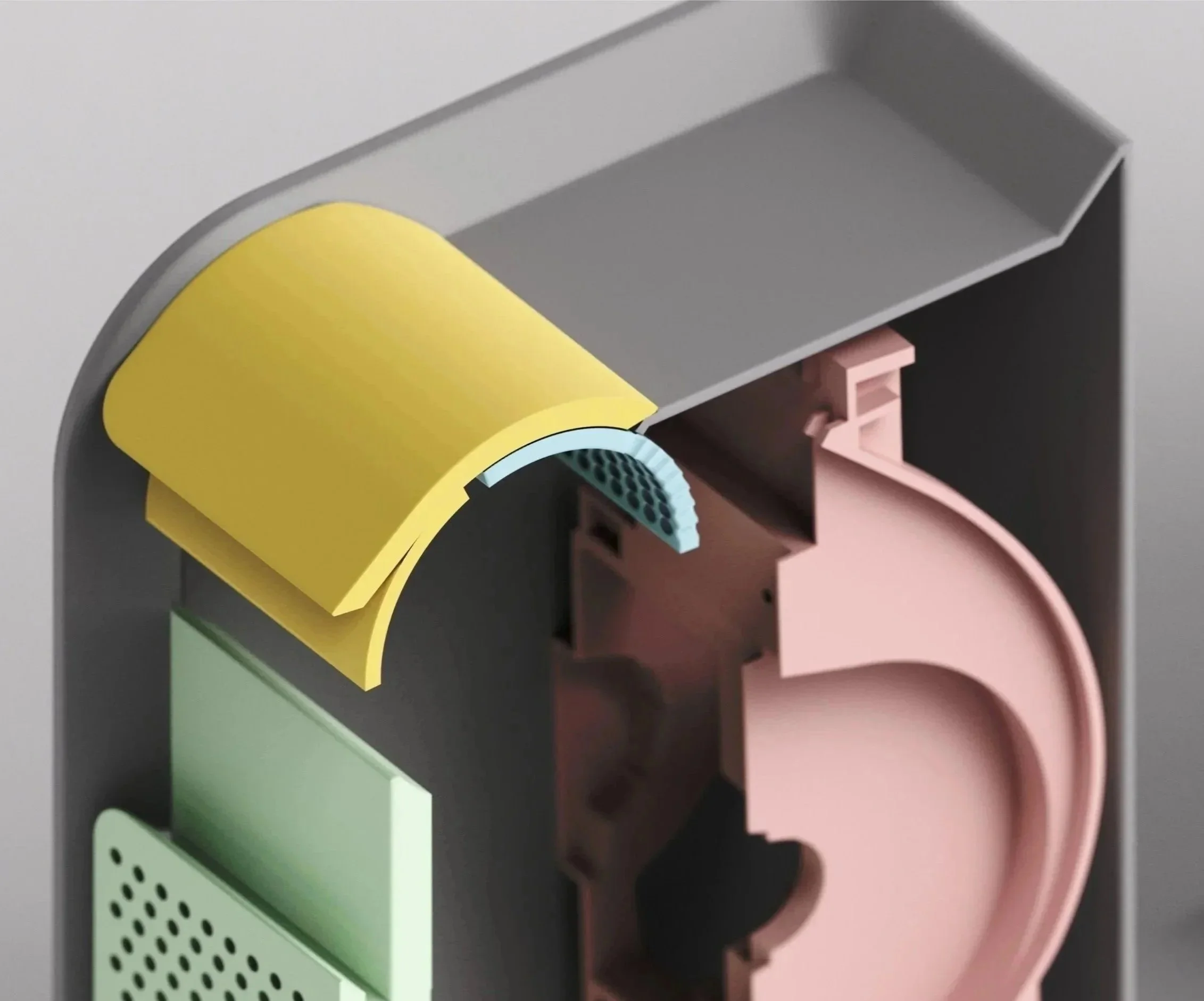
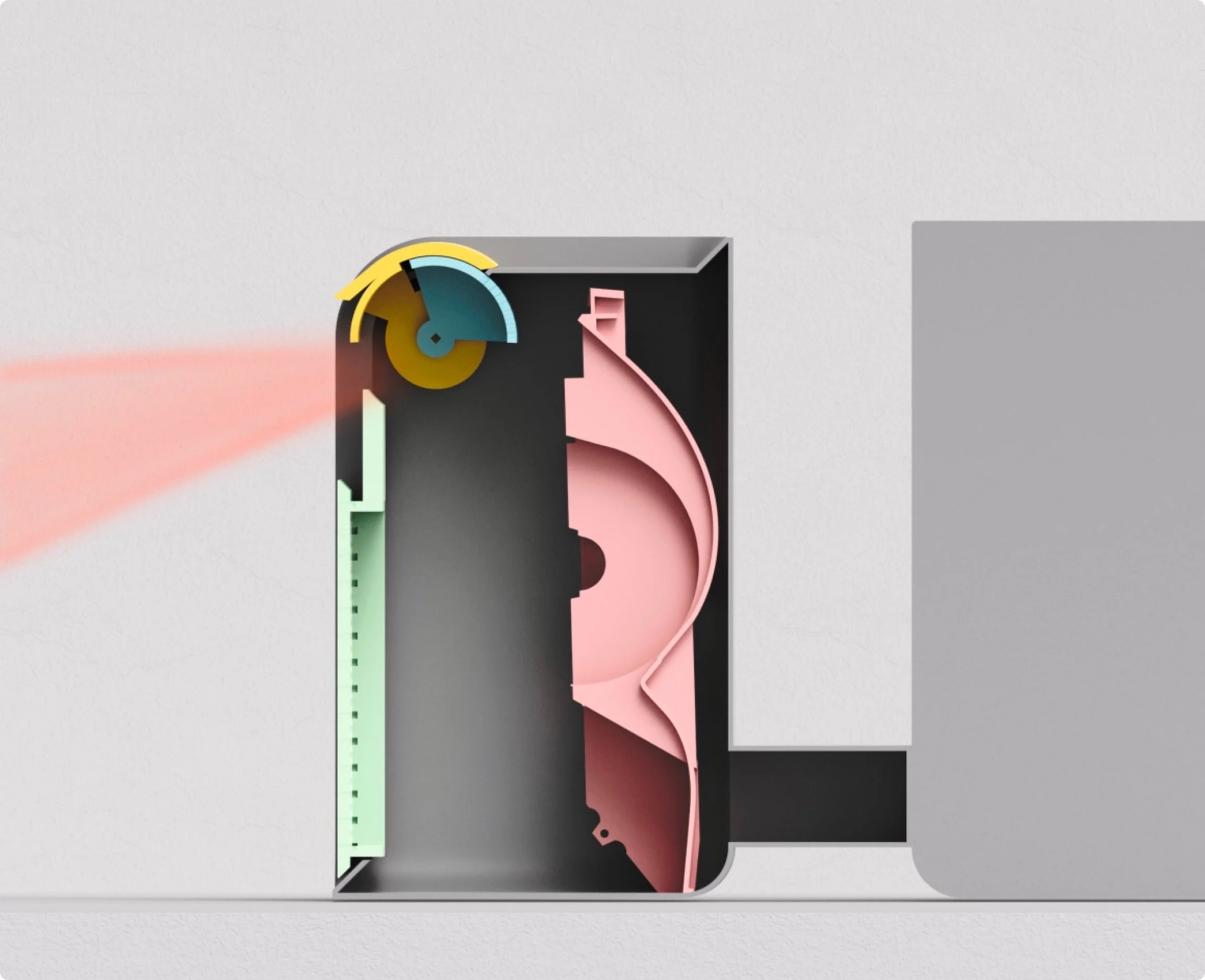
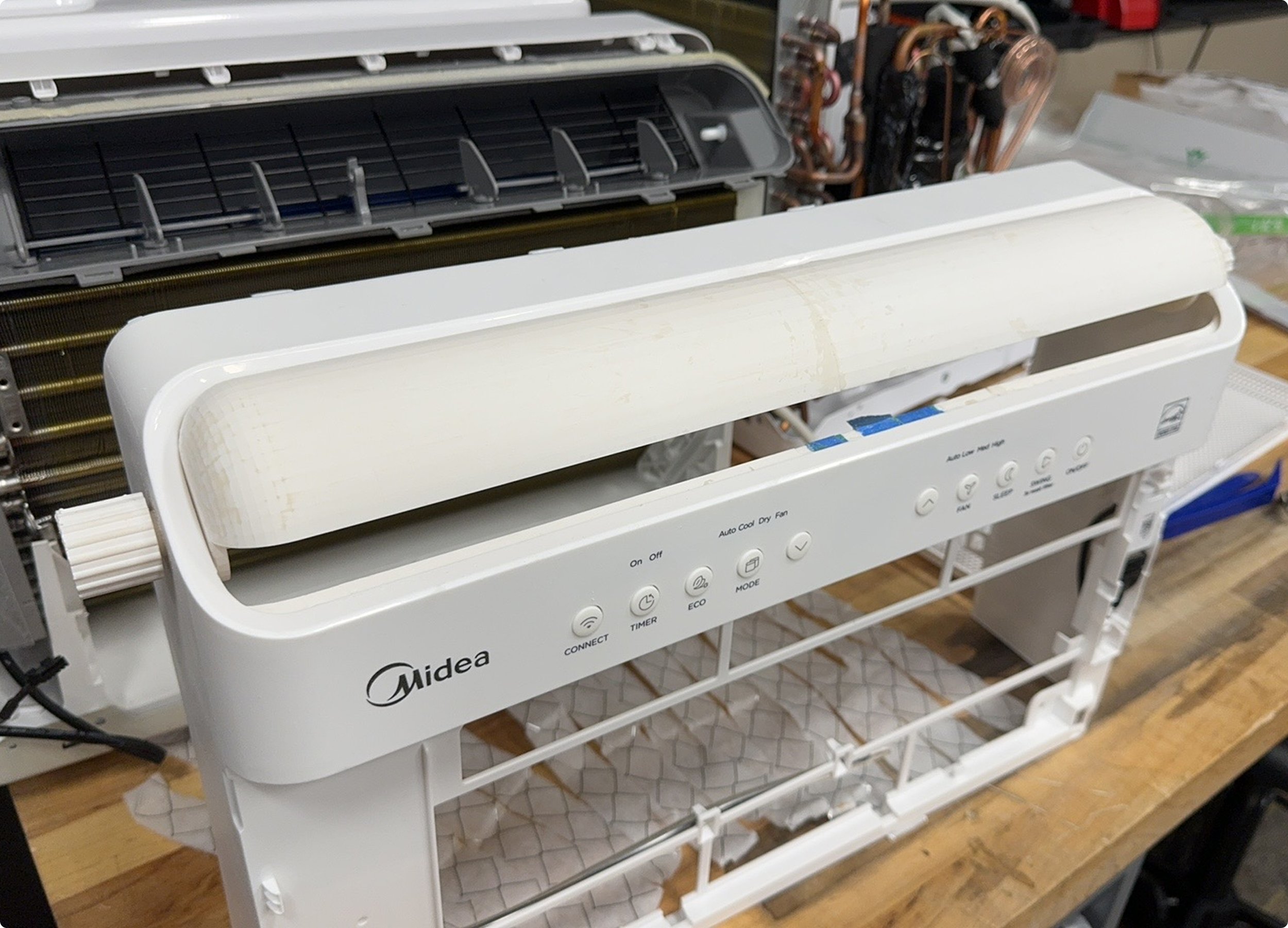
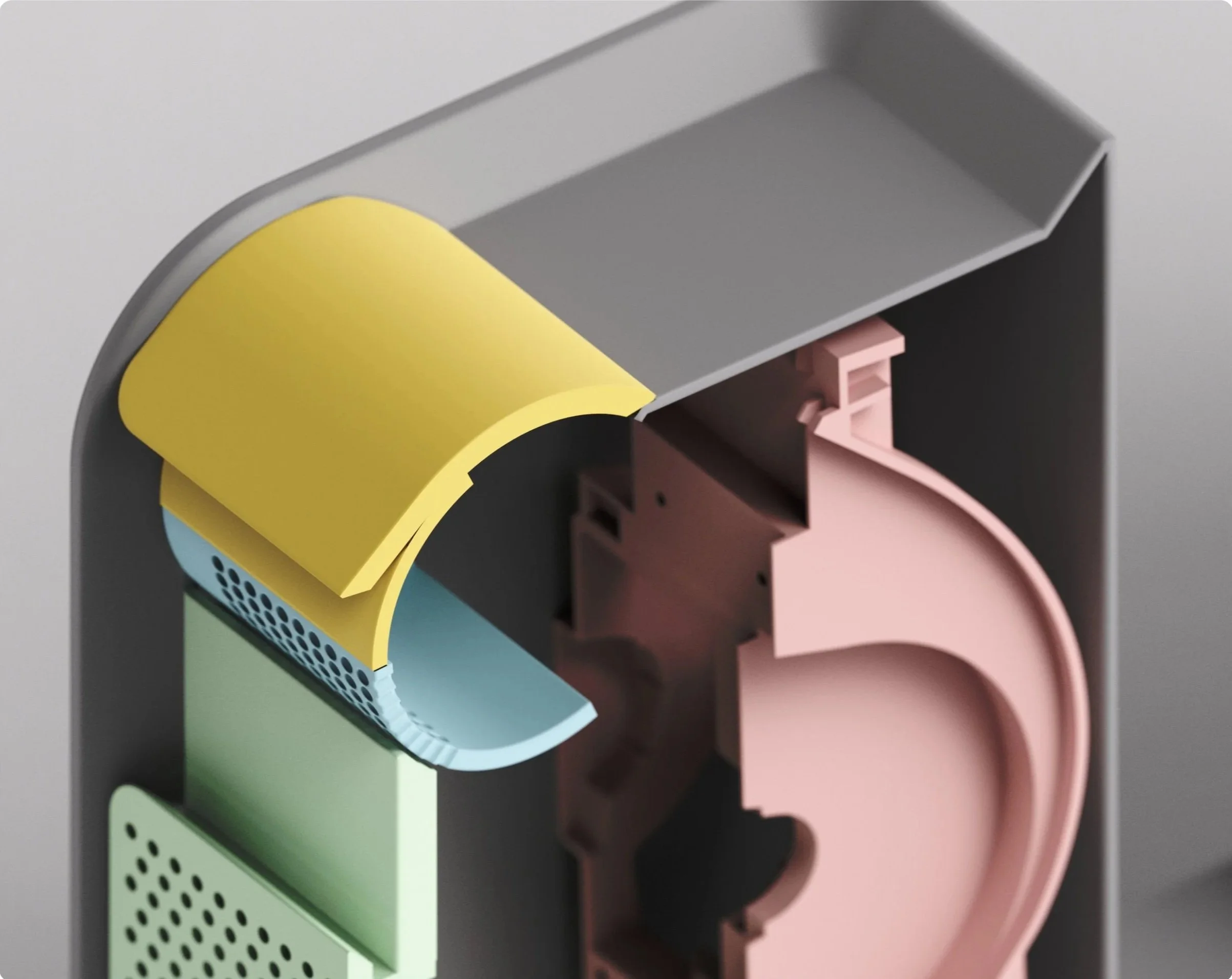
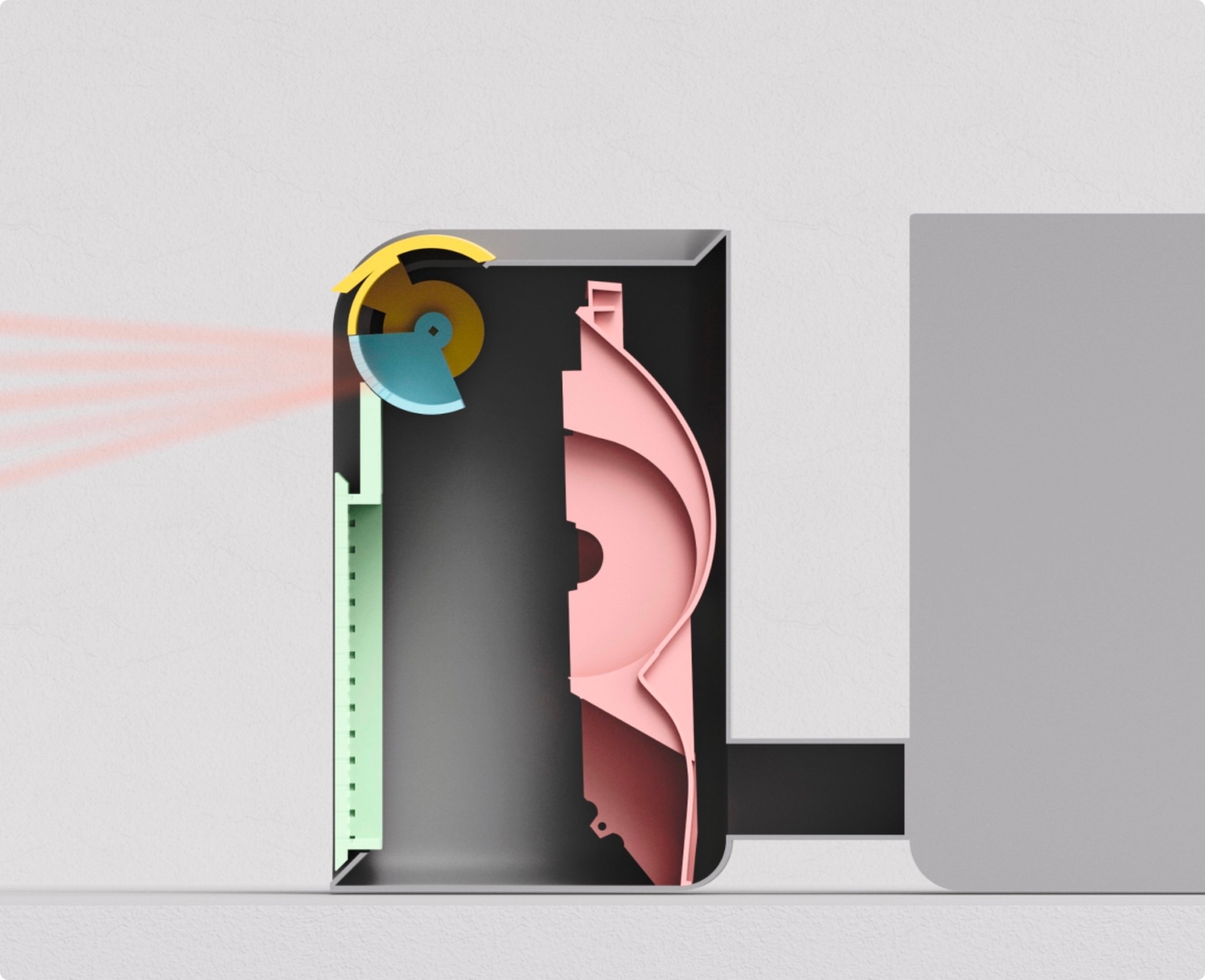
I installed the prototype on the first gen U-shaped window AC to test out the air flow. The louver can be manually controlled. This prototype effectively modulated the direction and strength of the airflow. This design was not implemented due to space constraints, however, it showed potential for a highly customizable air flow experience that was later considered for other platforms.
Design Innovation 3
Outdoor Unit
Outdoor units play a critical role in brand differentiation and in shaping a building’s exterior aesthetic. Most window air conditioners on the market feature nearly identical outdoor units—bulky housings with exposed fins and only minor variations in grille or hole patterns. It is usually very difficult to tell which brand of window AC is installed in a window from the outside.
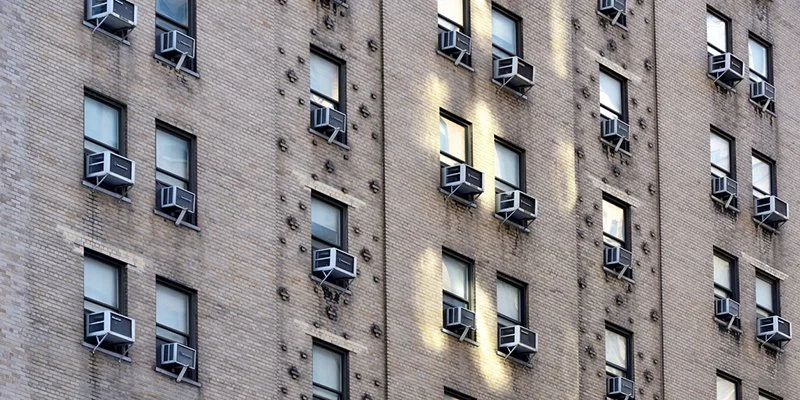
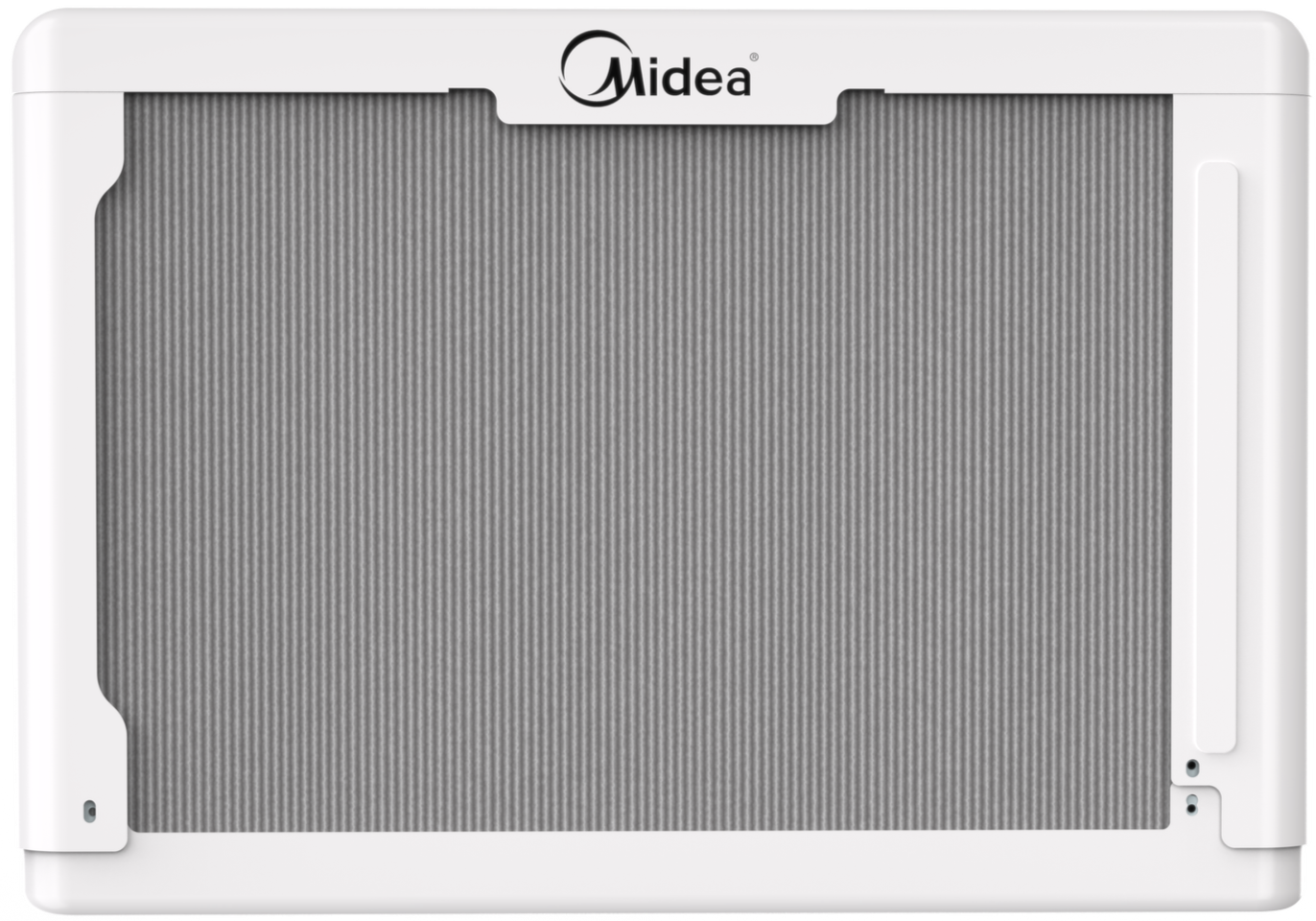

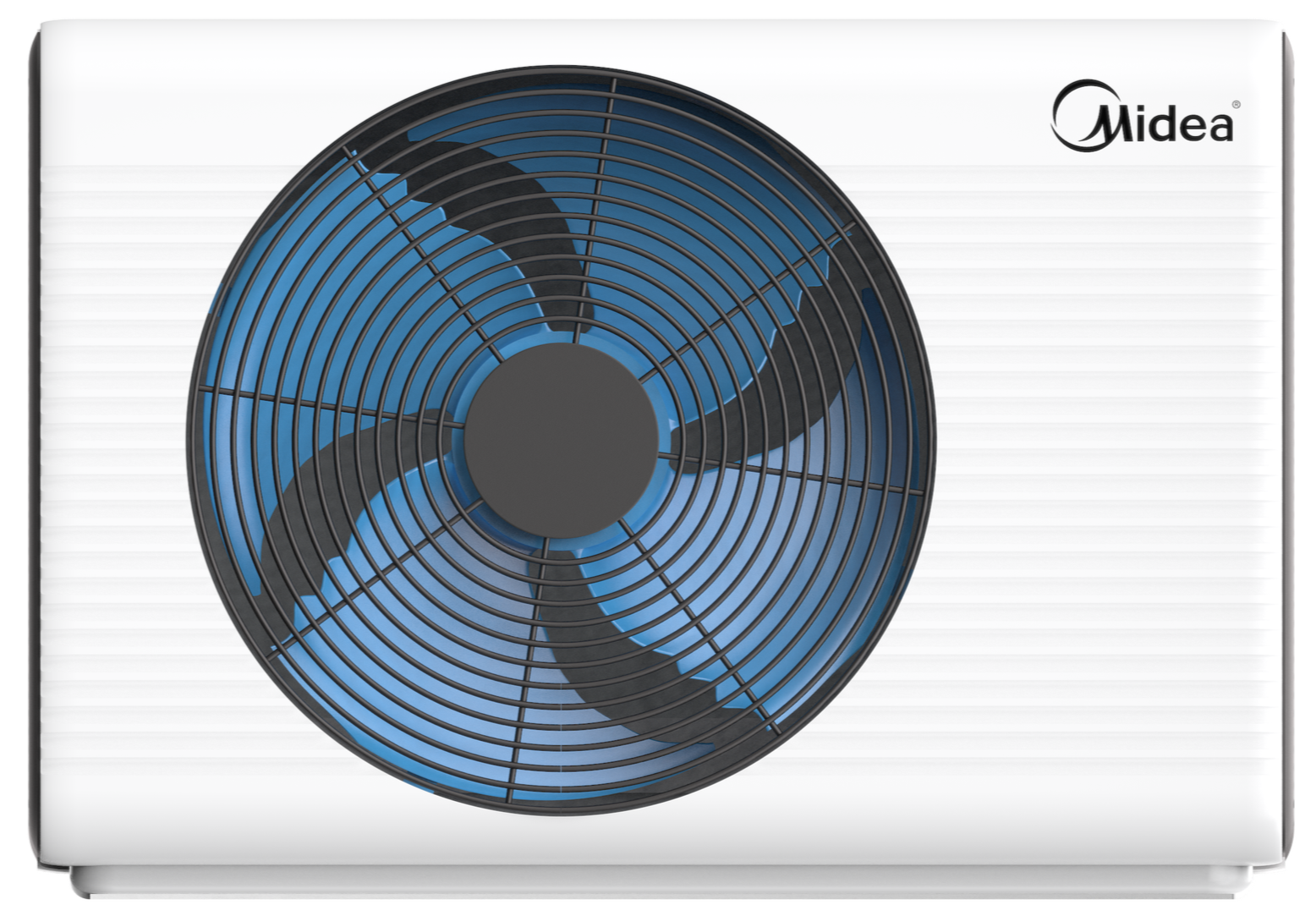
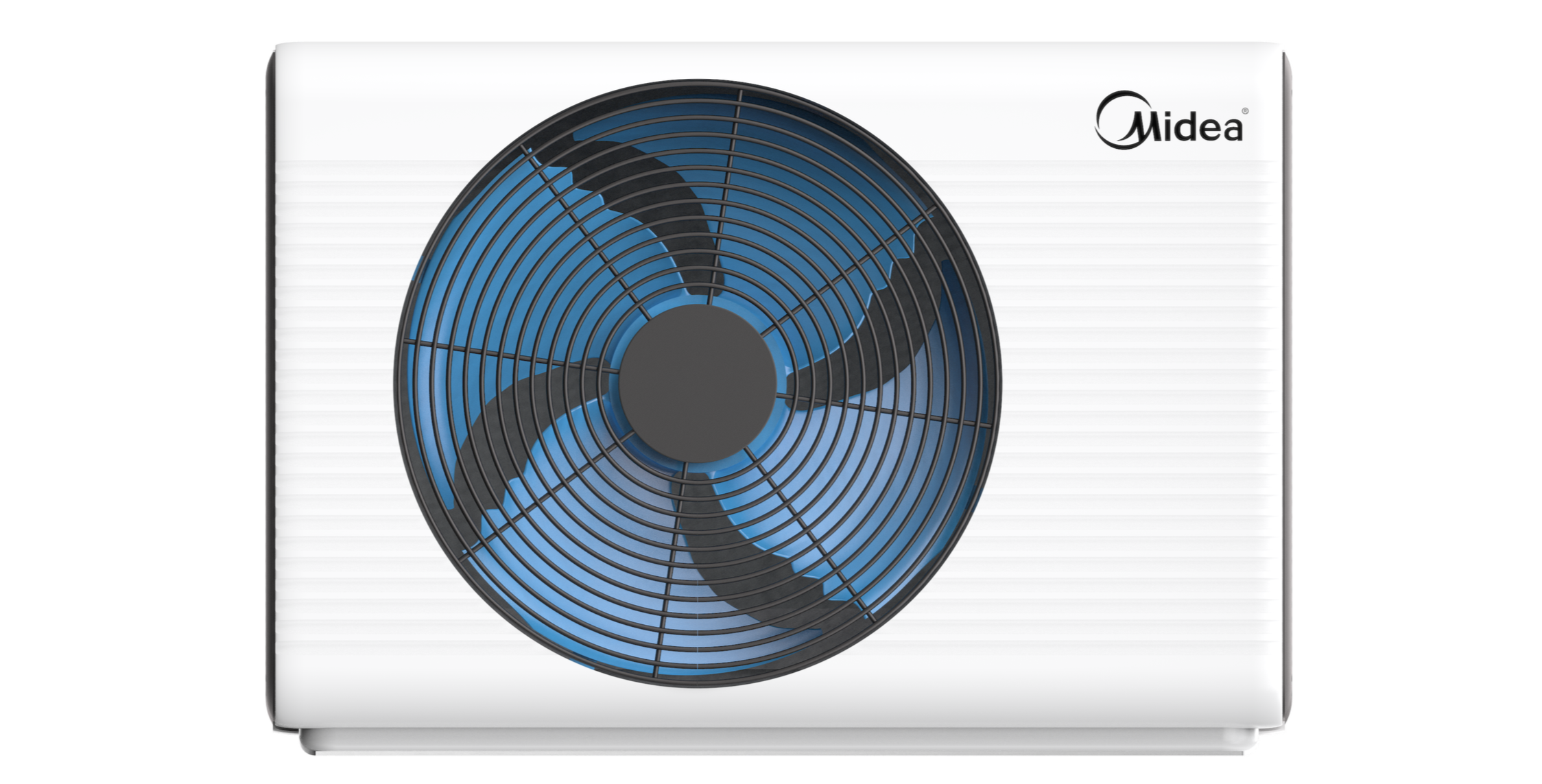
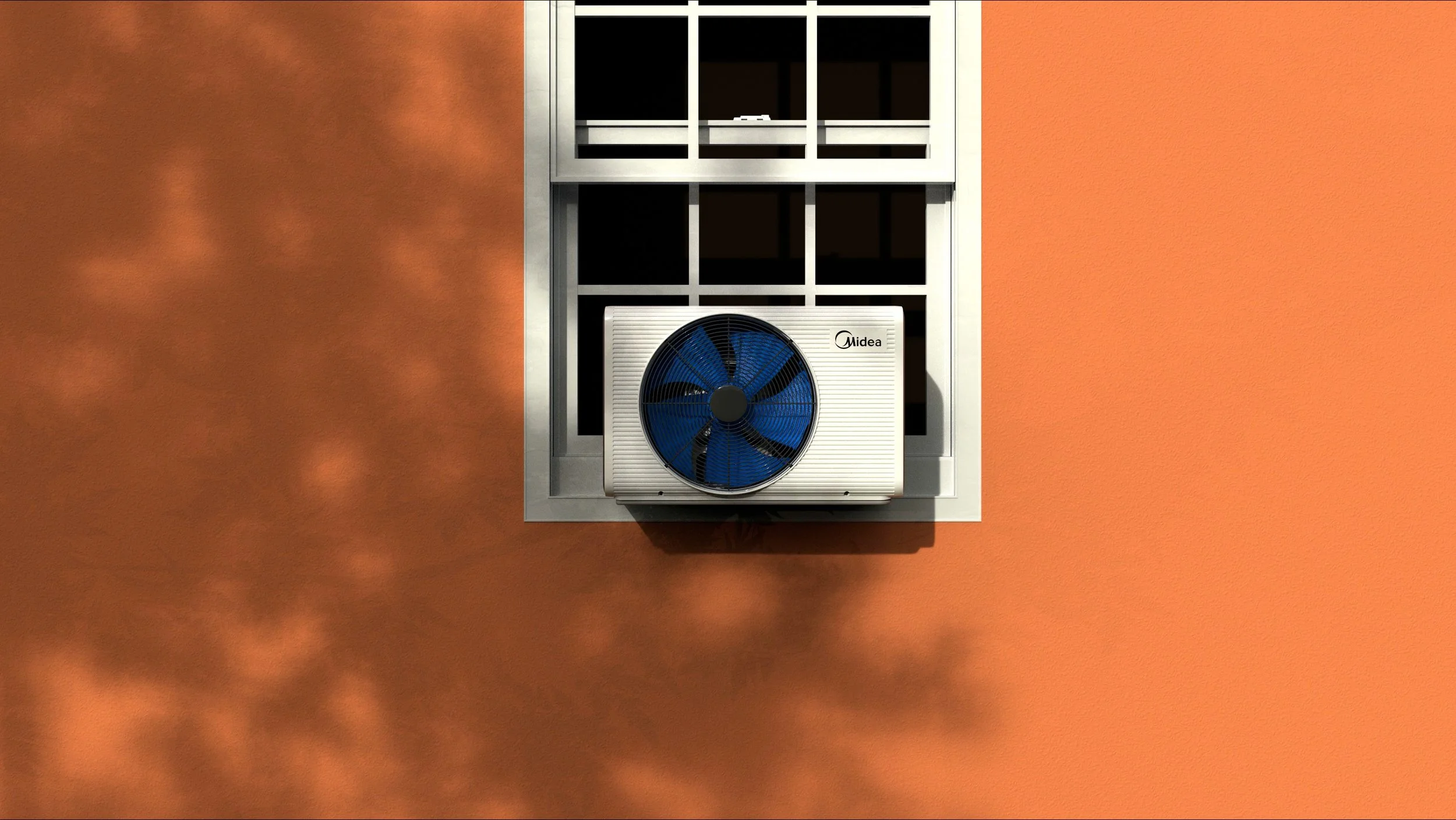
U2 introduces an entirely new architecture that eliminates exposed fins, positioning the fan outwards. It adopts a clean, enclosed design similar to a mini-split system, preserving the visual integrity of the building façade. As heat pump technology remains unfamiliar to many consumers, U2’s distinctive outdoor design serves as a visual differentiator and a catalyst for consumer education and curiosity around this new product category.
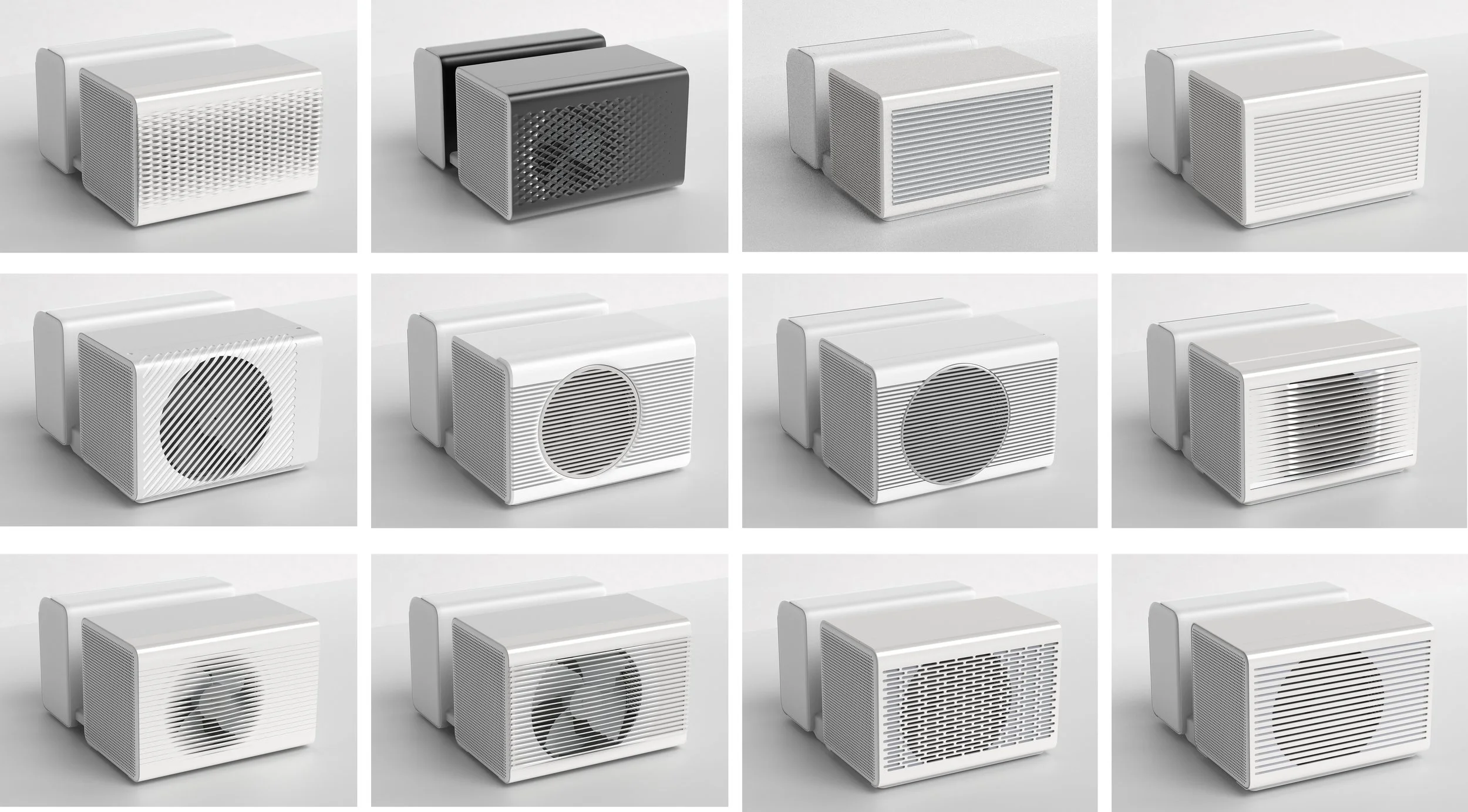
I explored a range of grille patterns aimed to accentuate the fan, integrate the unit with the building, and introduce a memorable branding motif. The concepts draw inspiration from architectural façades that manipulate surface opacity, as well as sheet-metal techniques that create texture and depth. .
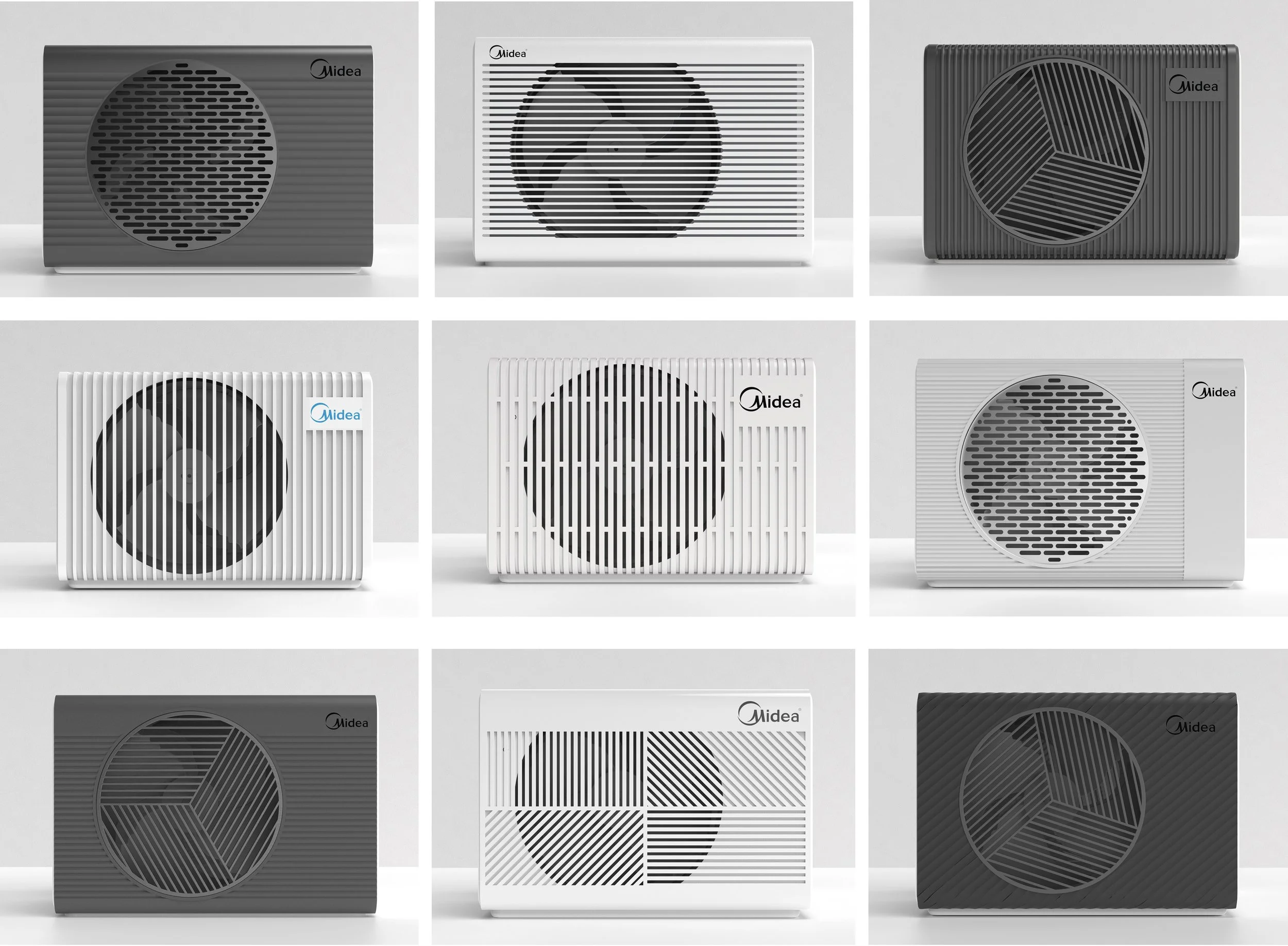
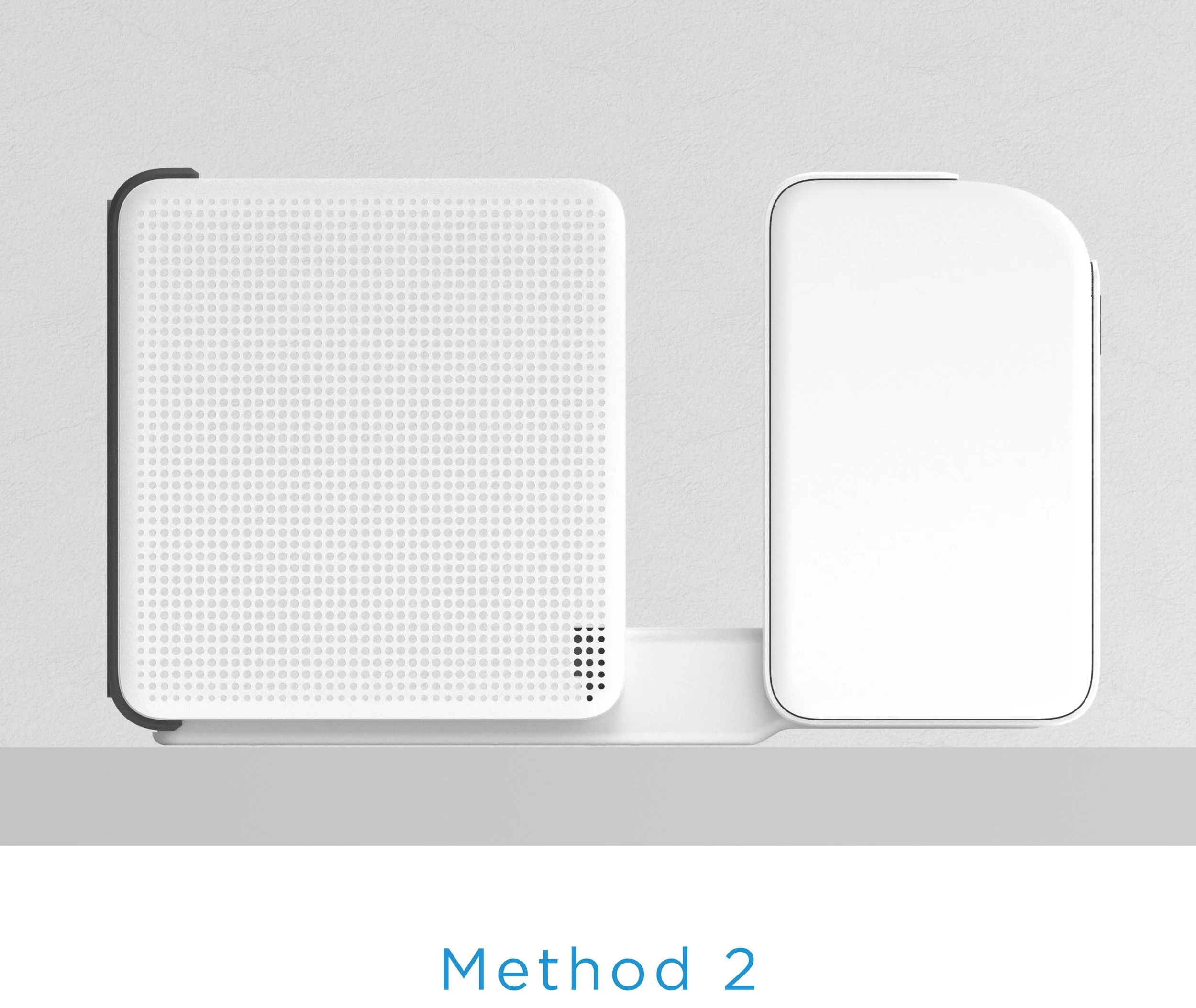
Logo placement and overall composition helped guide the design direction. It was tricky to introduce patterns and textures on the back panel while maintaining continuity with the wrapped-around sleeve. The two main approaches I had was framing the pattern right before the fillet, or creating a separate back panel attached to the sleeve.
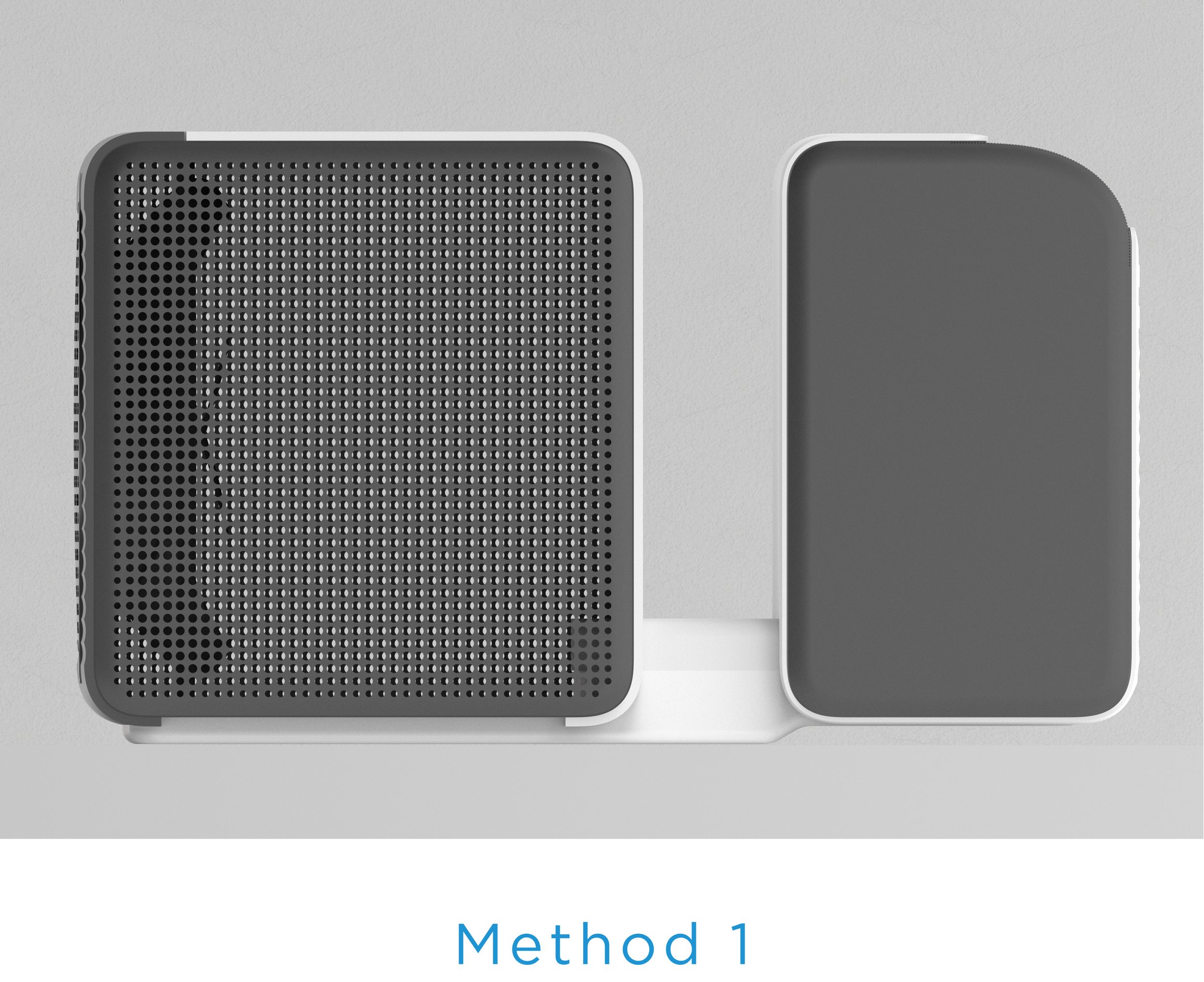
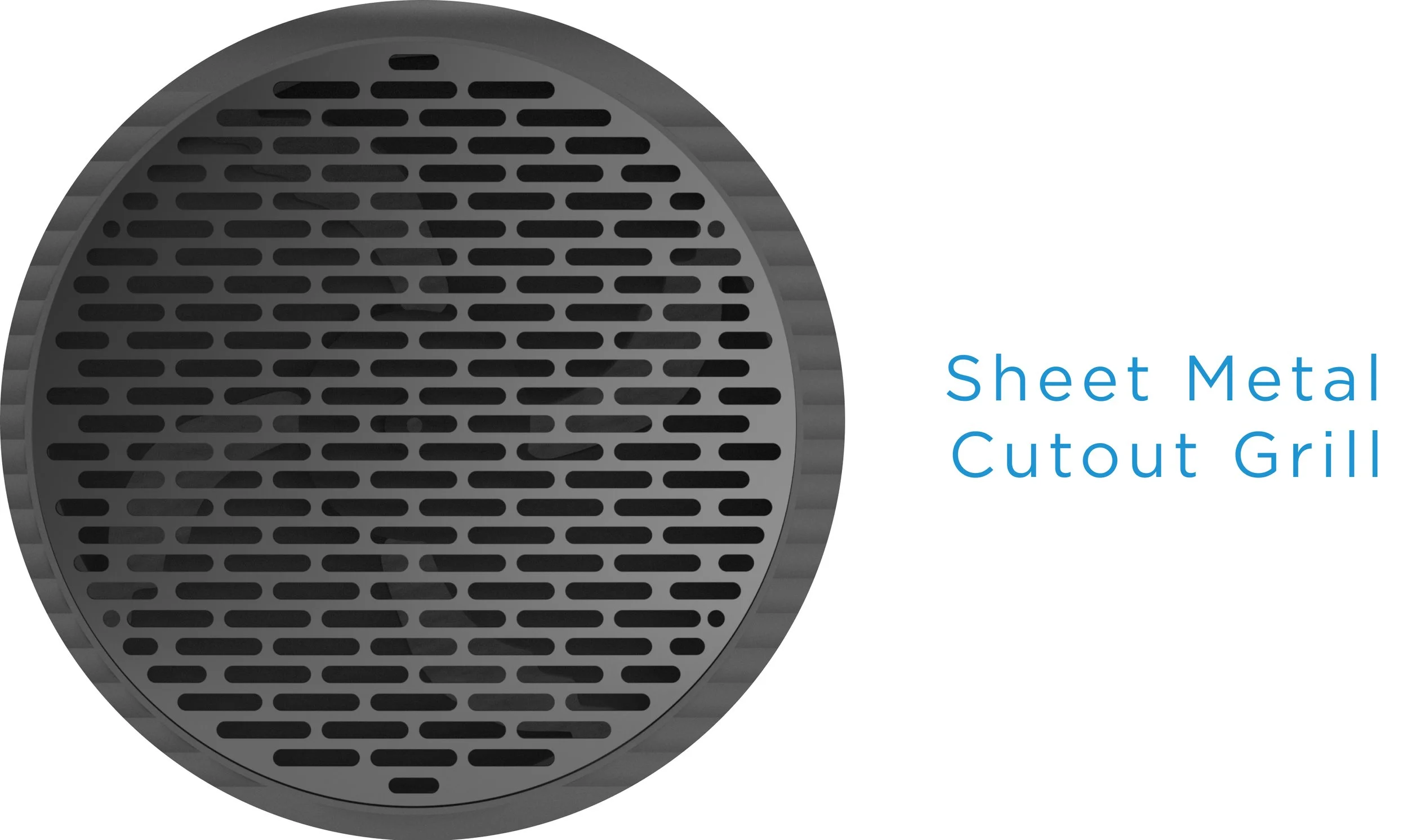
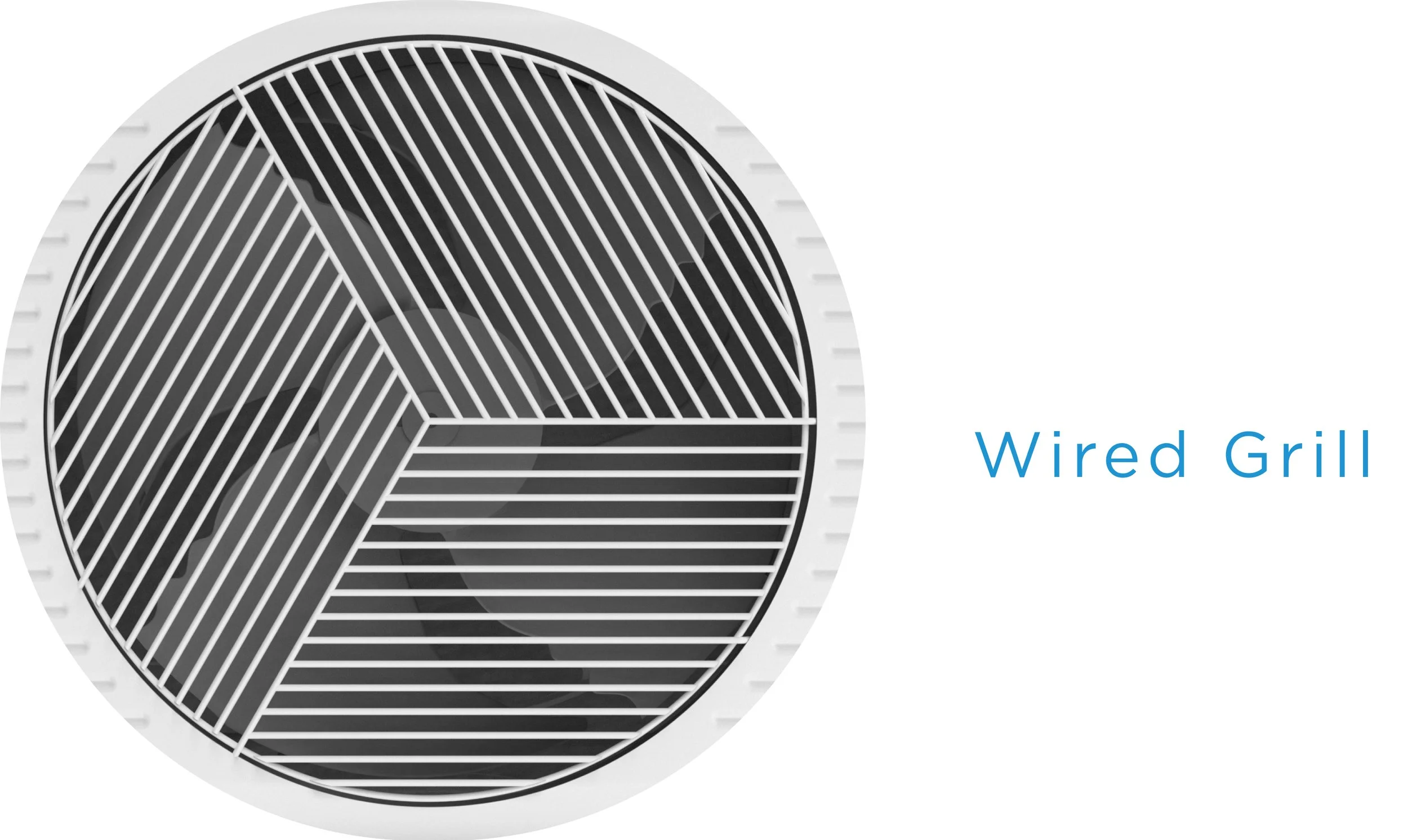
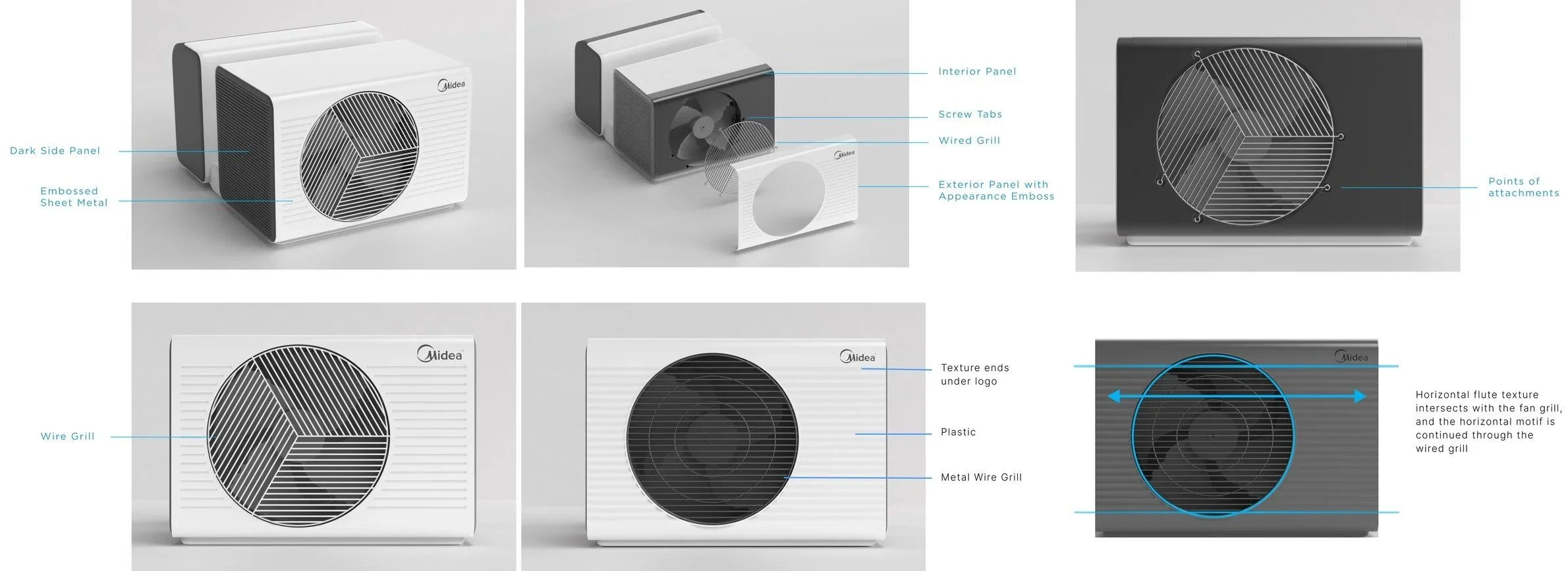
Outdoor unit is primarily sheet metal construction, allowing for white finish without color degradation over time. In some designs, I combined sheet metal chassis with plastic back panel since plastic provided more flexible geometry. There were two main fan grill construction methods: welded wired metal and sheet metal cutout. After testing the airflow, wired grill was favored as it created much less air resistance.
Ultimately, we went with the horizontal flue texture. Its composition echoed with PWHP (one of the prominent Midea heat pump products). The horizontal motif intersects with the circular grill and is continued through horizontal wiring pattern. However, later, the grill pattern was changed to circular spiral pattern due to ease of manufacturing.
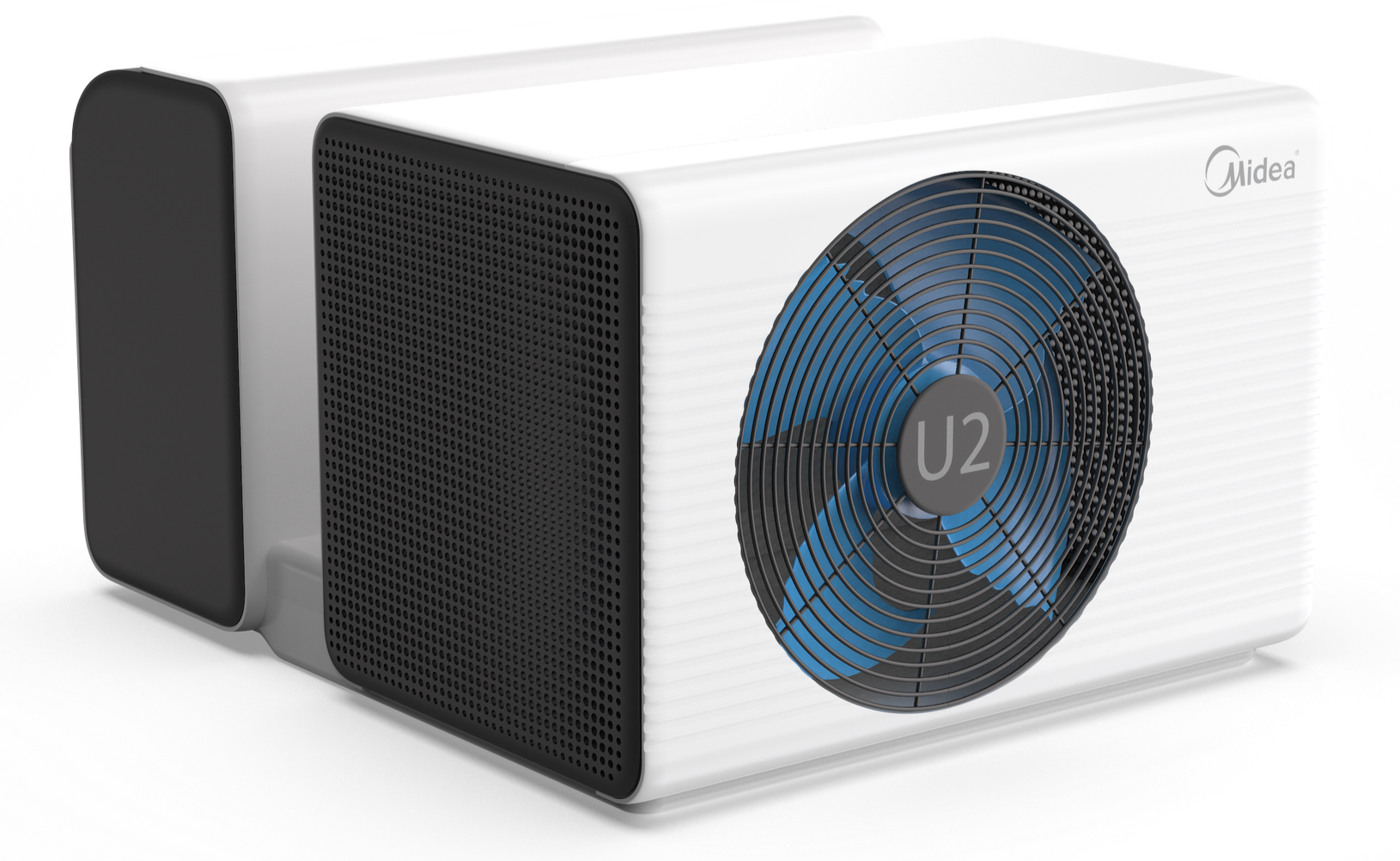
For the final design, the wrap-around housing was kept as a single material and color to avoid metal-to-plastic seams that could age differently over time. The horizontal fluting texture enables a flexible translation across both plastic and sheet-metal constructions, allowing the design to adapt to potential late-stage development changes. The fan grille’s spiral pattern reduces part count while incorporating a central circular plate that conceals the fan hub and provides an opportunity for branding or product messaging.
Design Innovation 4
CMF Exploration: Color Blocking
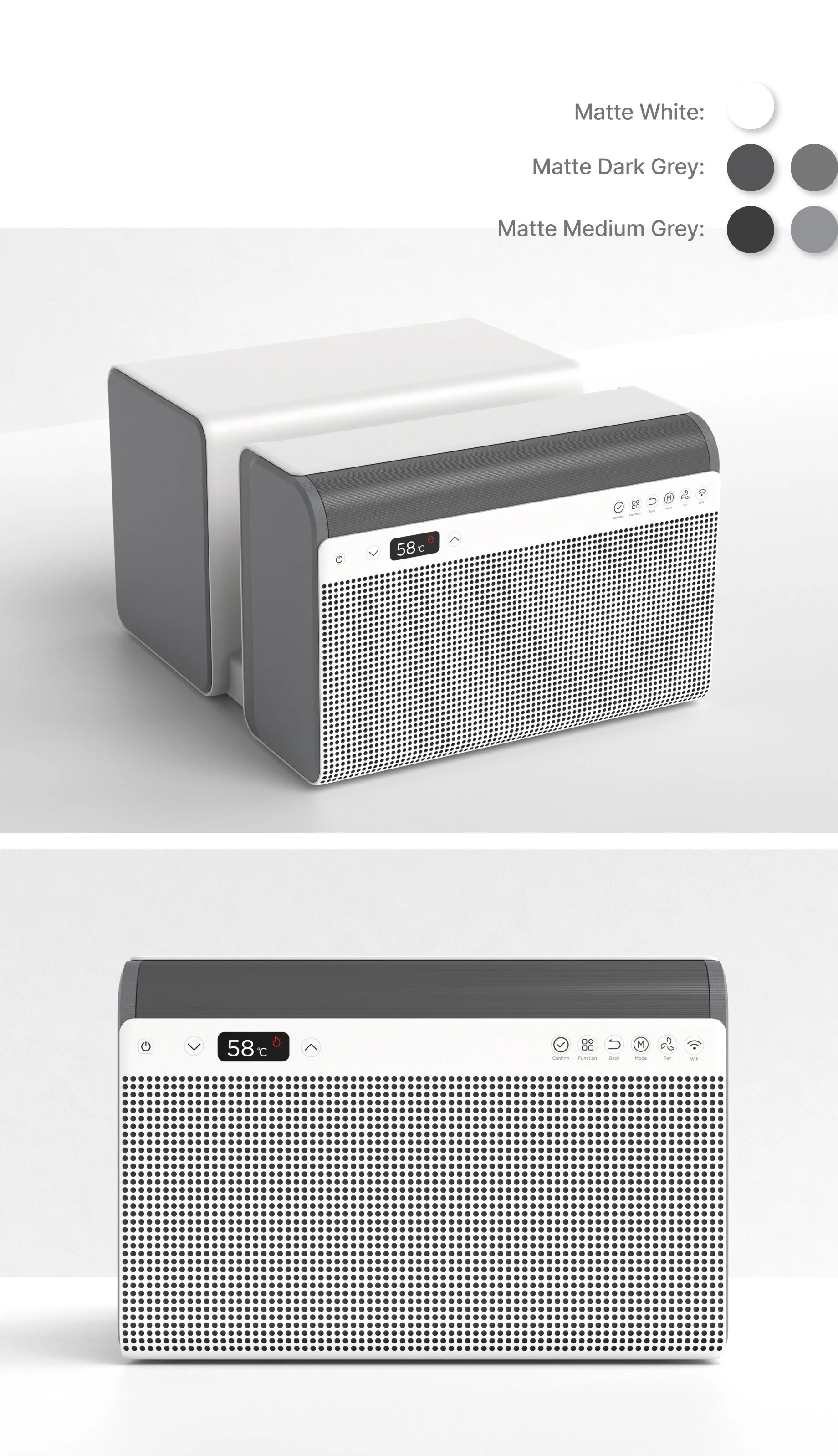
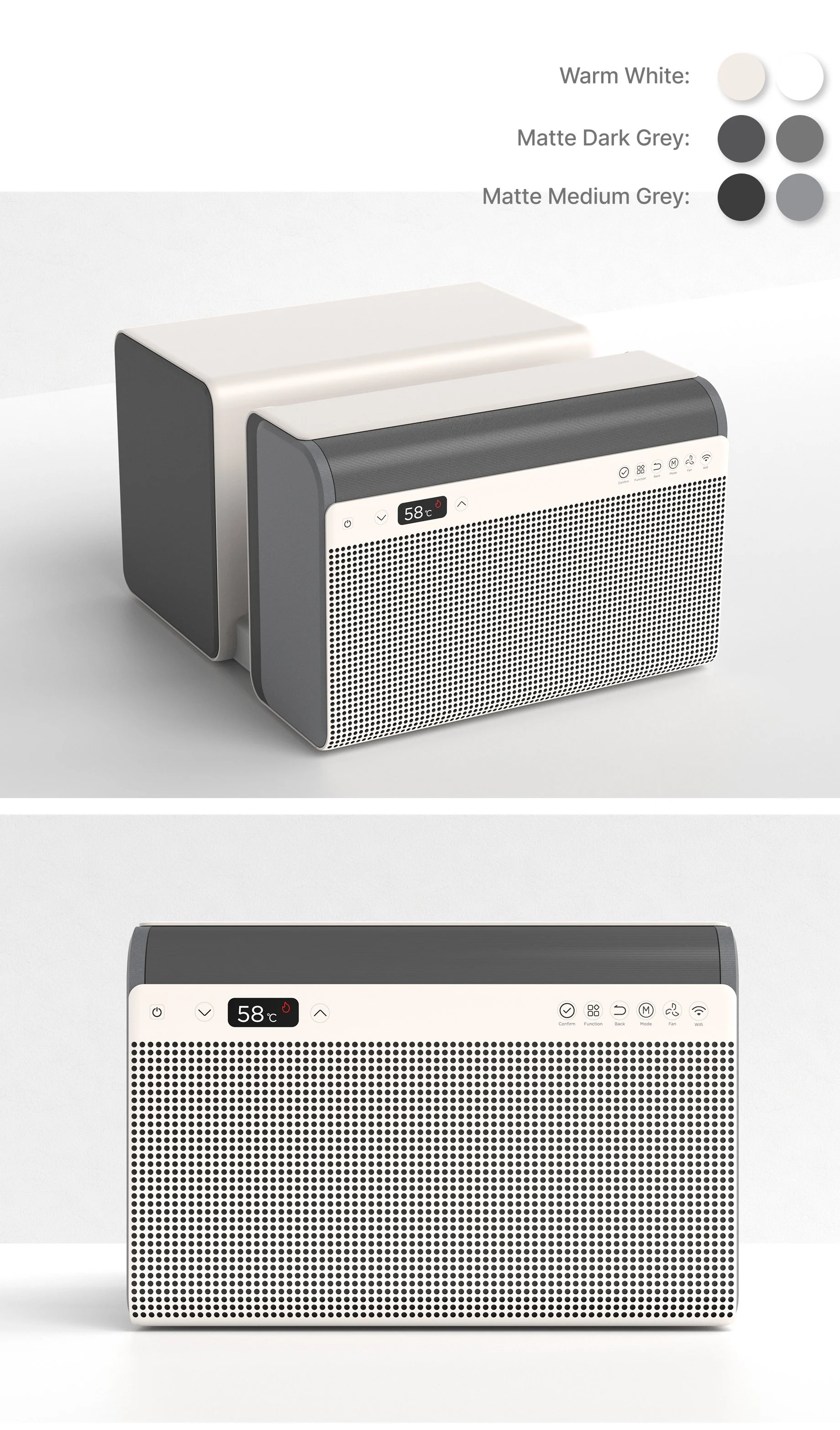
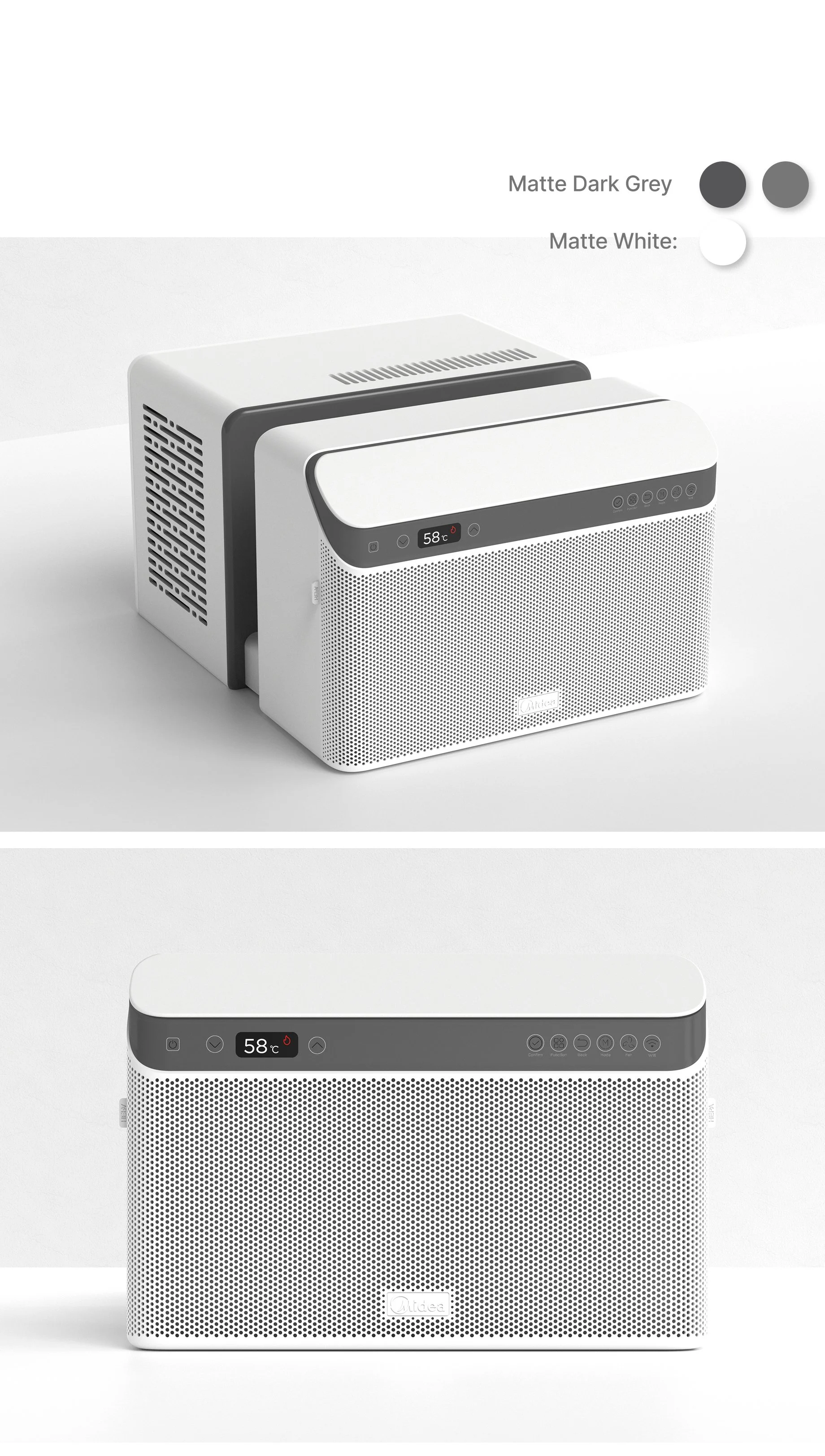
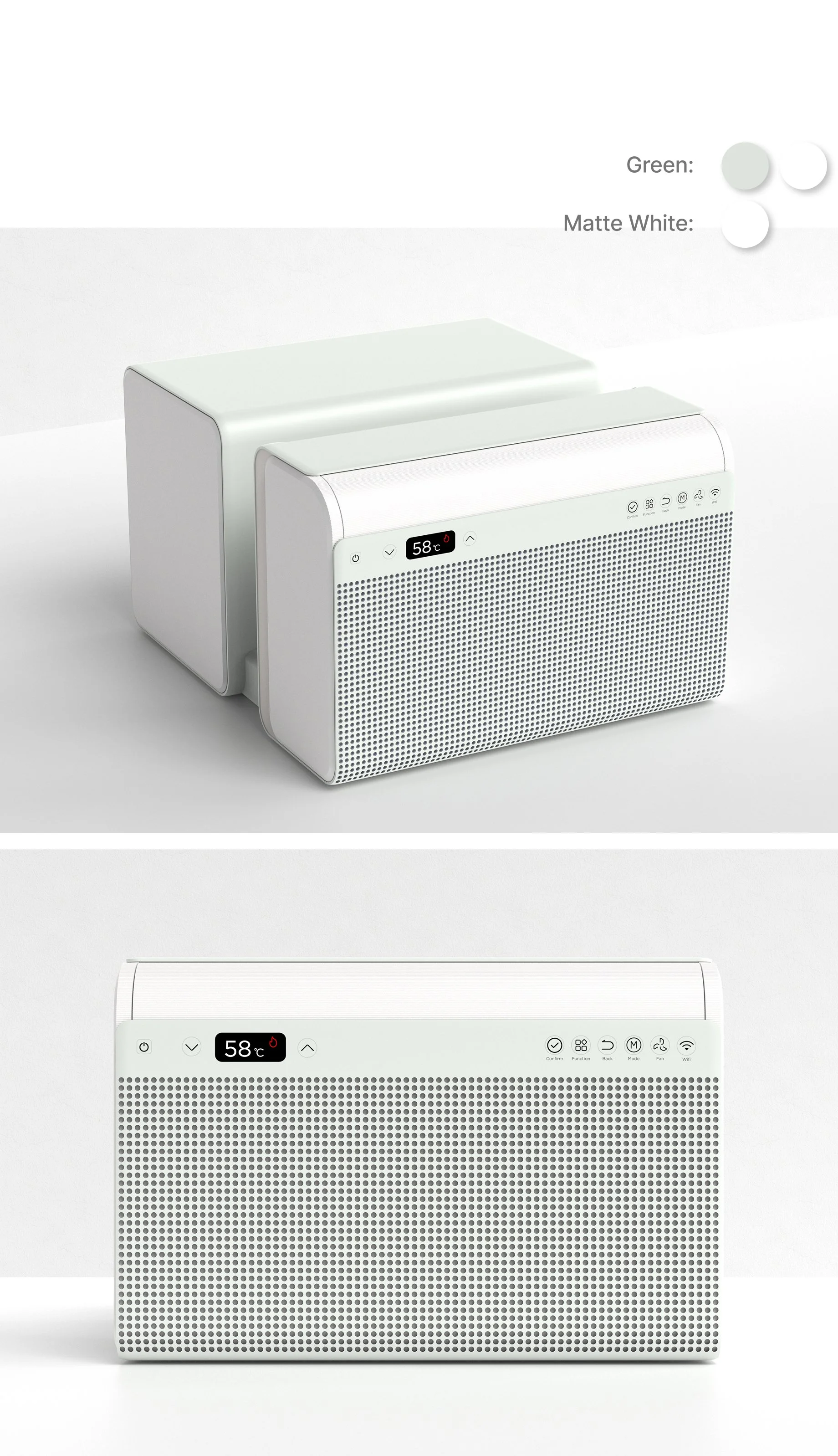
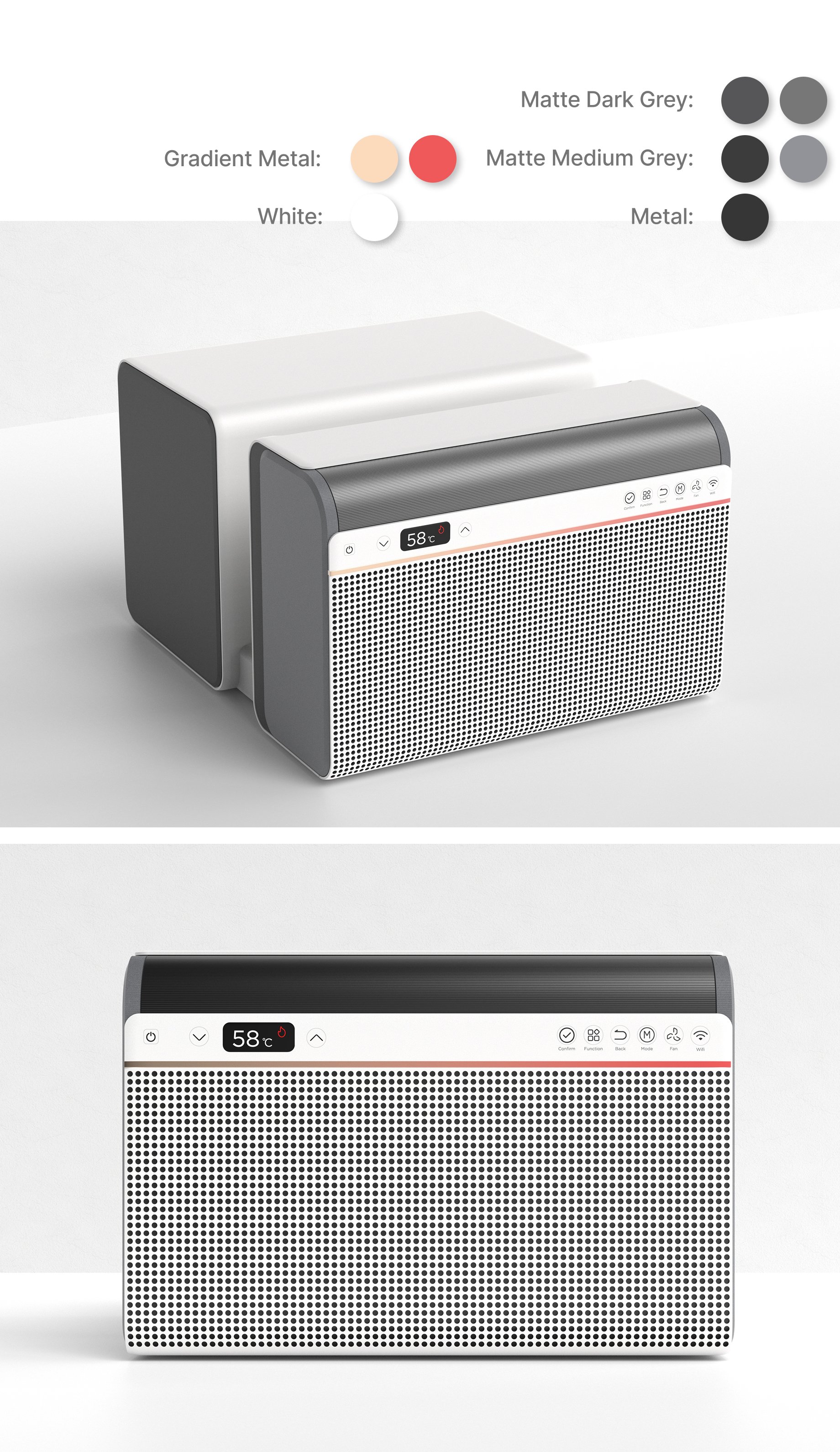
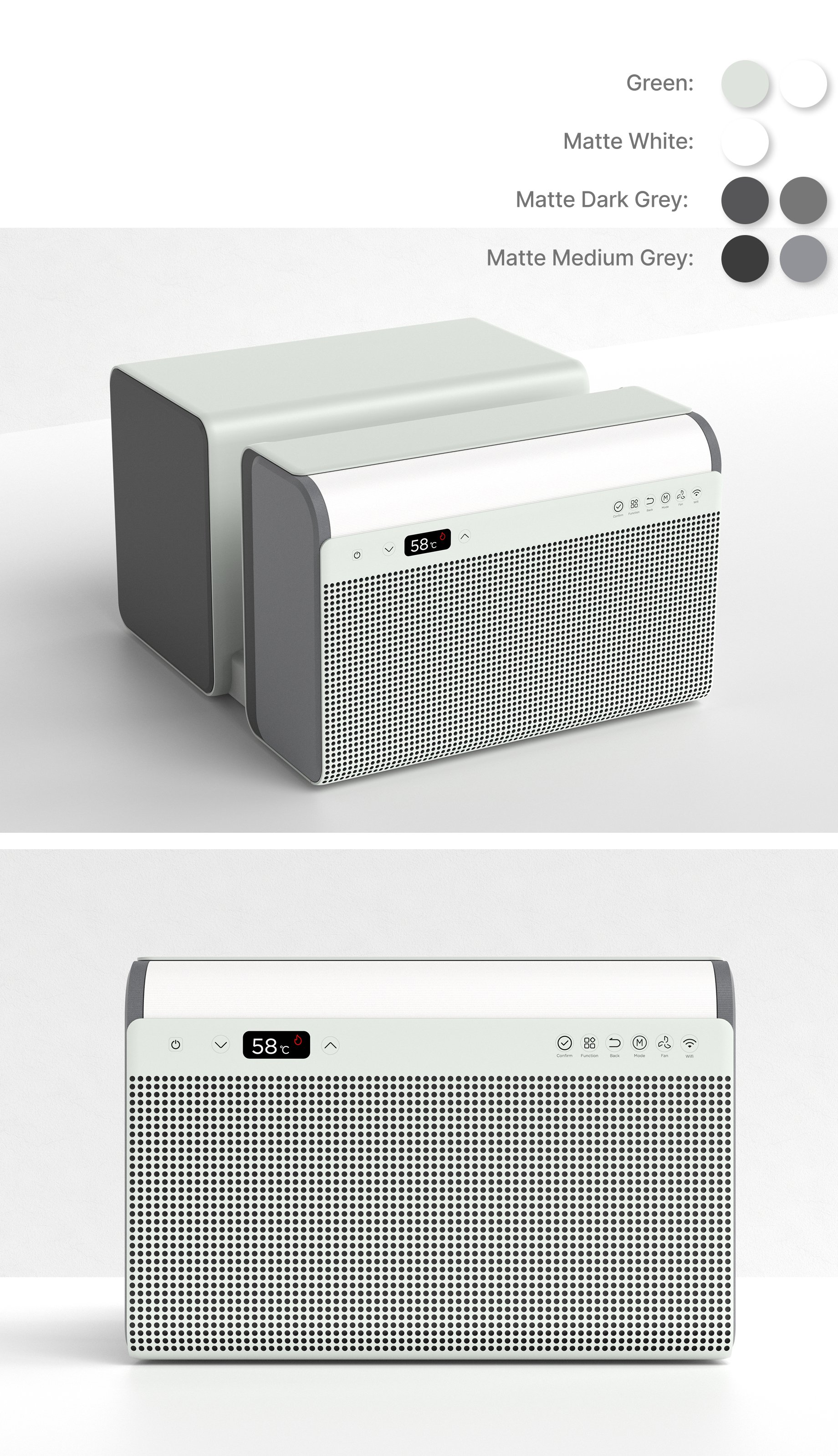
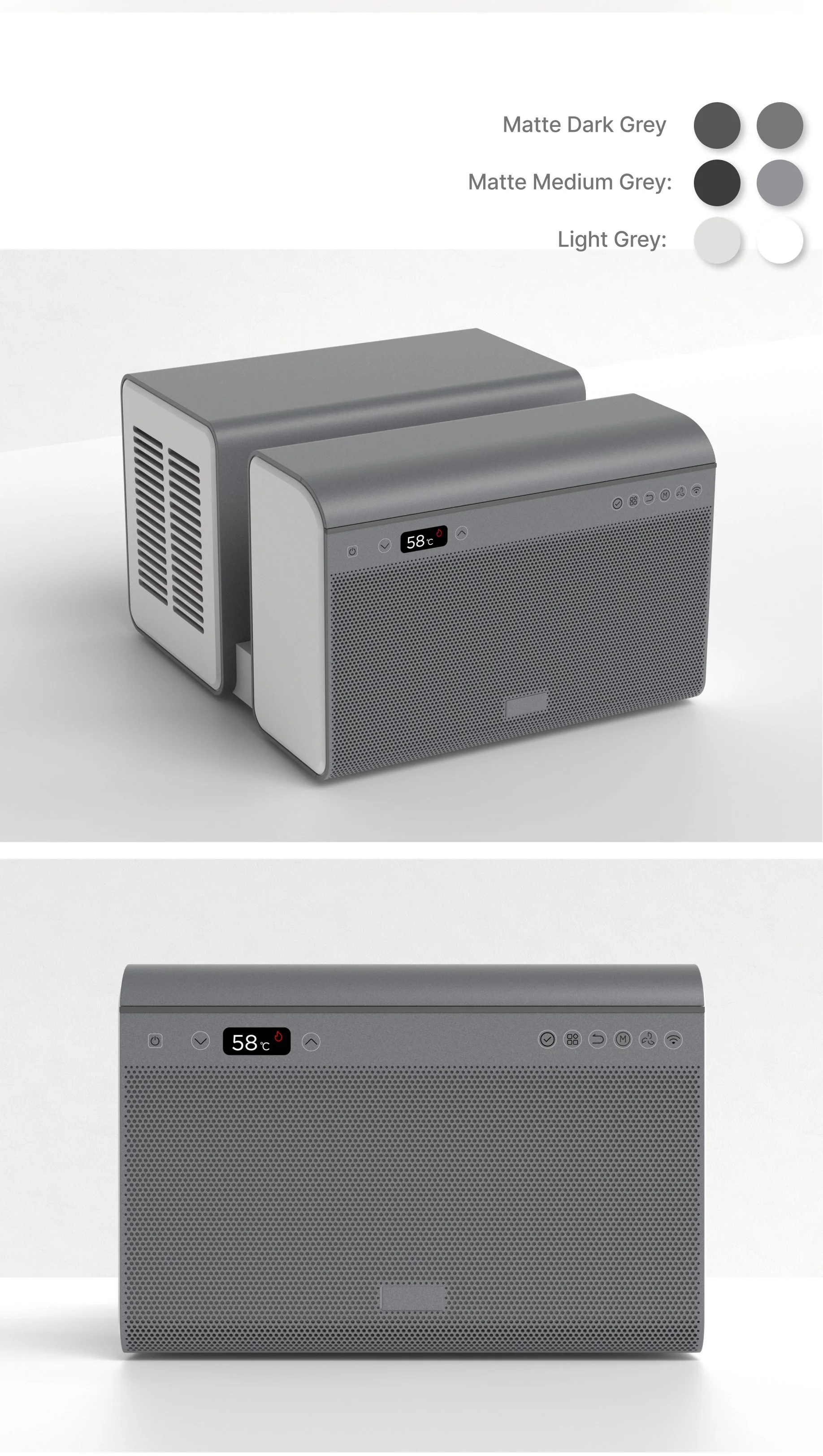
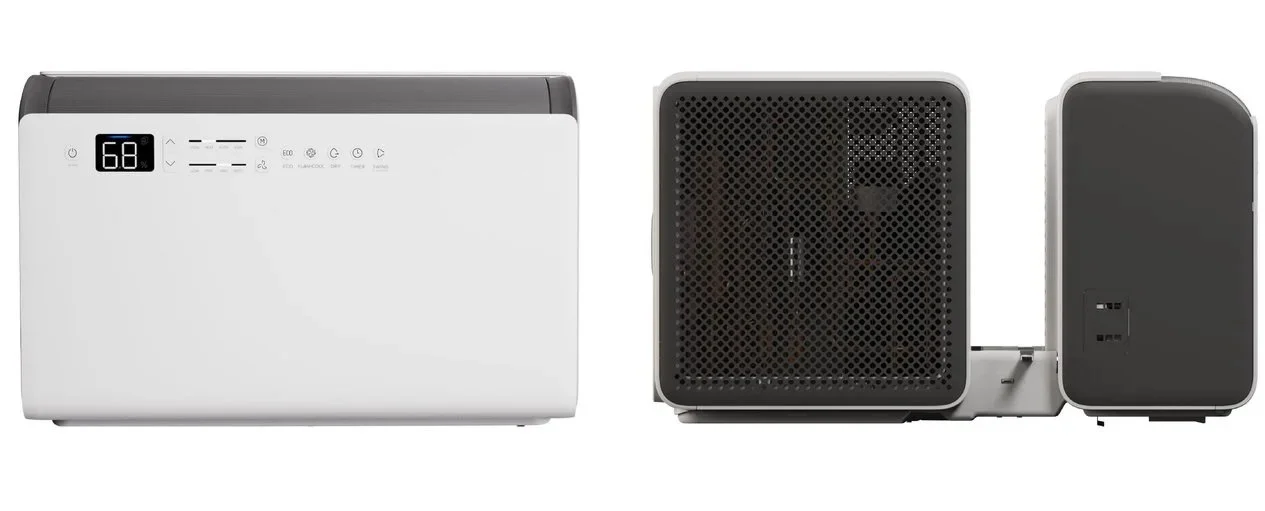
We used two colors to visually break apart the mass of the body. making the wrapped feature a lighter color and the bulk of the body a darker grey color. The contrast creates a secondary layer of hierarchy that exaggerates the proportion, setting the bulk of the unit back, overall making the design slimmer.
CMF Exploration: Color Blocking
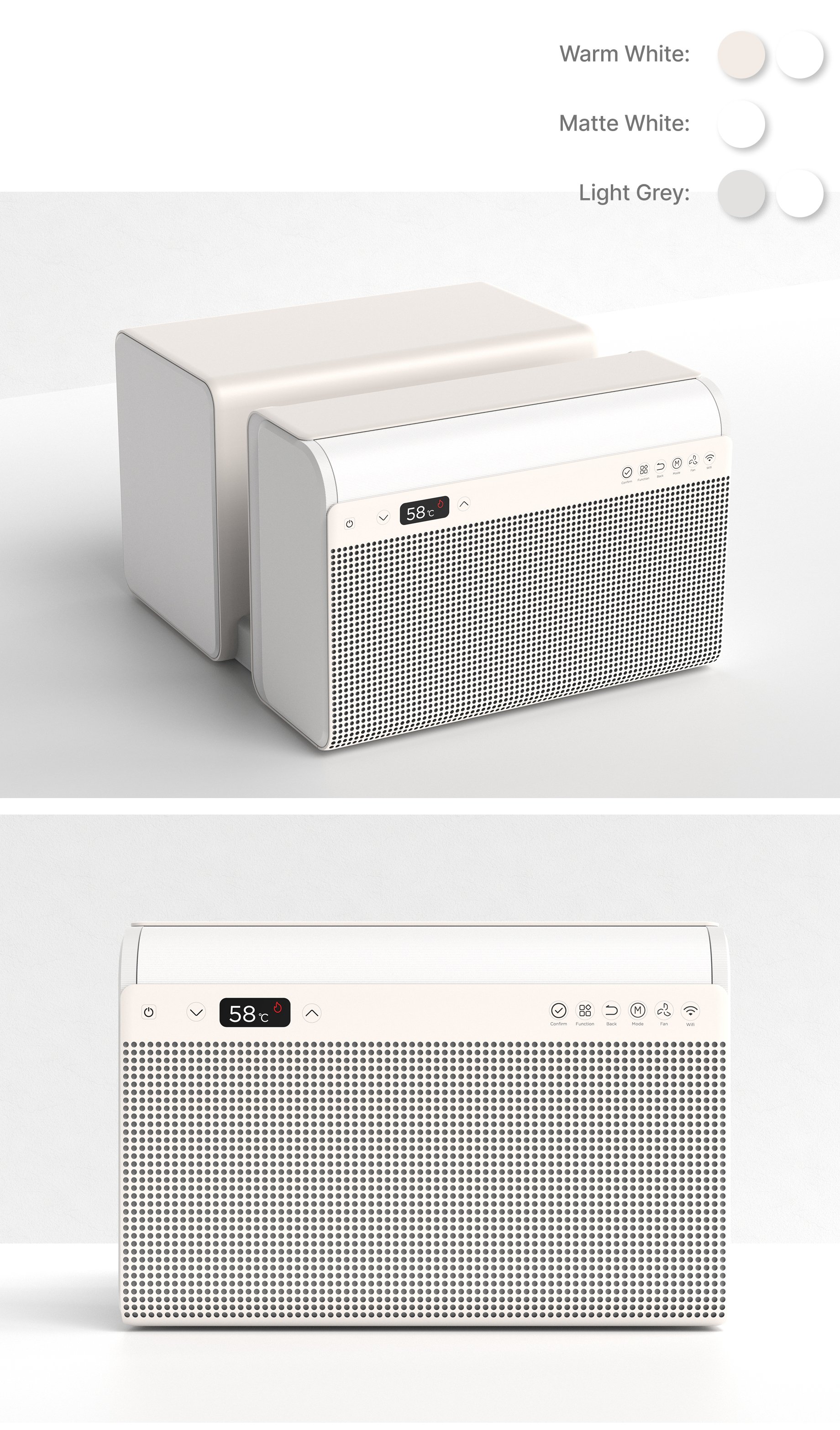
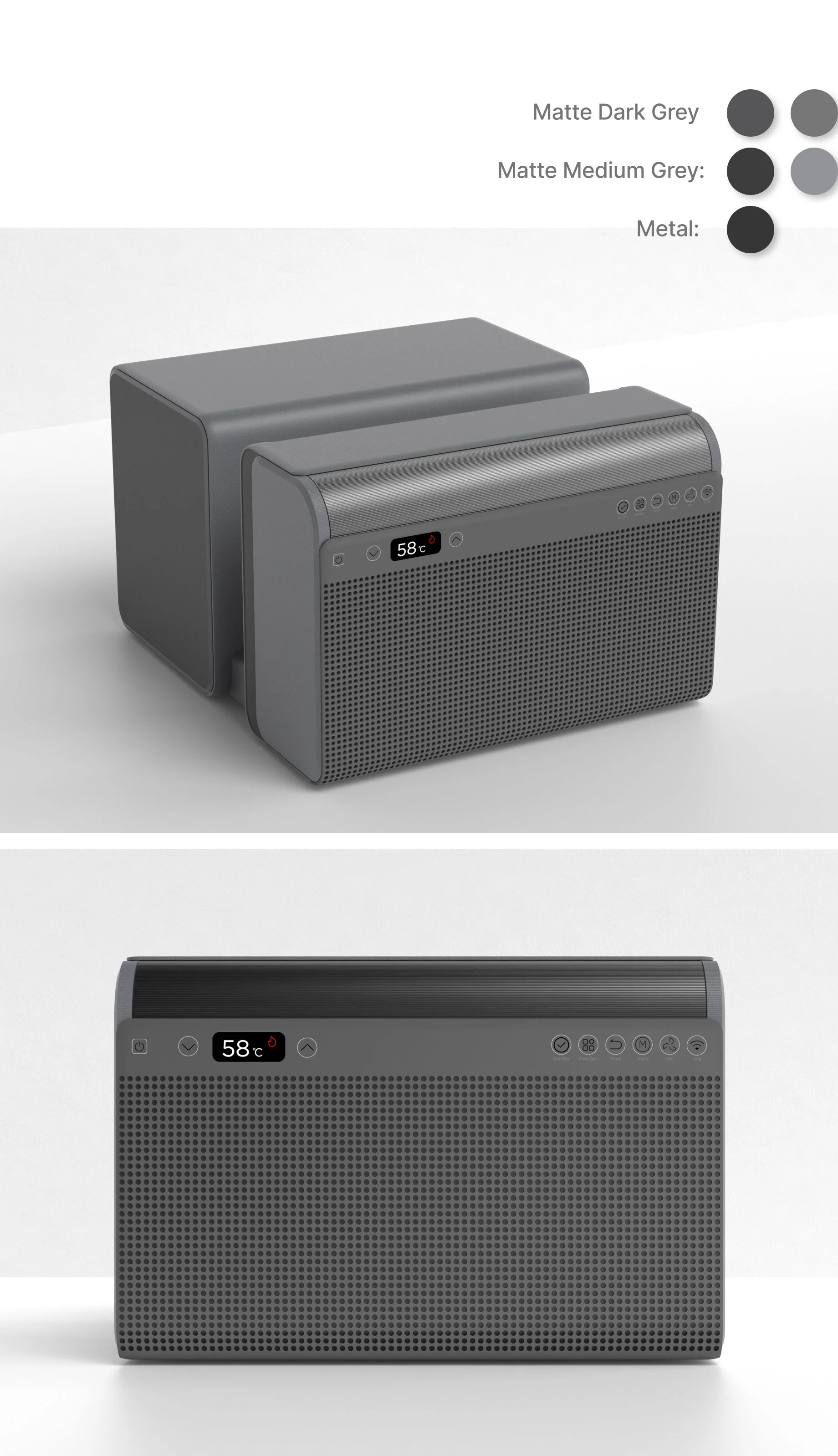
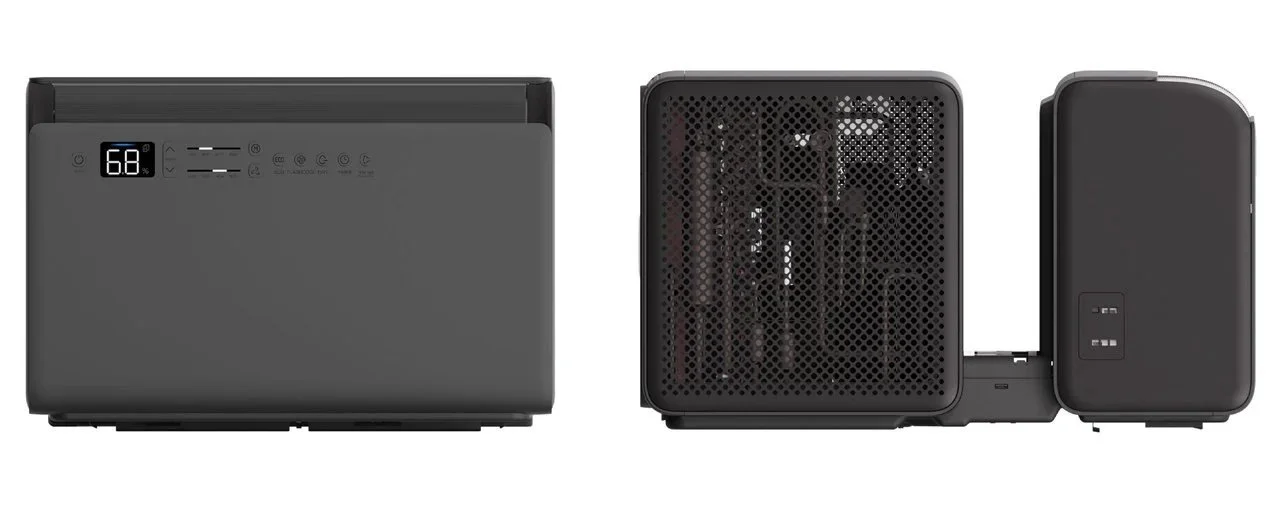
We offered the unit in 2 SKUs, a white unit that covers most sales volume, and an all dark unit that helps differentiate in certain retail channels.
CMF Exploration: Color/Material Blocking
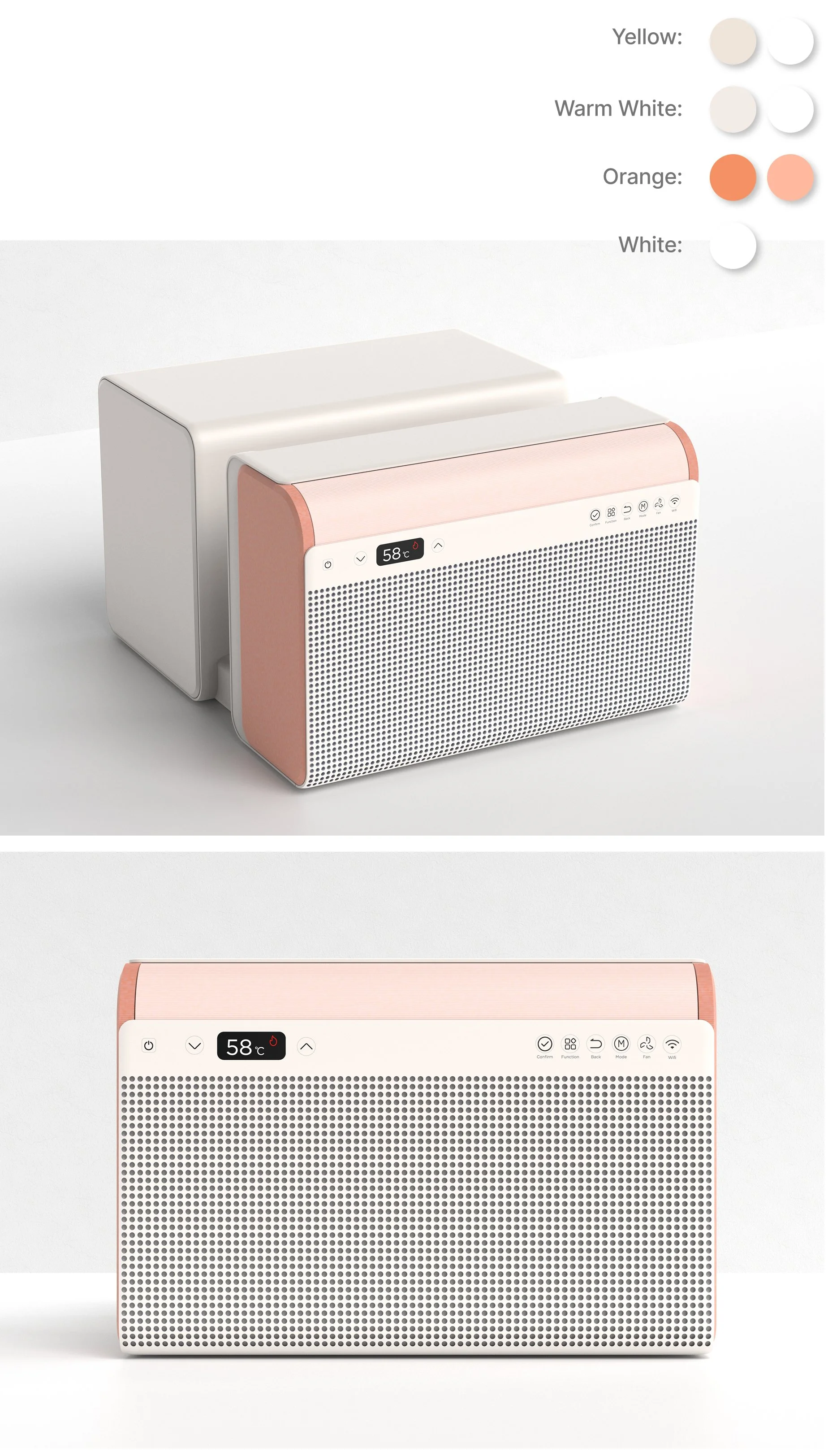
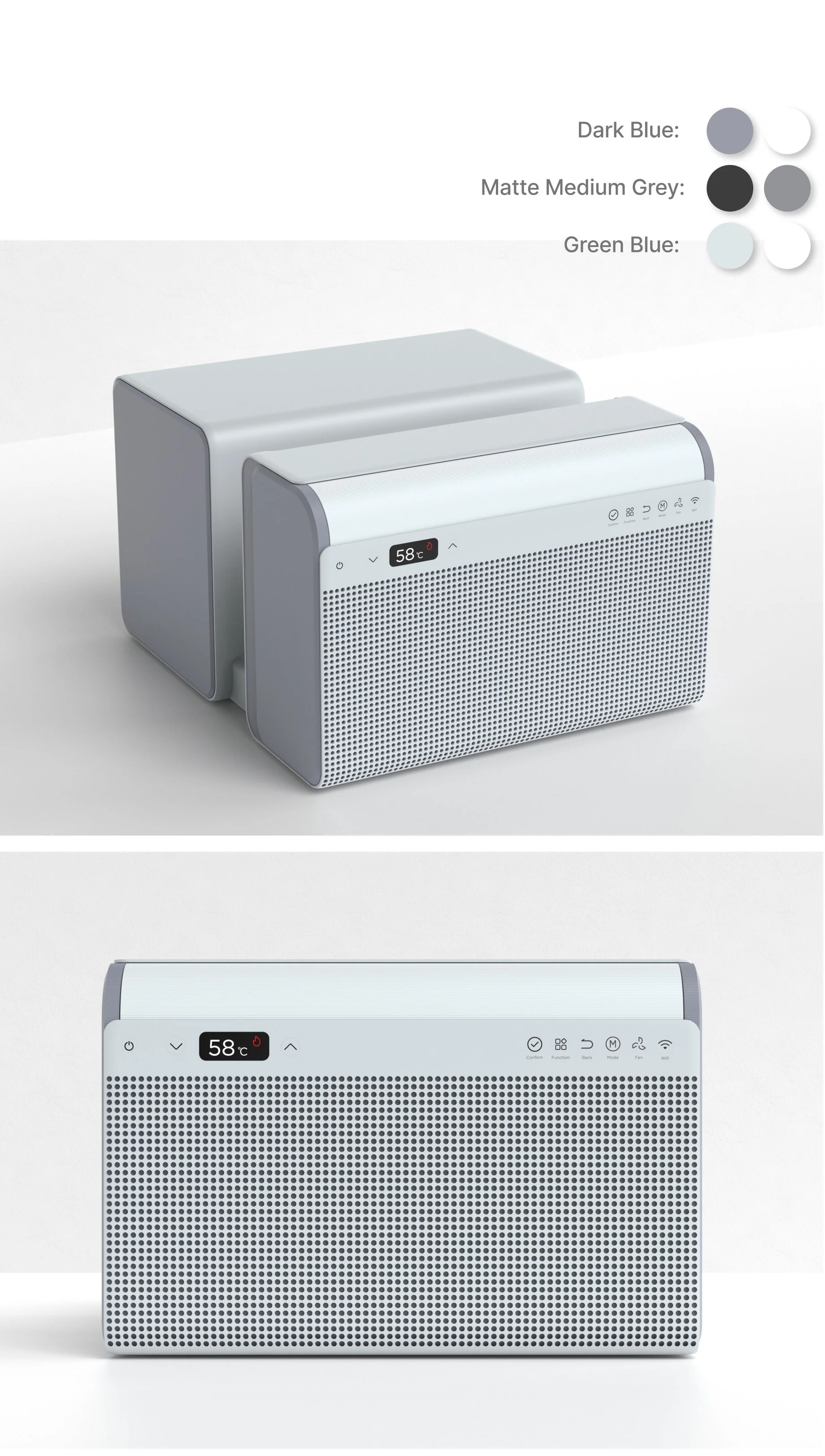
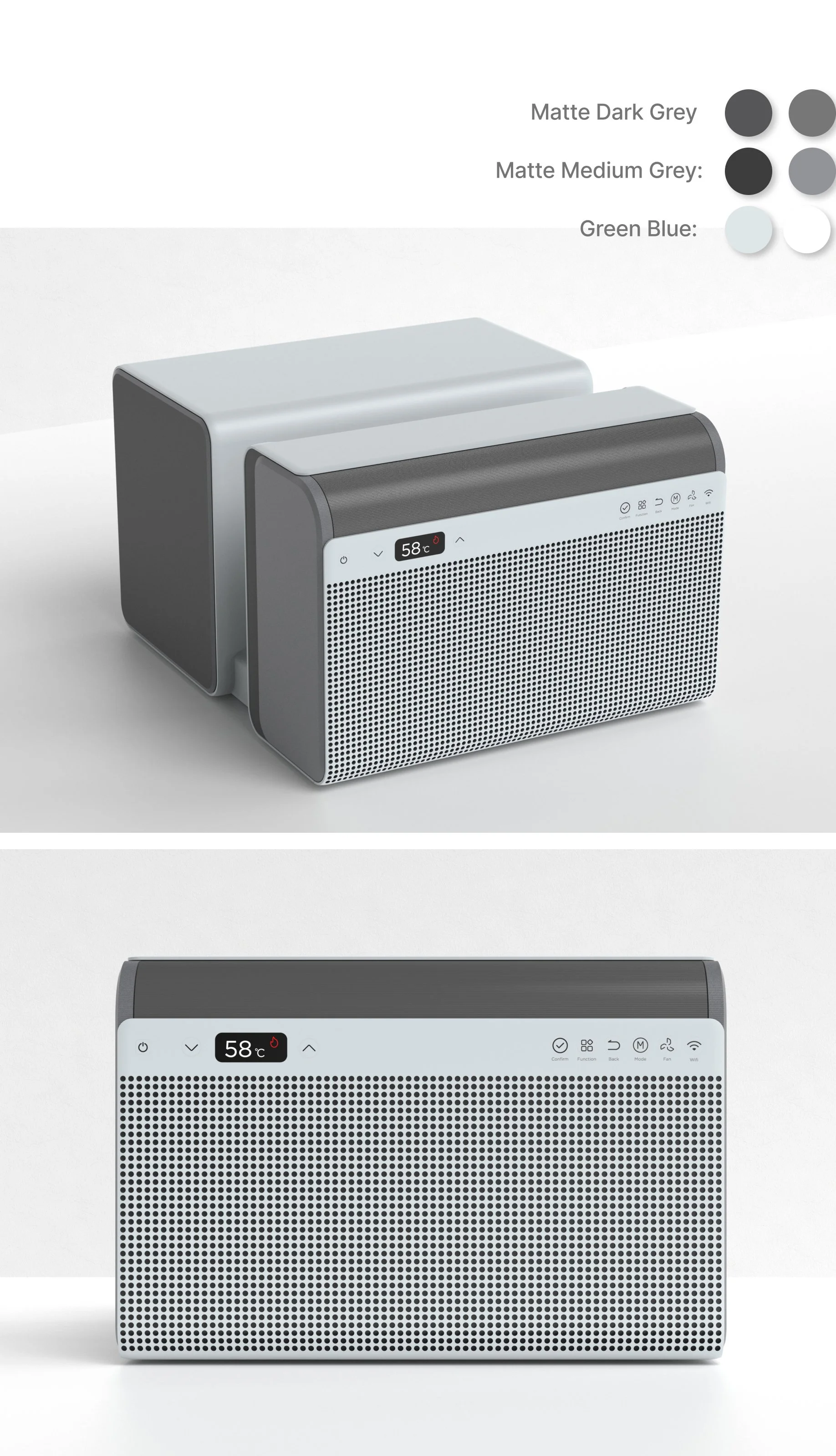
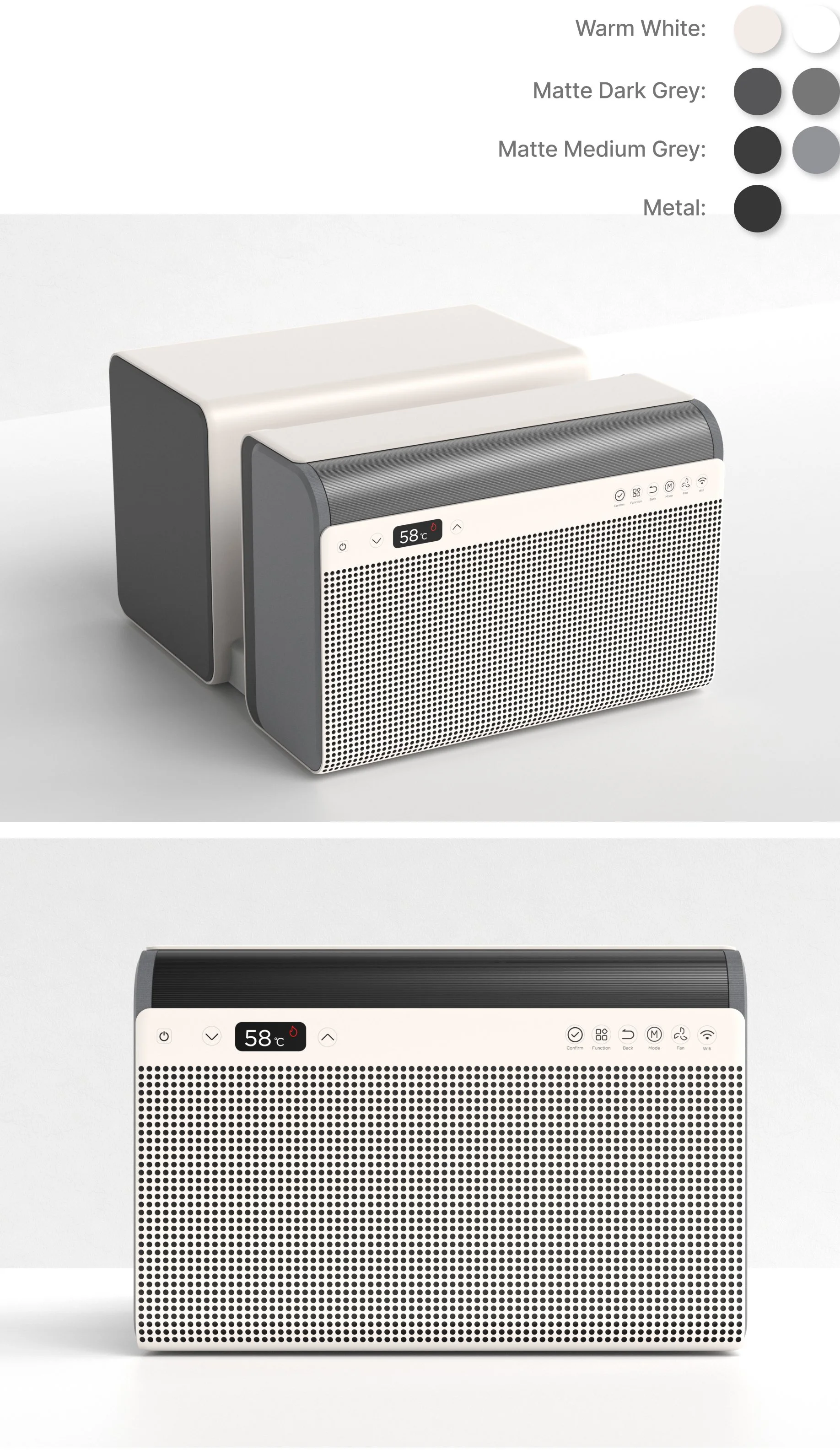
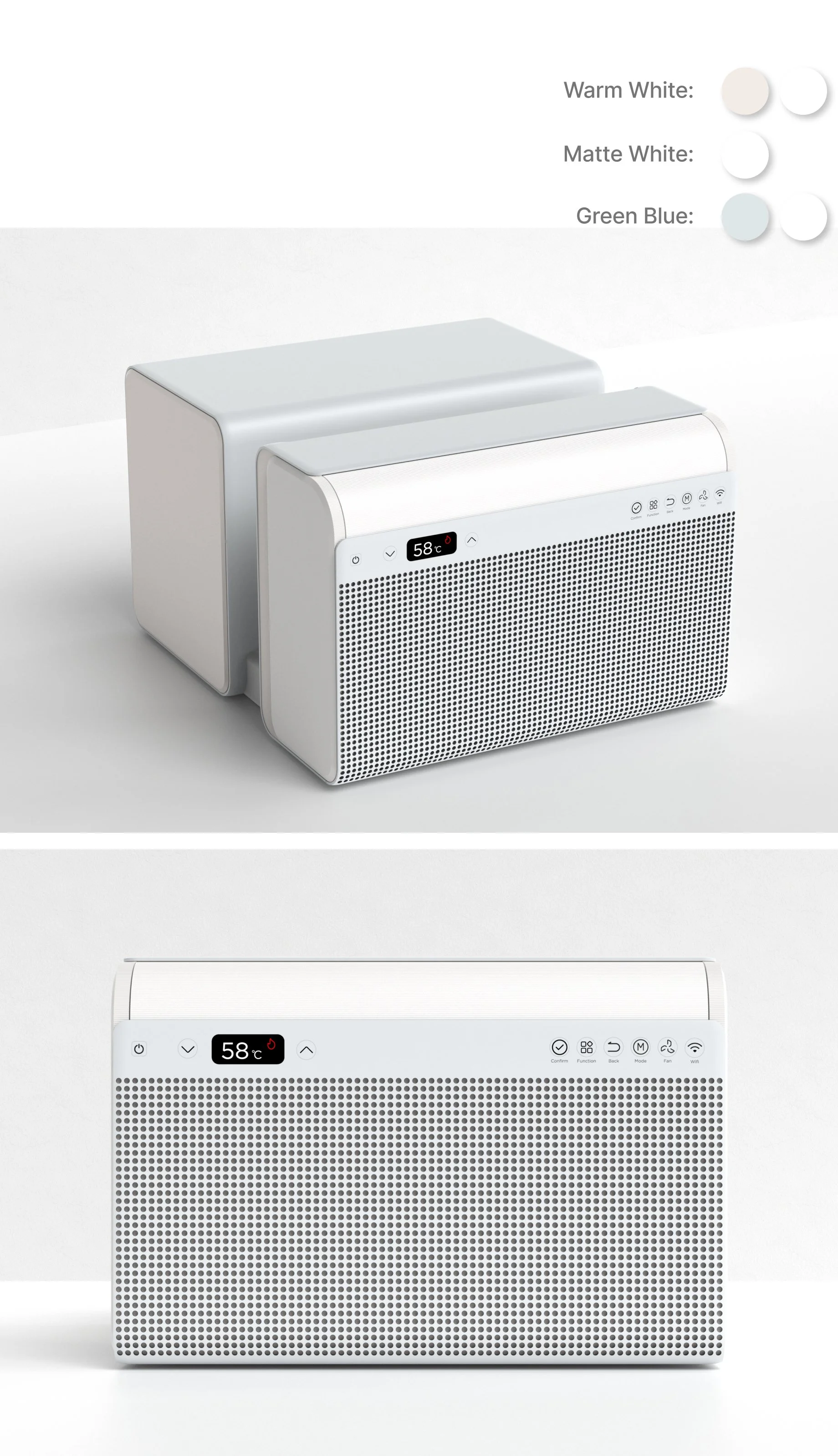
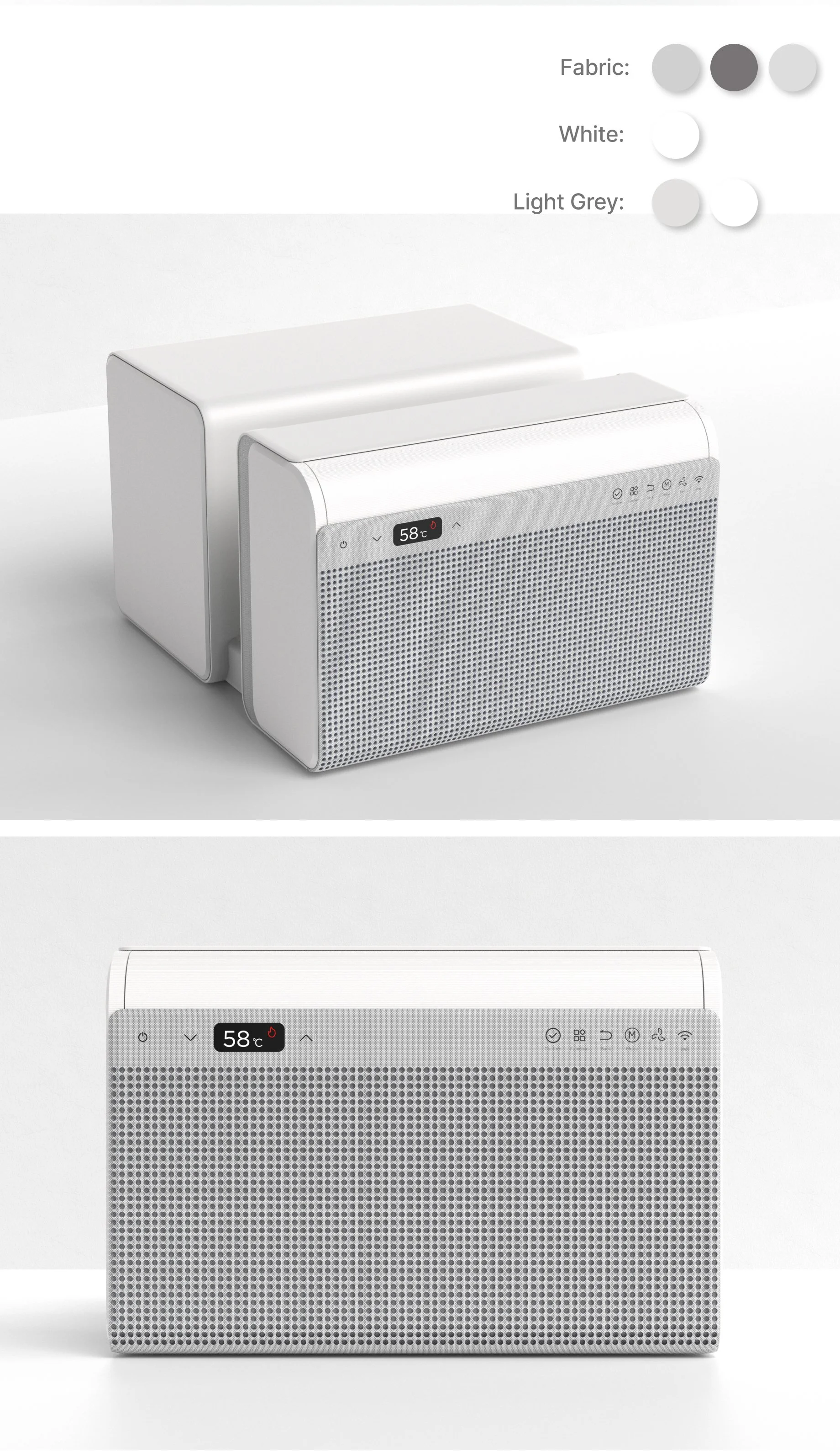
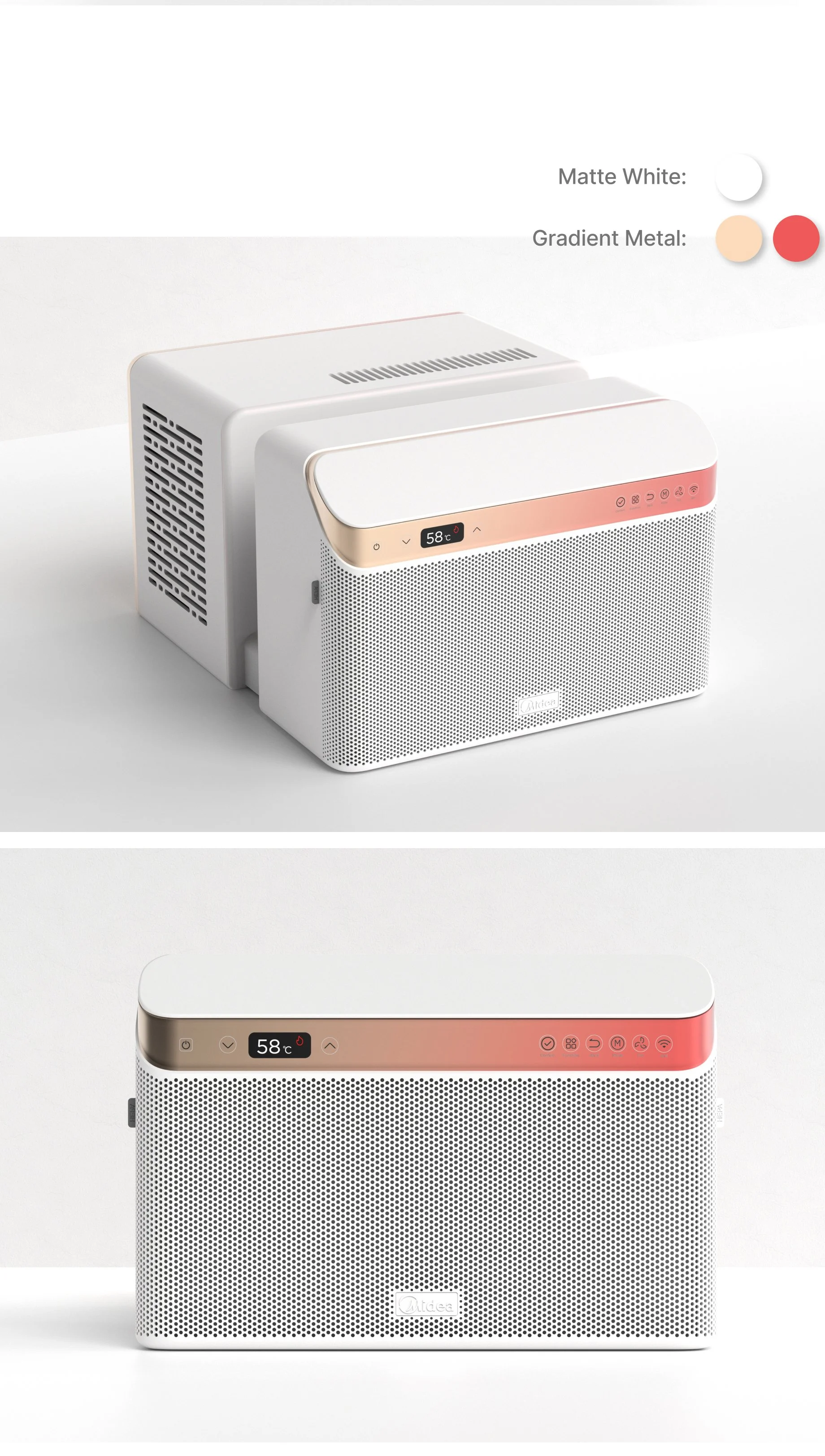
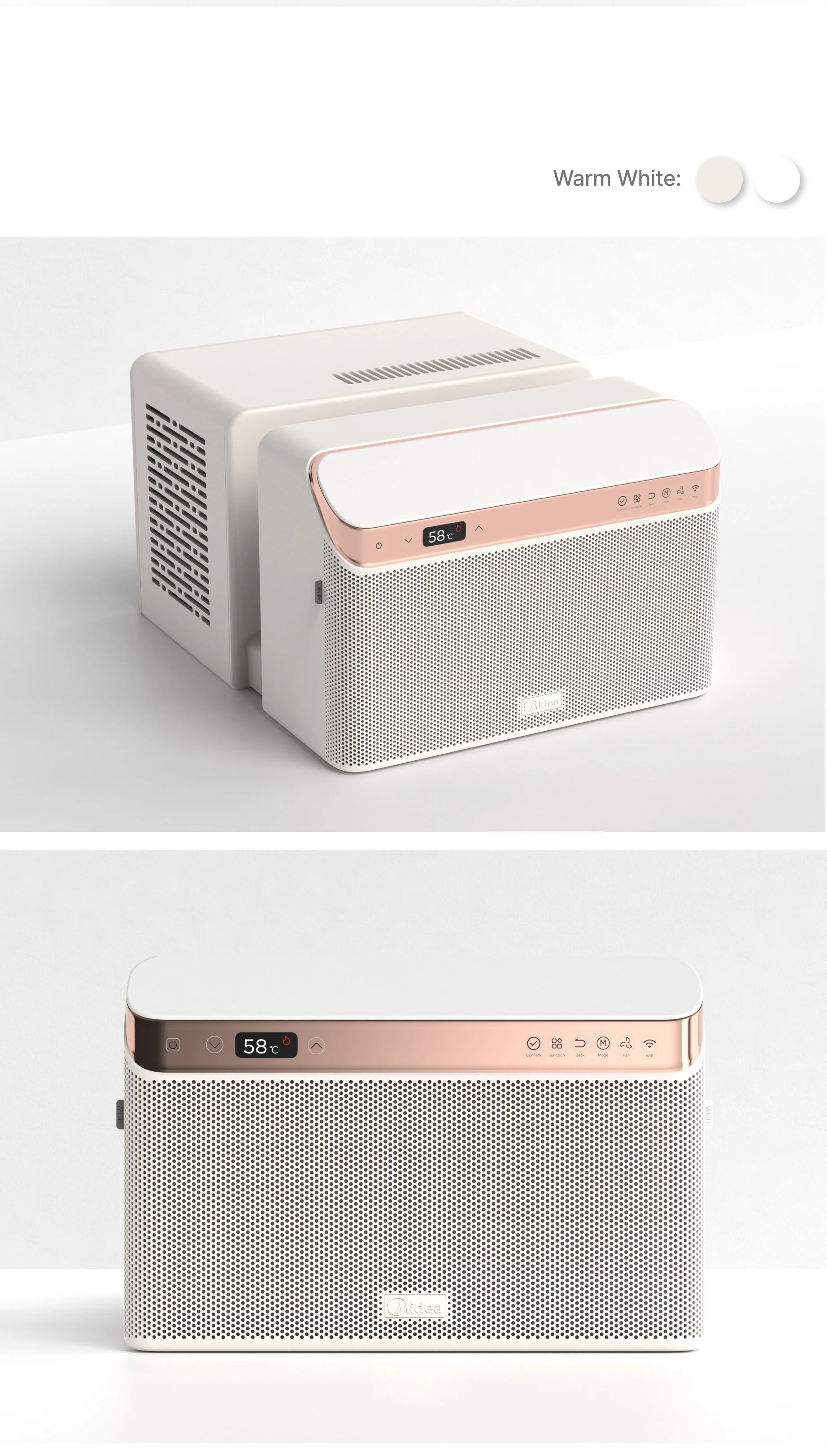
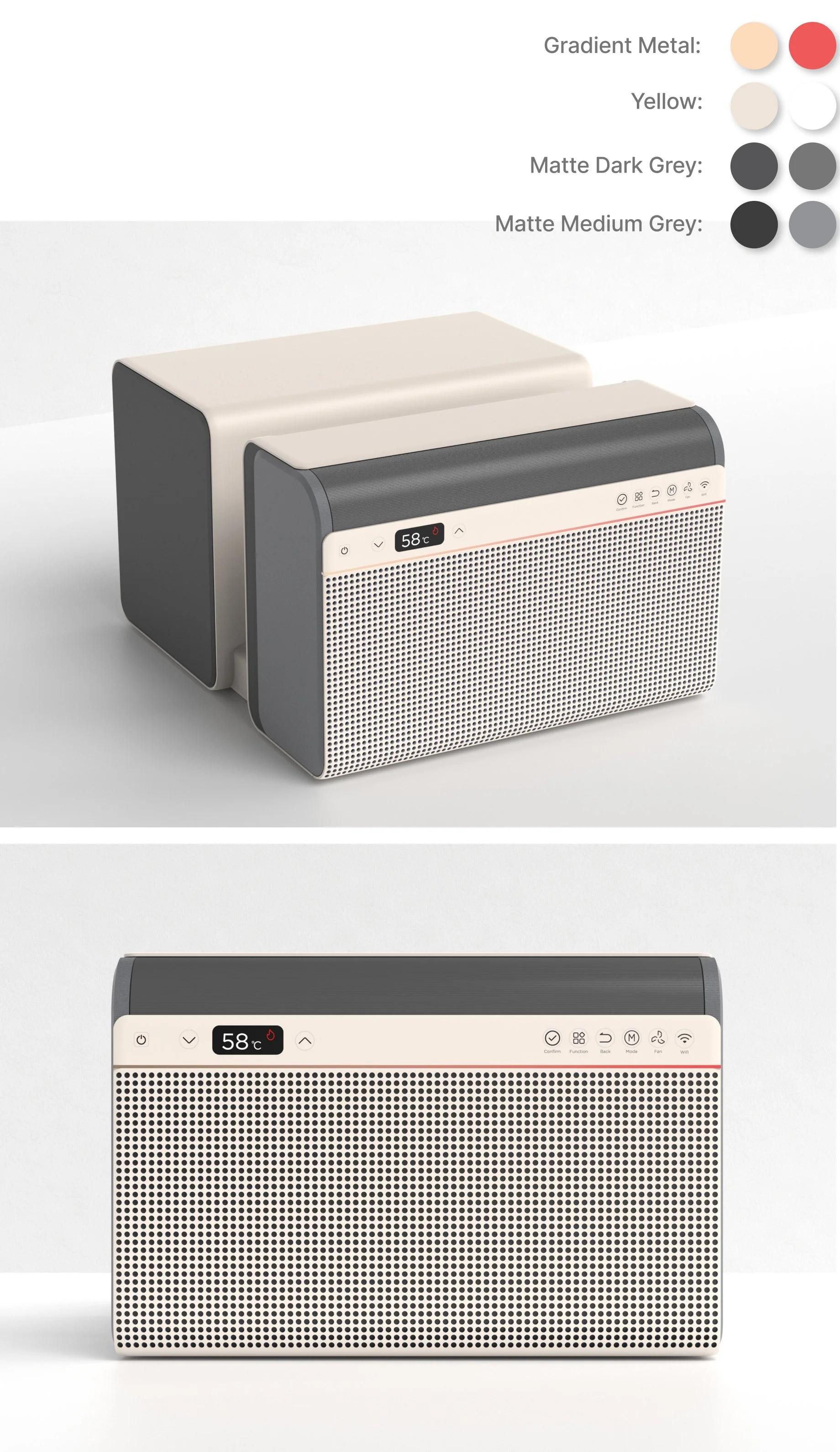
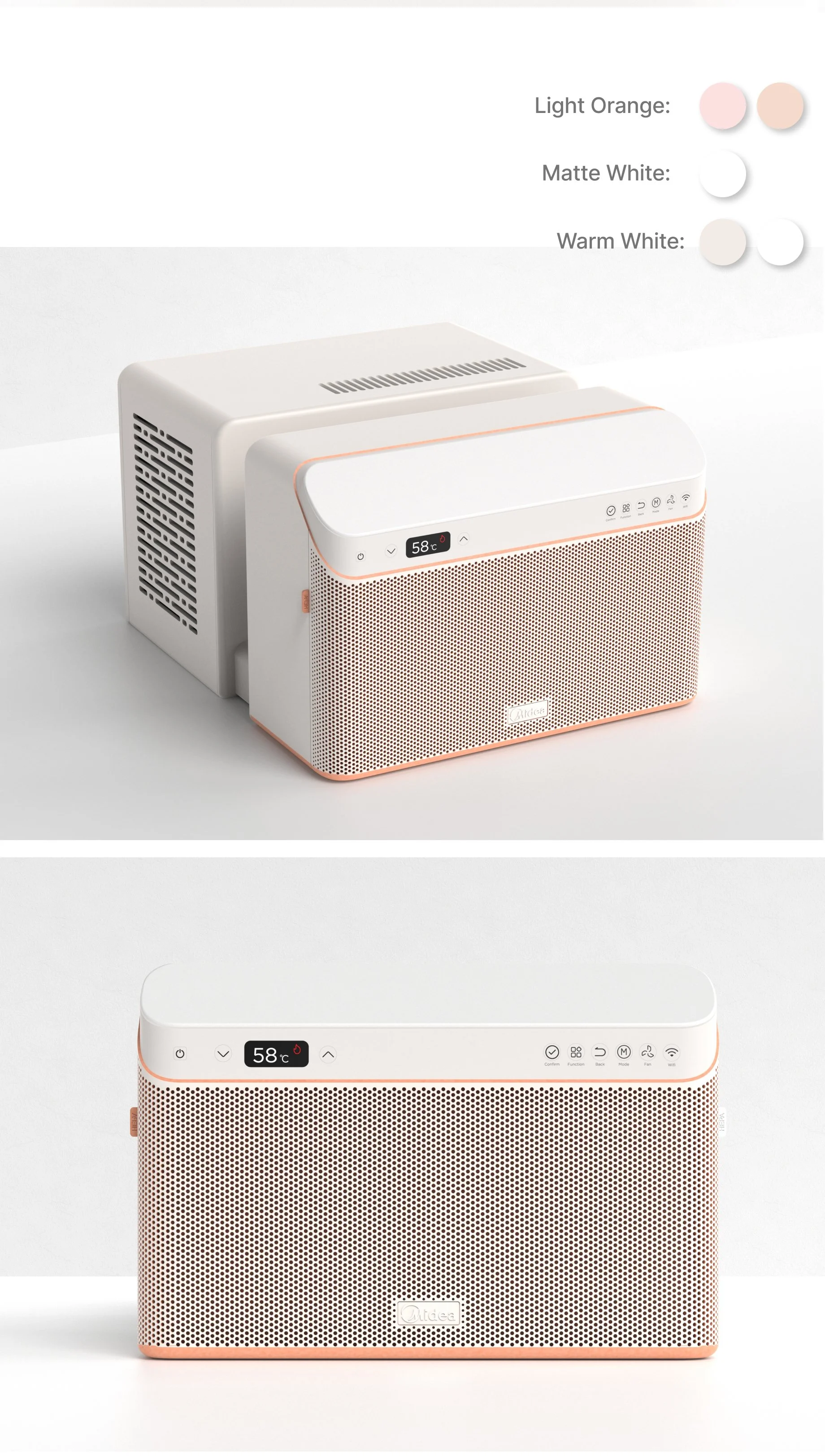
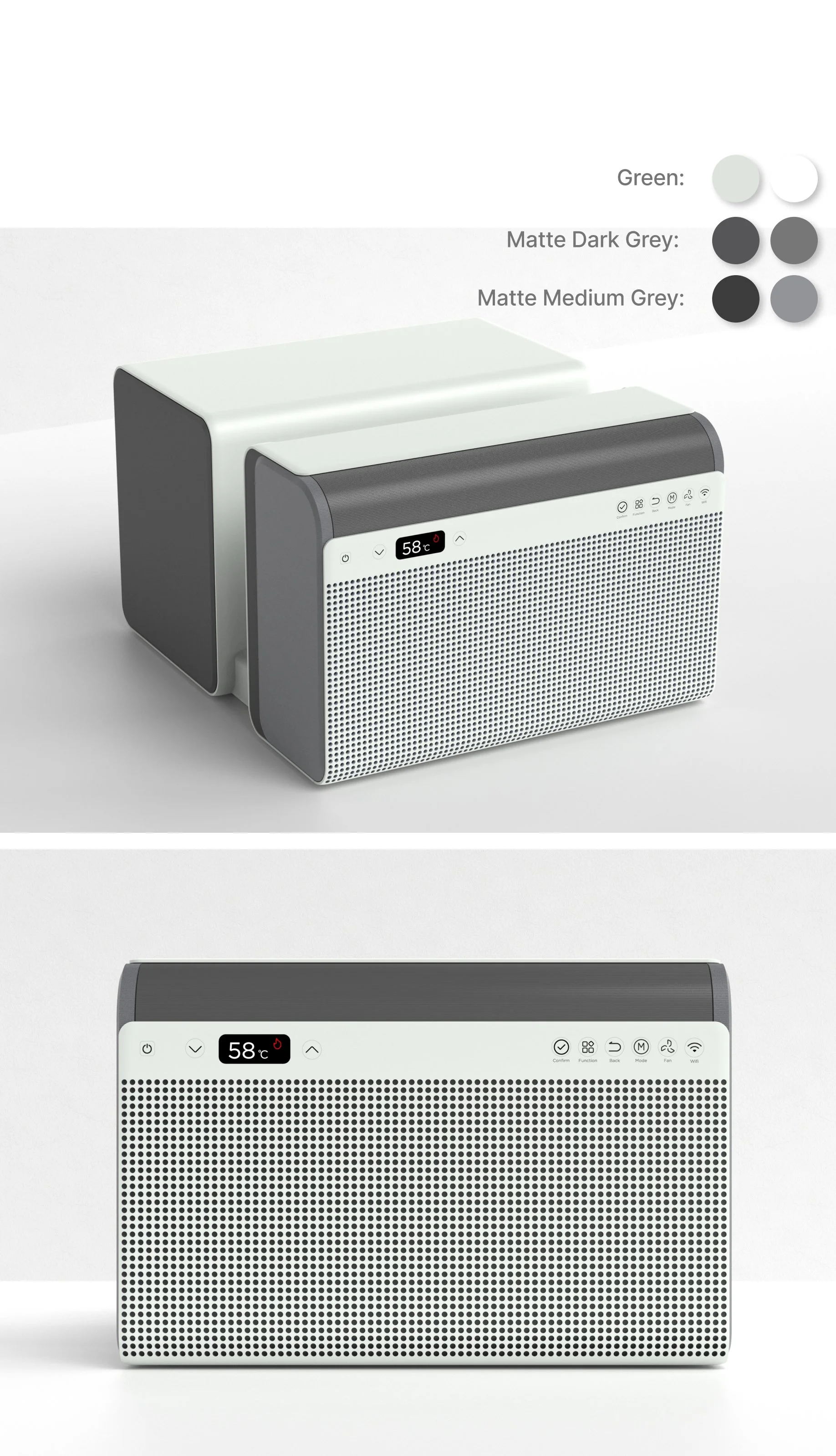
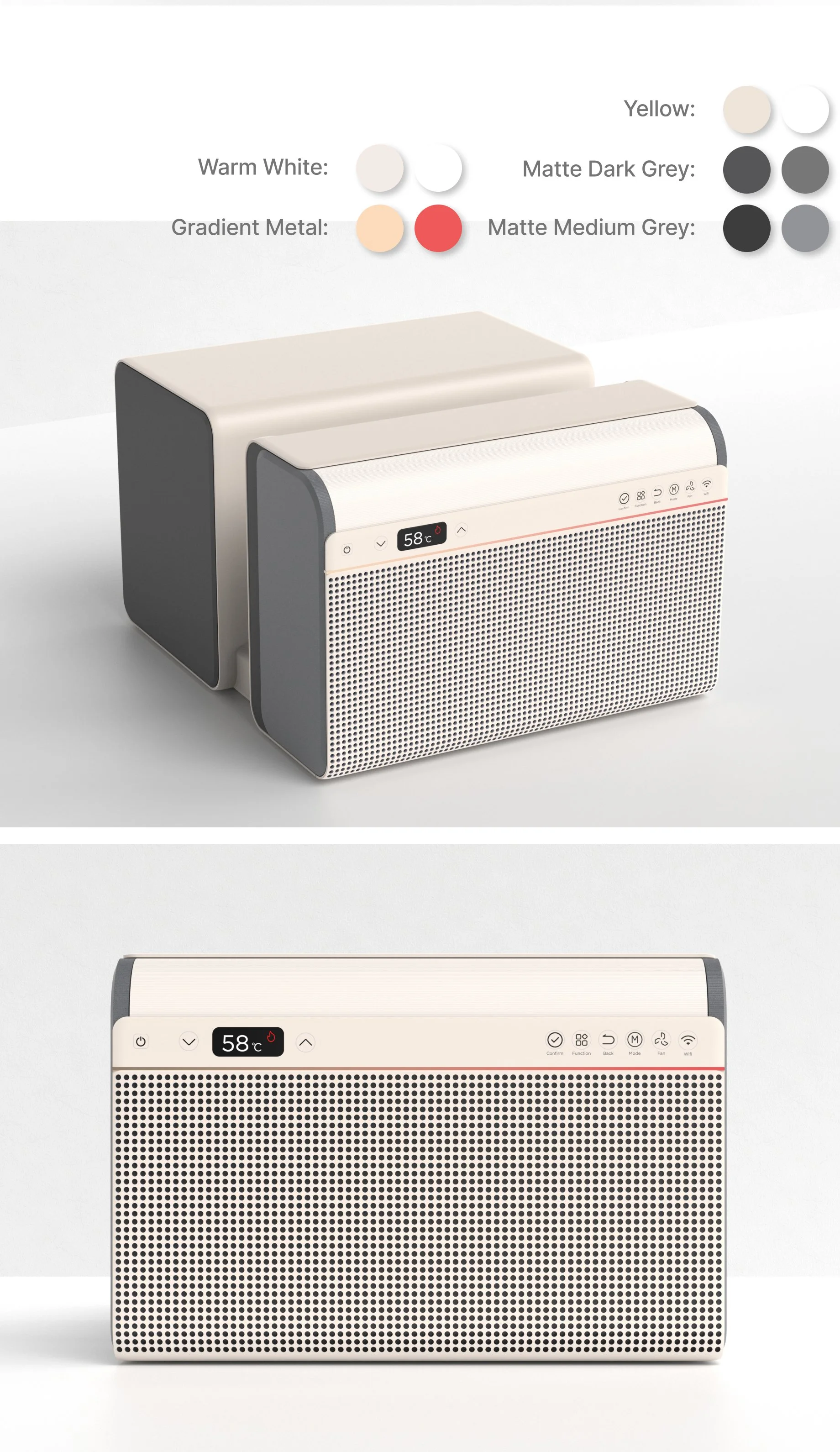
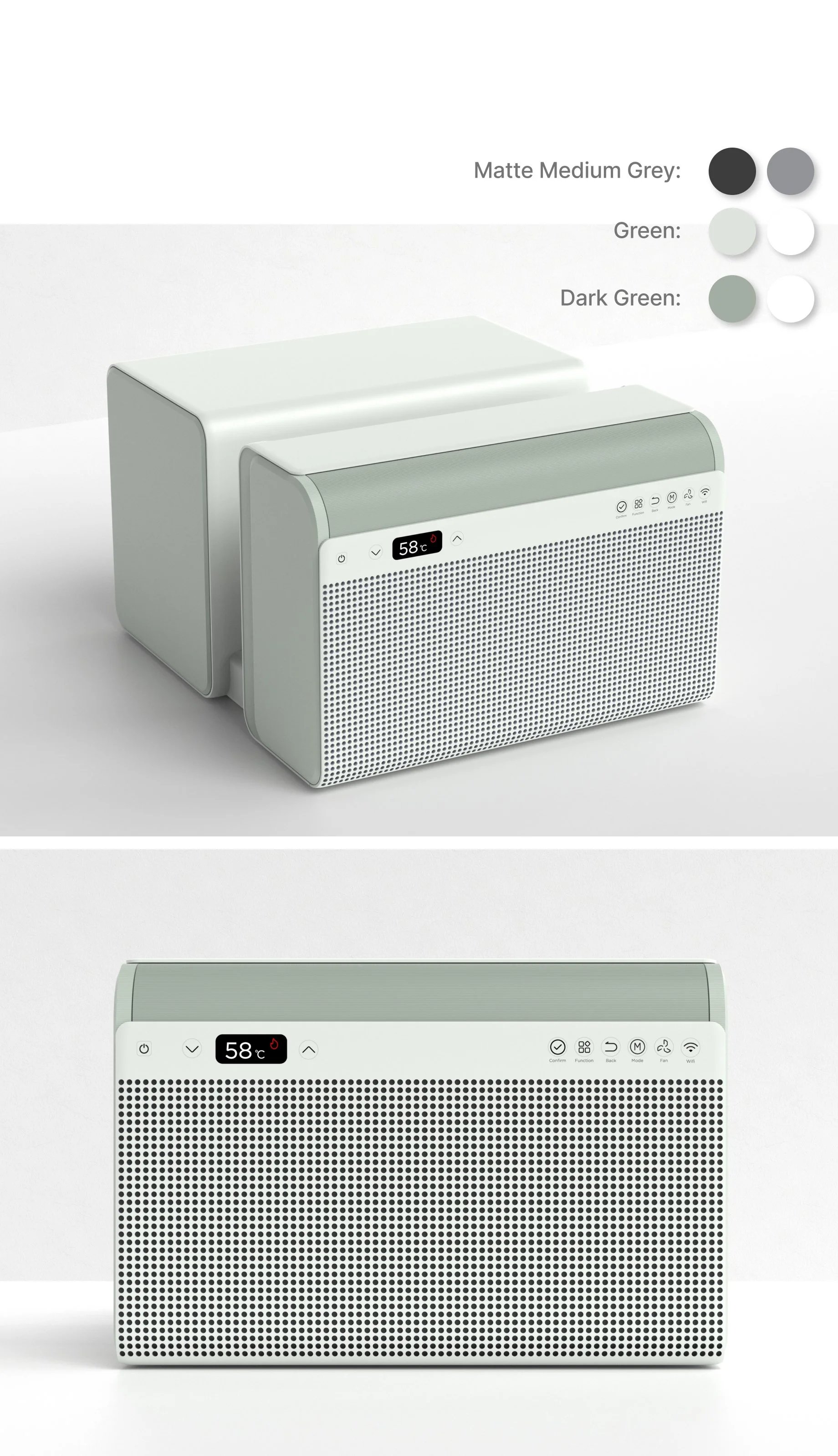
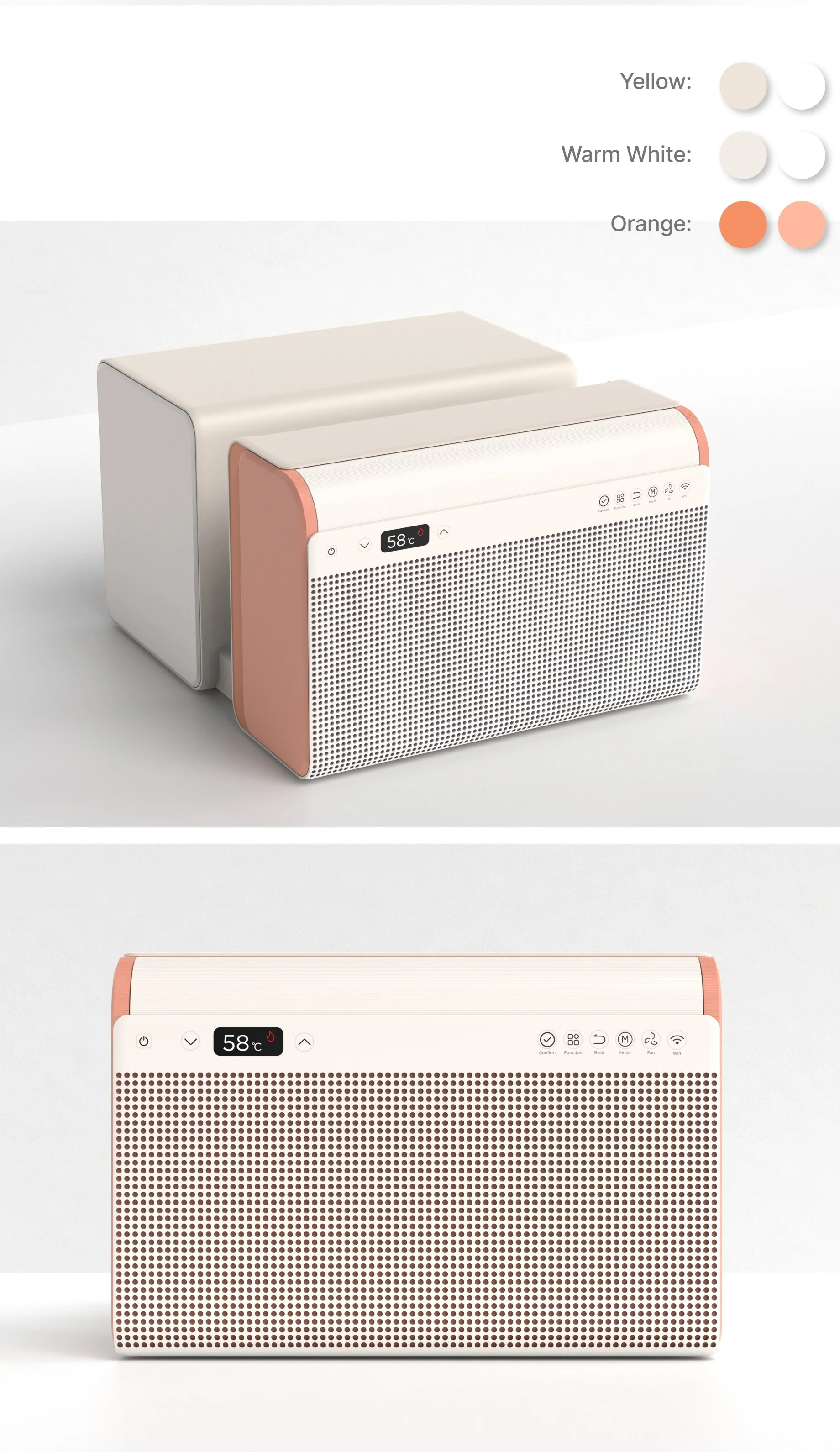
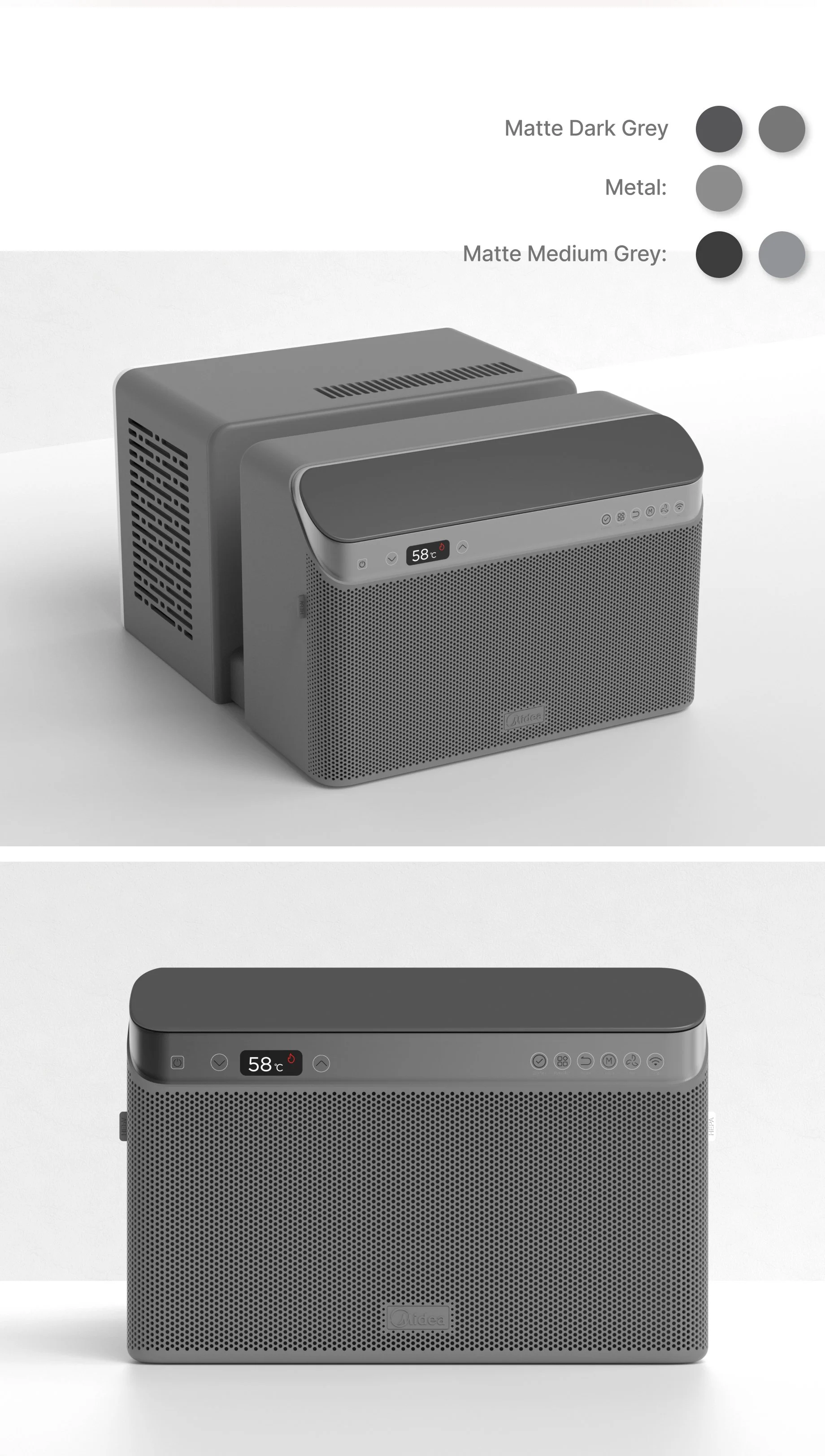
Besides the all white and all black CMF options, we wanted to explore the possibility of subtle or high contrast color/texture blocking to accentuate interaction points, break down complex forms, and create visual hierarchy on the designs.
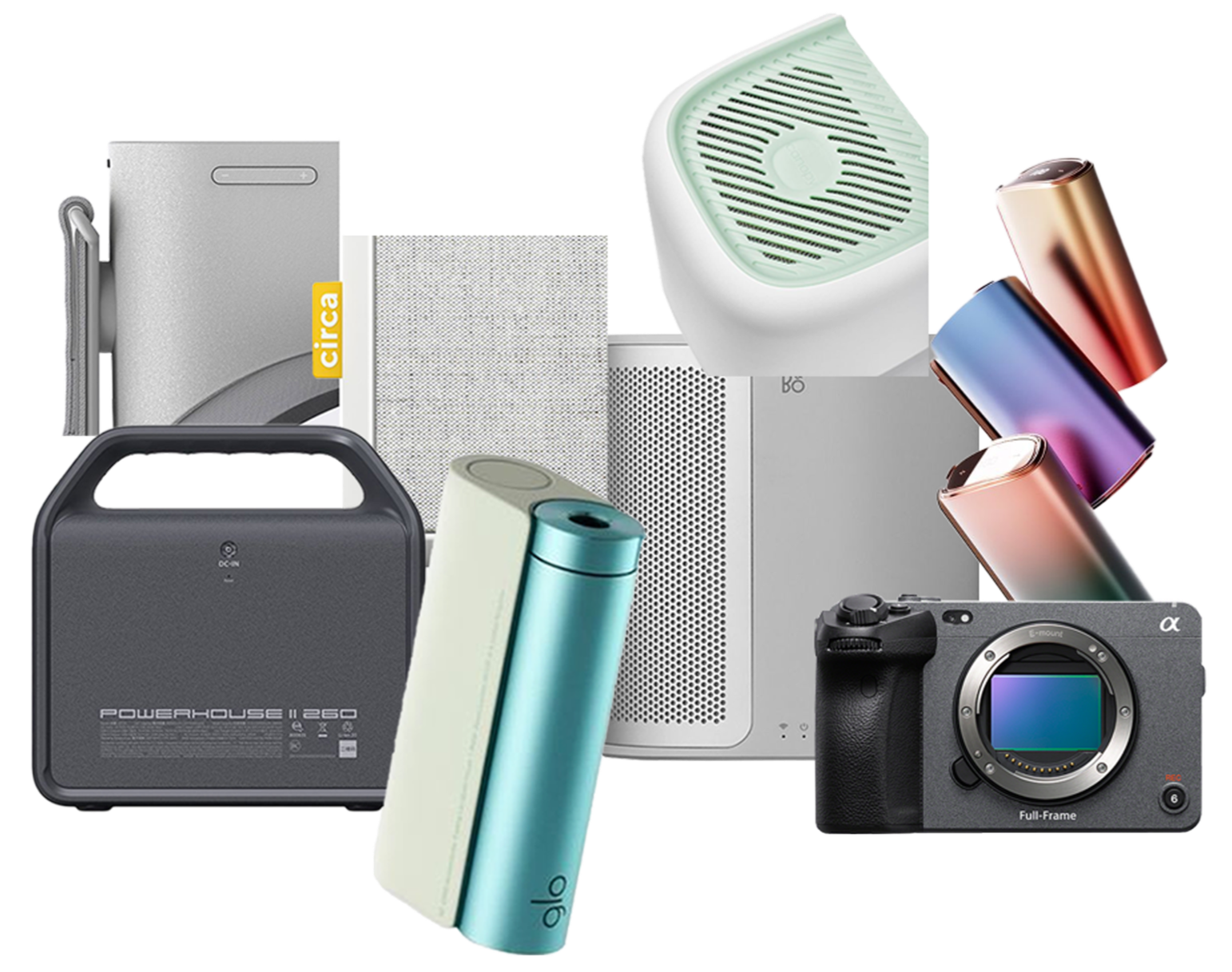
While evaluating multiple form concepts, I explored various ways to introduce contrast and differentiation through color and material configurations. This included investigating plastic-to-metal transitions, juxtapositions of glossy and textured surfaces, subtle versus high-contrast color pairings, and anodized color gradients. The study helped validate the effectiveness of CMF blocking in reducing the perceived visual footprint of the unit. It also pushed the boundaries of traditional air-conditioner CMF by demonstrating how color can create a younger, more modern product expression.