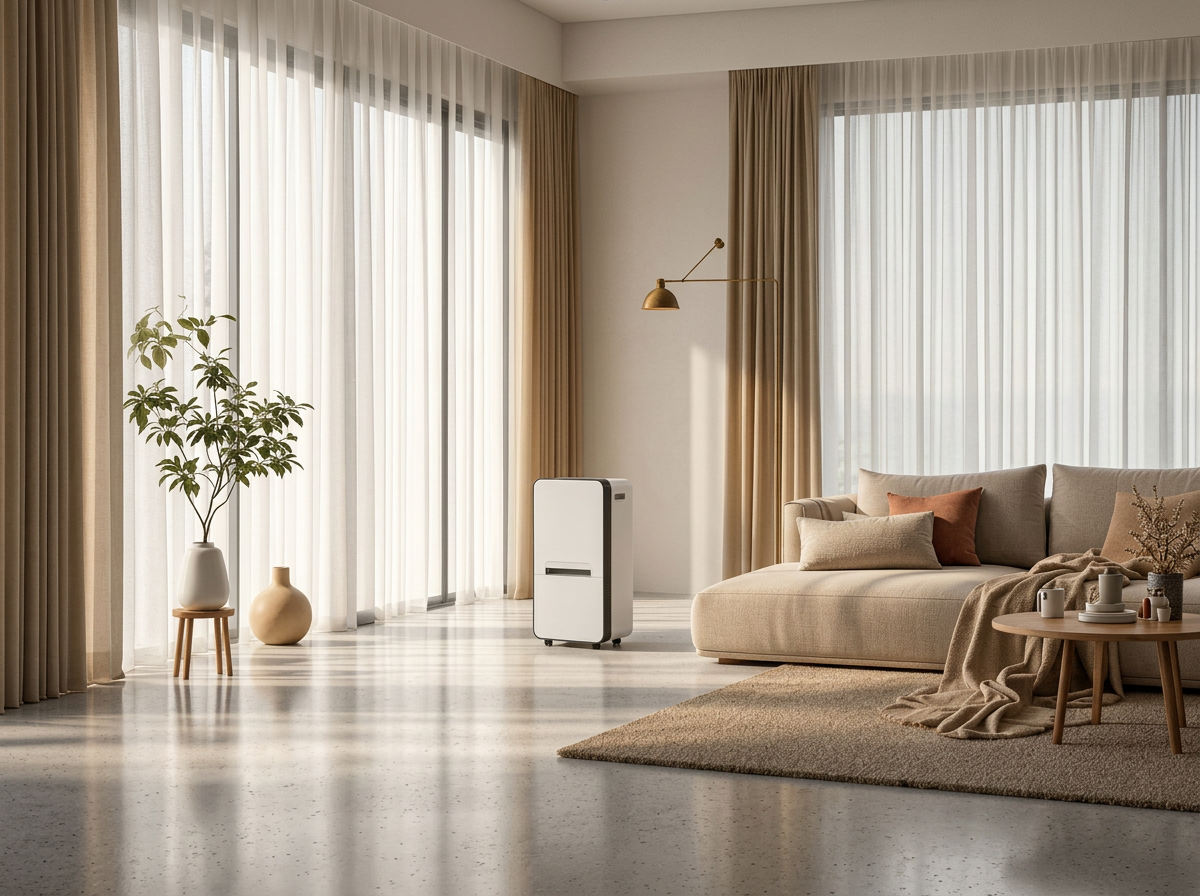
DT Dehumidifier
Midea is one of the largest dehumidifier manufacturers and OEM supplier in the North American market. DT is a new platform that aims to bring differentiation to Midea’s dehumidifier product portfolio and slowly phase out the older platforms on the market.
Info:
Midea American R&D Center 2024 - 2025, 4 months
Lead the ergonomic design and form strategies and liaison for the China team
Role:
Project Context
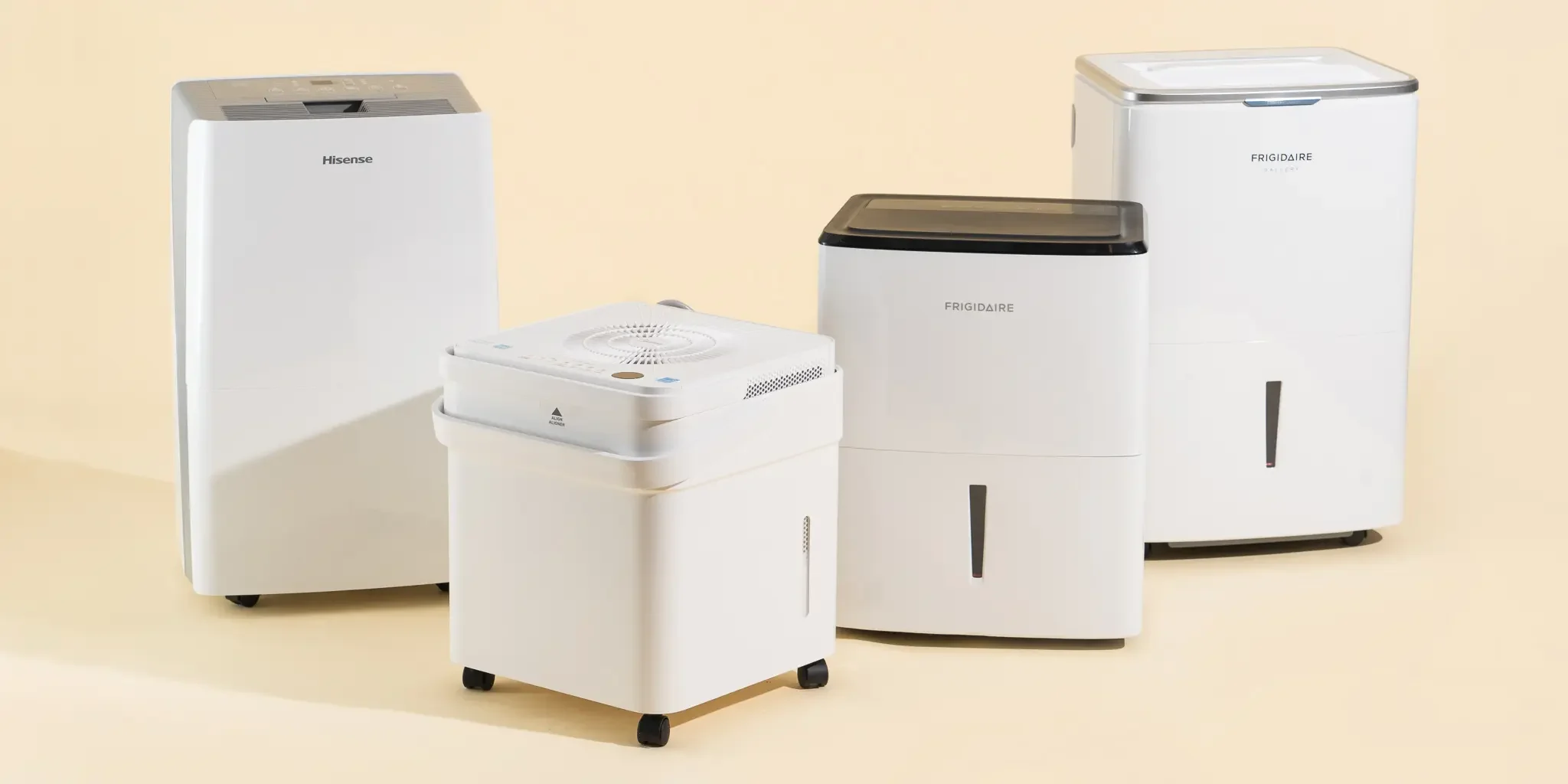
Dehumidifiers are highly utilitarian products, with performance driving most purchase decisions. As a result, brands primarily compete on capacity, energy efficiency, and noise. And because this category is heavily OEM-driven, many products share similar architectures and components, leaving little room for meaningful differentiation.
Product Roadmap
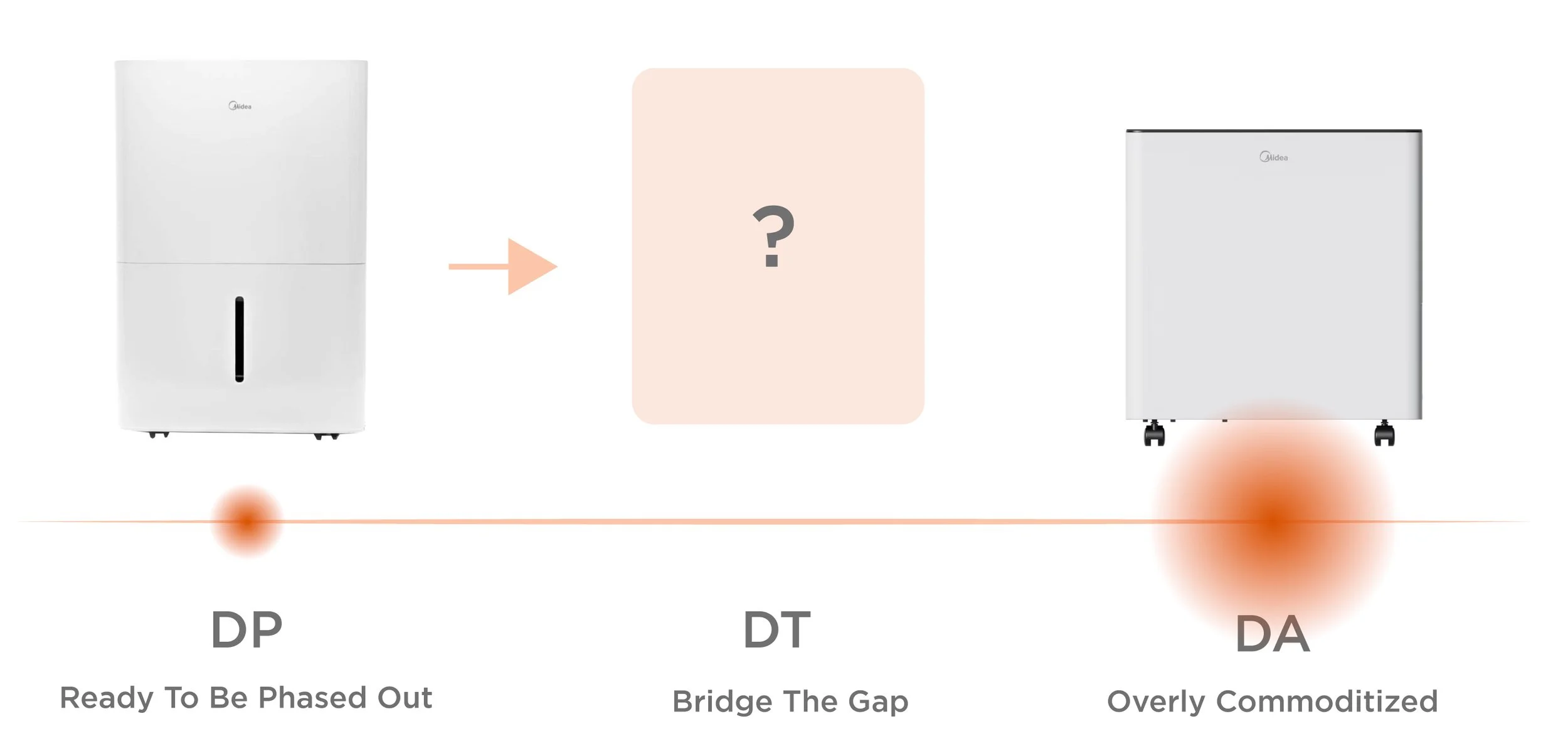
The DT platform serves as an OEM brand differentiator
While DA and DP remain the core volume drivers within Midea's dehumidifier portfolio, both face strategic challenges. DA has become highly commoditized through extensive OEM adoption, weakening its uniqueness in the market and diluting Midea’s OBM presence. DP, on the other hand, is constrained by an outdated design language and ready to retire.
Low Cost, High Impact Opportunities
When I joined the DT project, it was positioned as a "filler platform"—a standard dehumidifier meant to fill a portfolio gap with a new form factor and minimal investment. Rather than treating it as a superficial refresh, I revisited user research to identify persistent pain points and uncover low-cost, high-impact opportunities to improve the platform.
Optimizing Bucket Is The Key
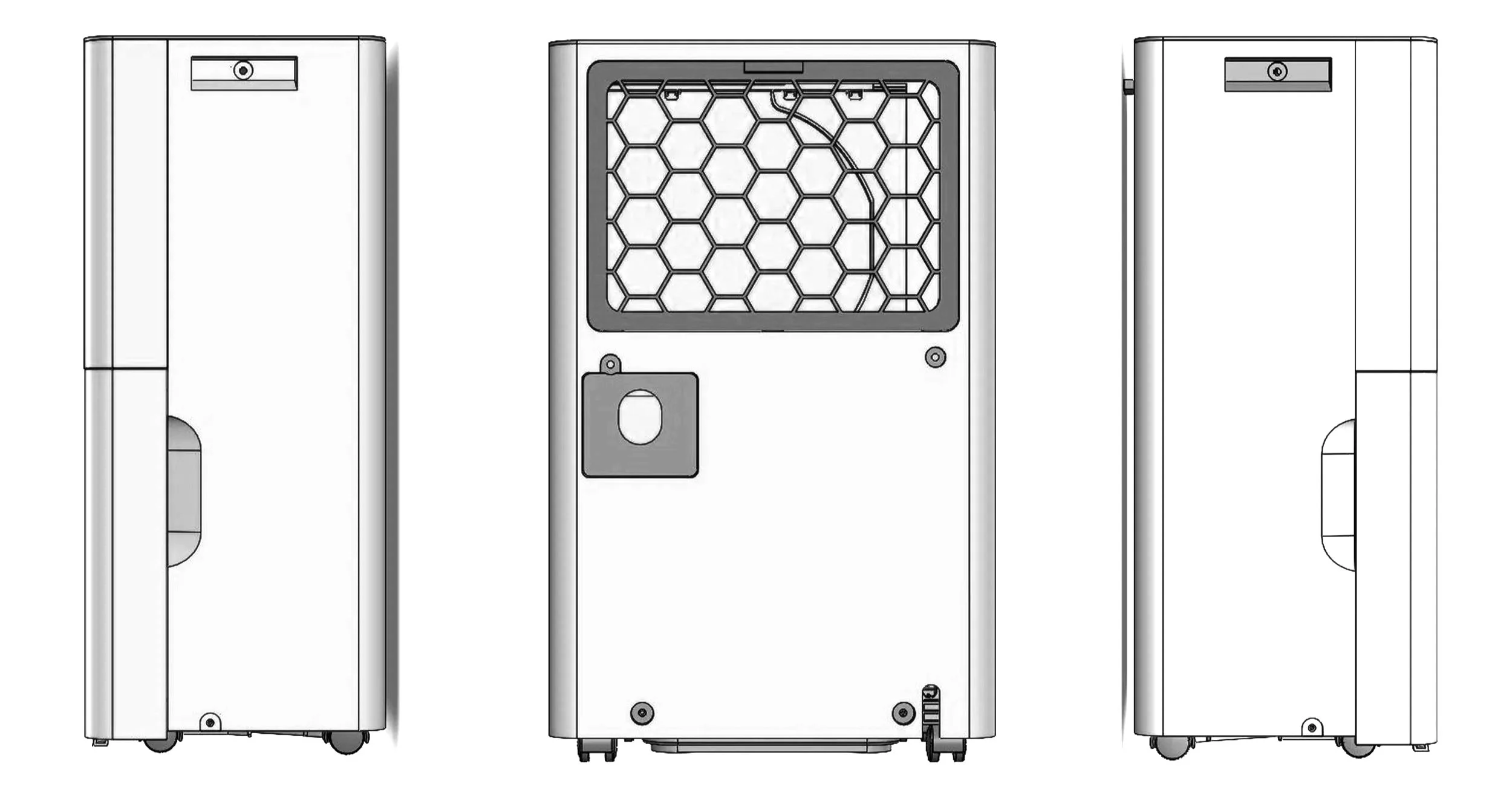
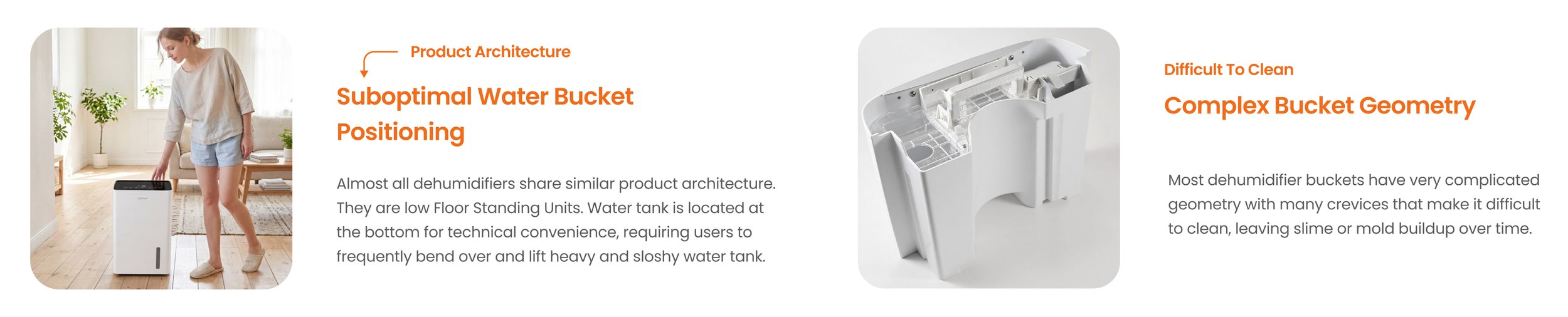
How do we optimize the bucket ergonomics and cleanability, and make the design flexible for OEM differentiation?
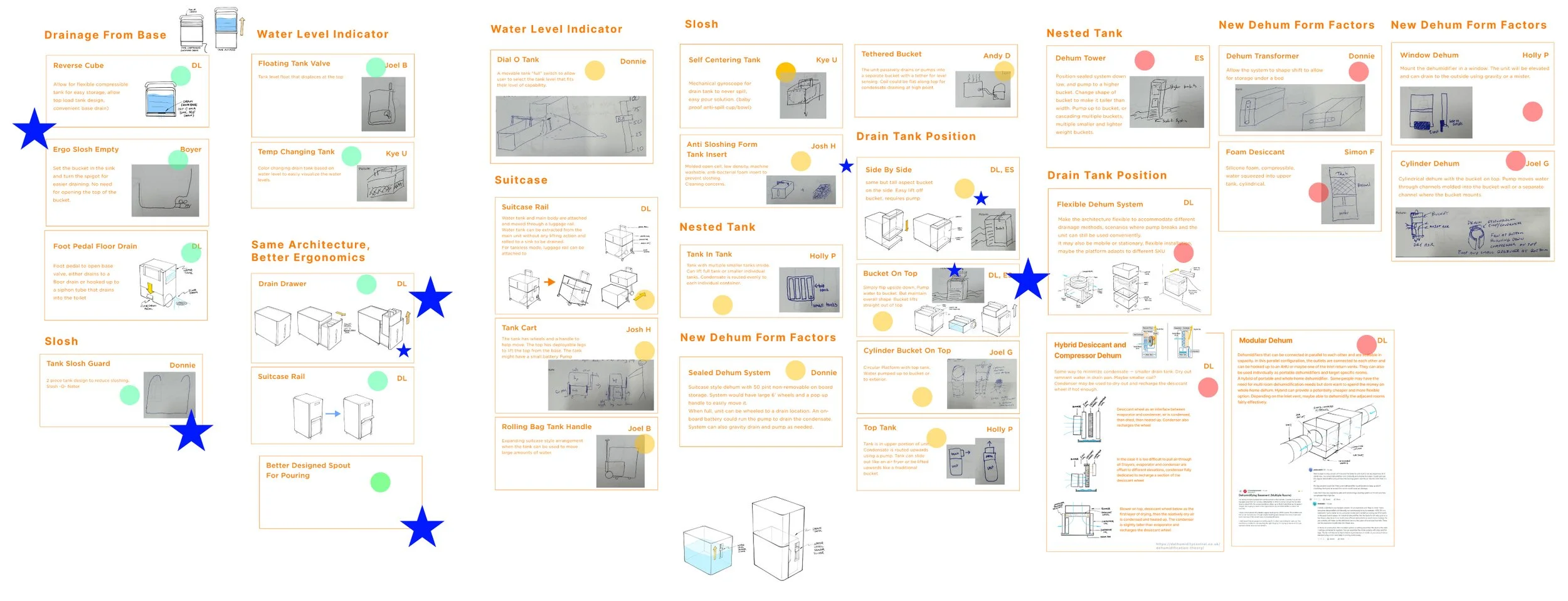
Innovation Session
There had been little innovation in dehumidifiers at the R&D center, so I organized a cross-functional innovation workshop with engineers, CMI specialists, and designers.
Centered on four key pain points—tank ergonomics, drainage, livability, and cleanability—the session generated both short- and long-term ideas that helped shape the DT project and future dehumidifier platforms.
Existing Bucket
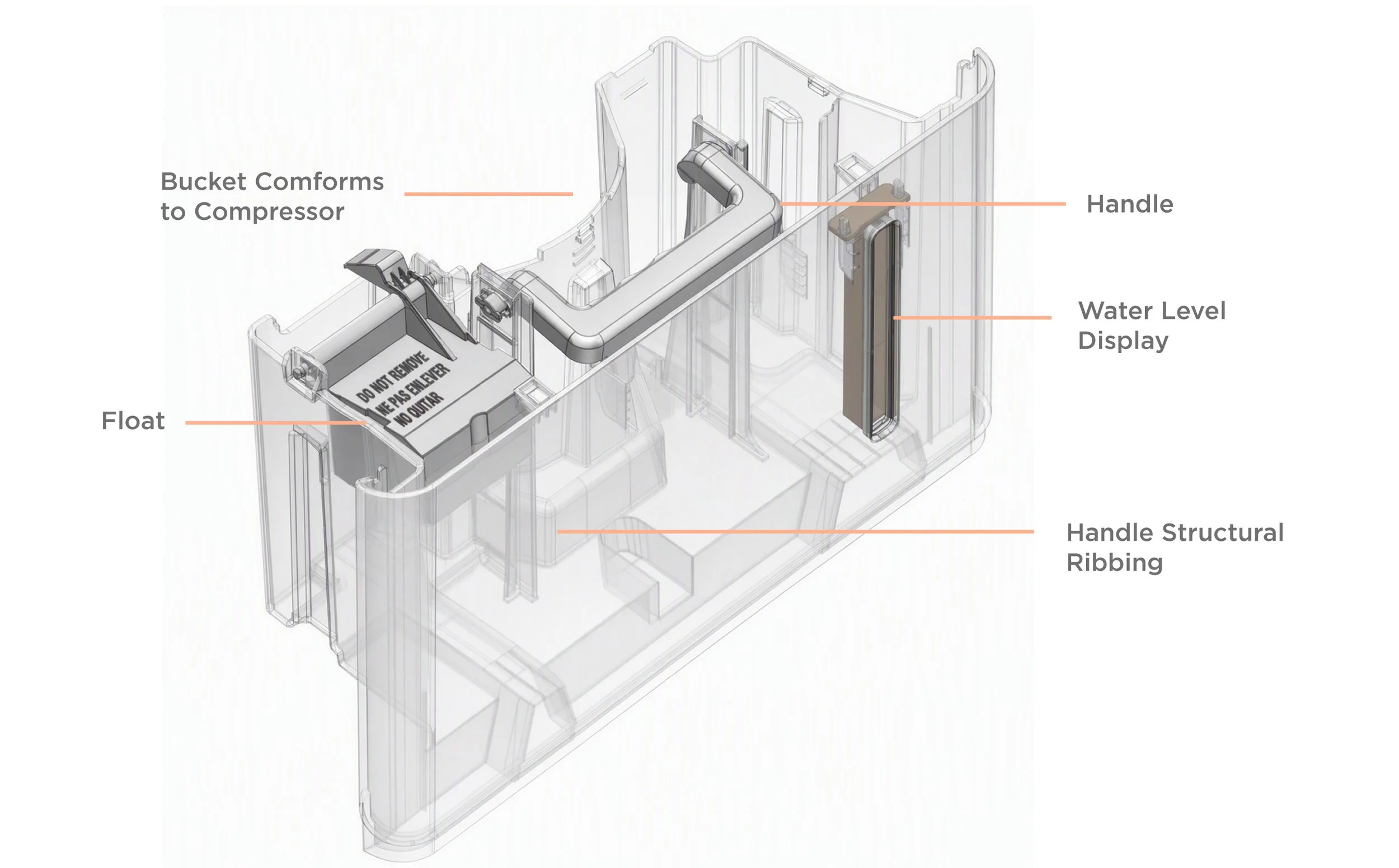
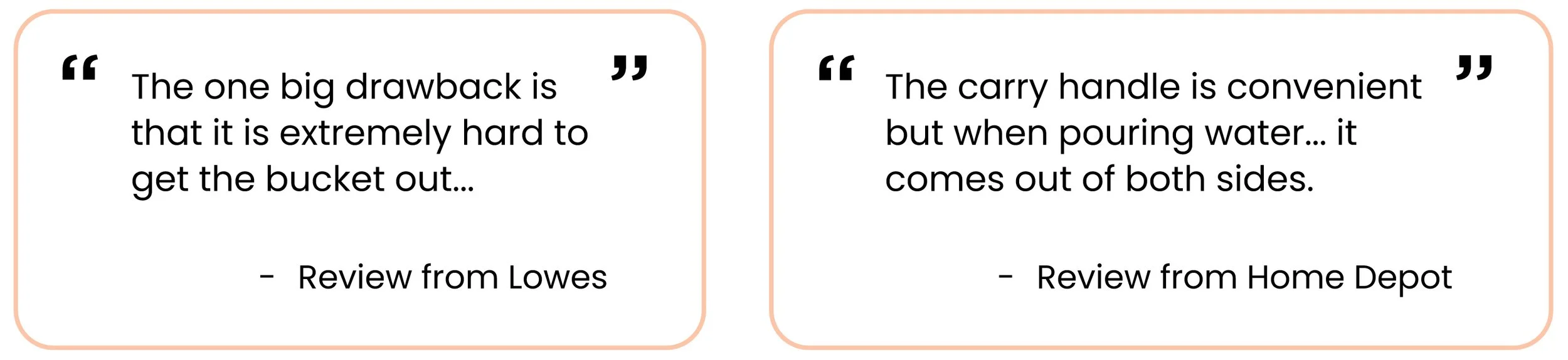
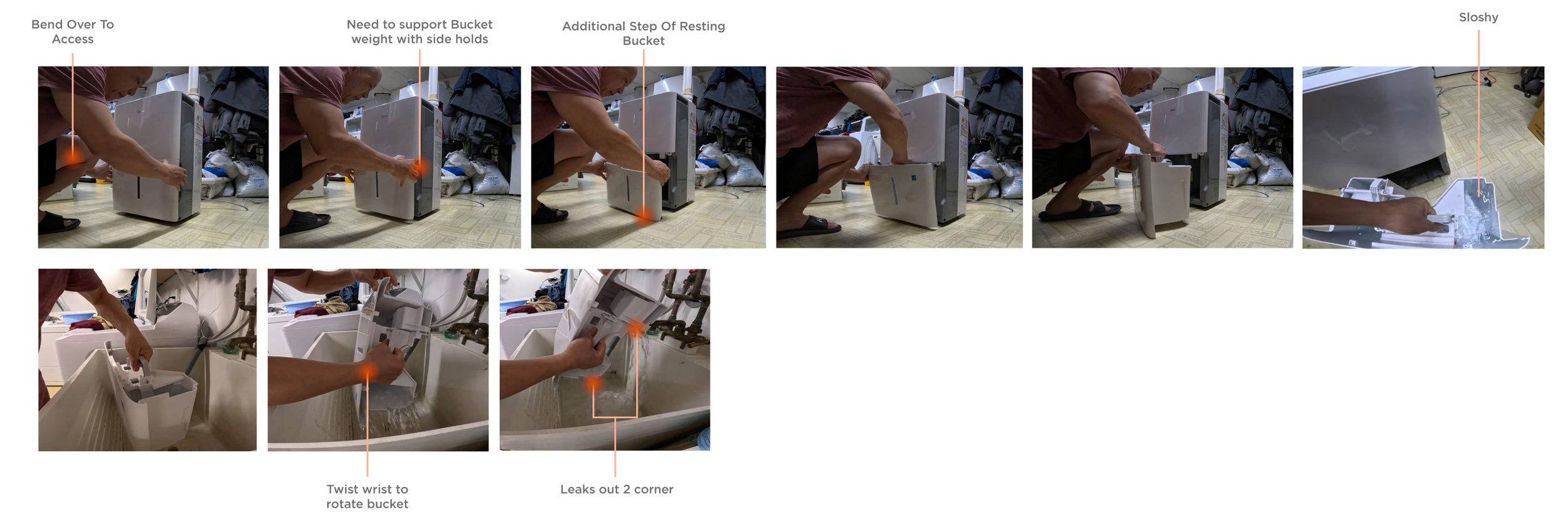
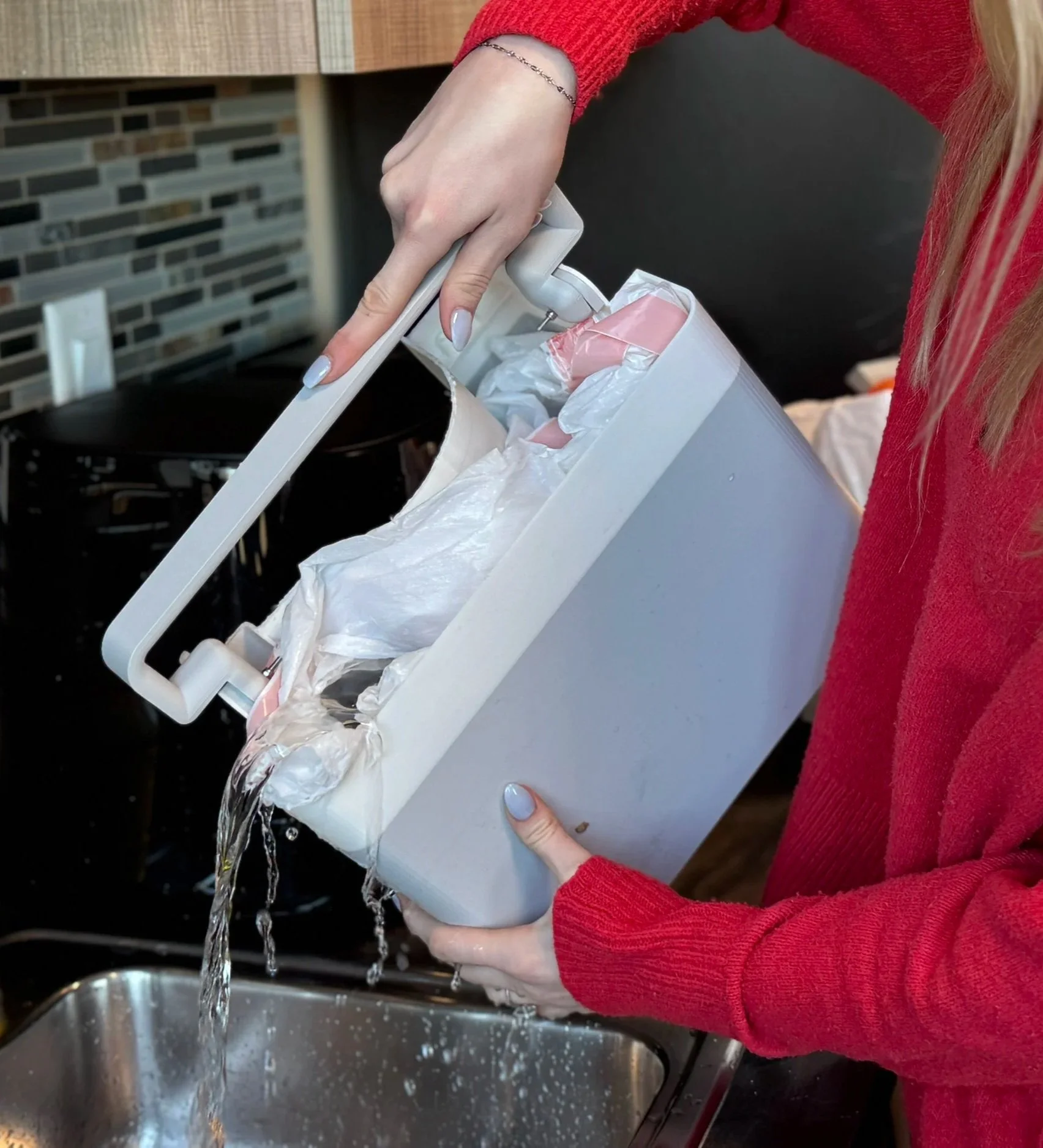
Most dehumidifiers use side-pull buckets that require users to bend down, carry a heavy bucket, and then lift it again to empty. Complex ribs, handles, and slosh guards also make the bucket difficult to clean.
Space-saving bucket shapes and poorly designed slosh guards often cause messy, inaccurate pouring despite integrated spouts.
Preliminary Concepts
Prototyping
Side Pull
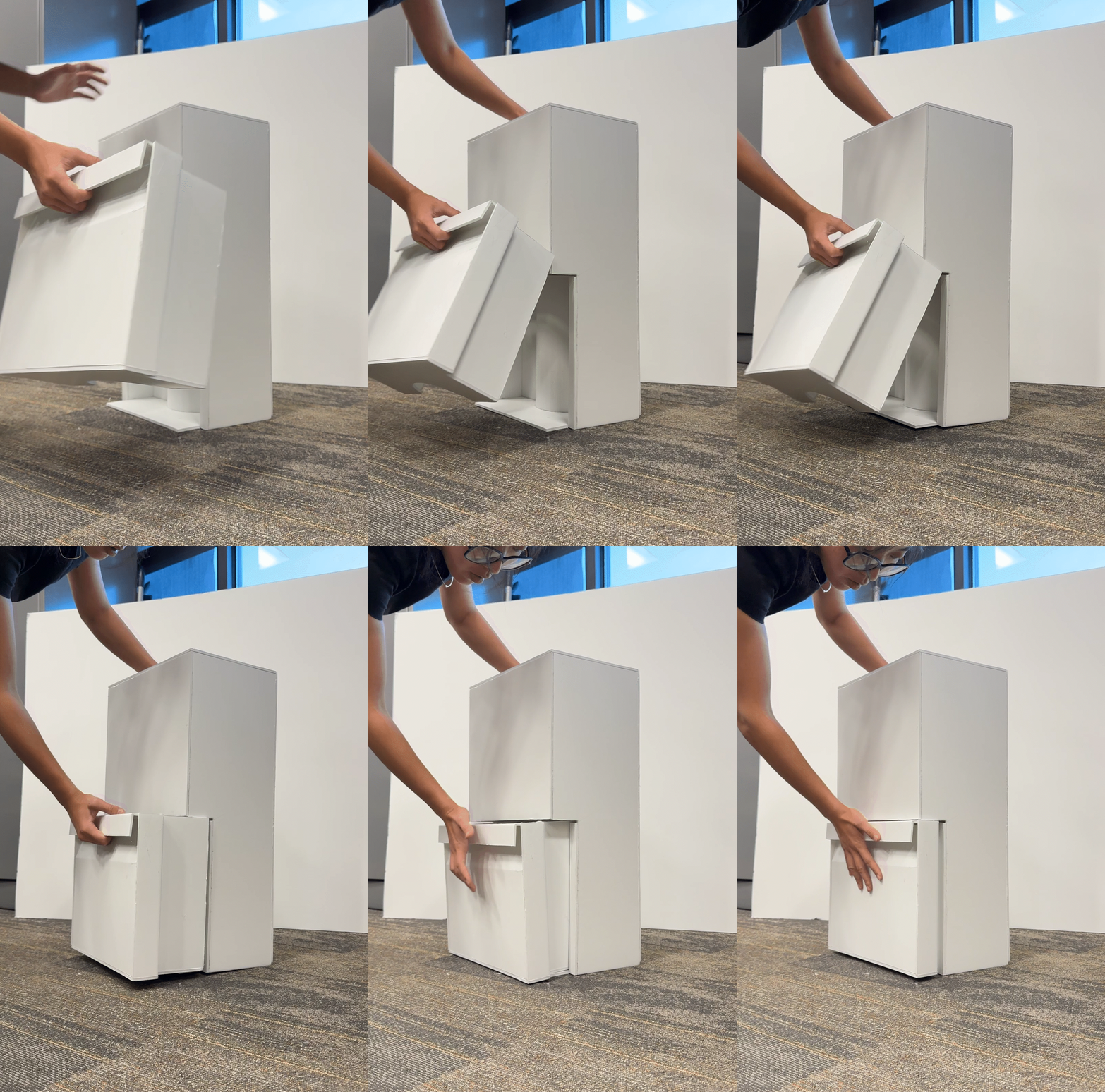
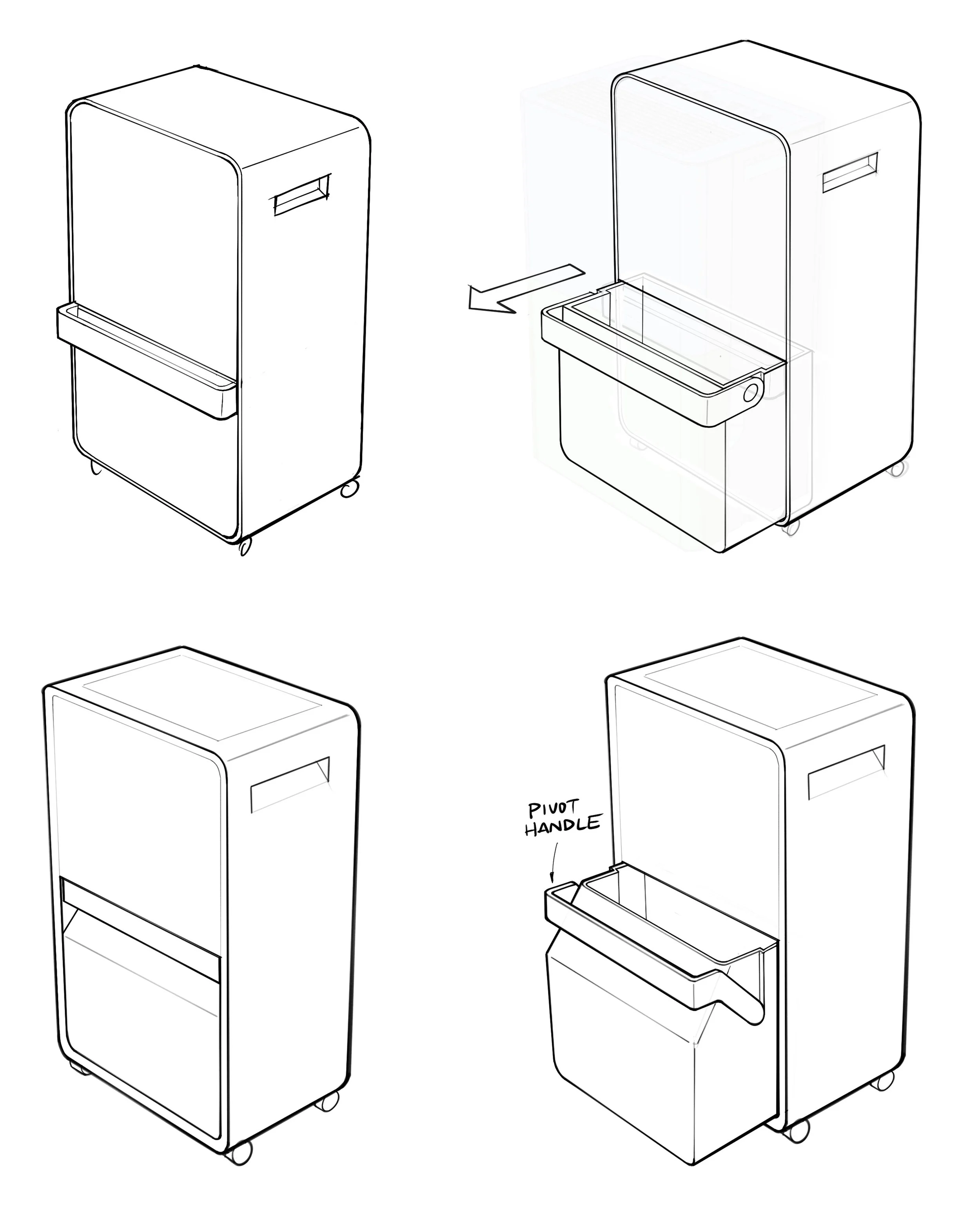
Built-in Handle


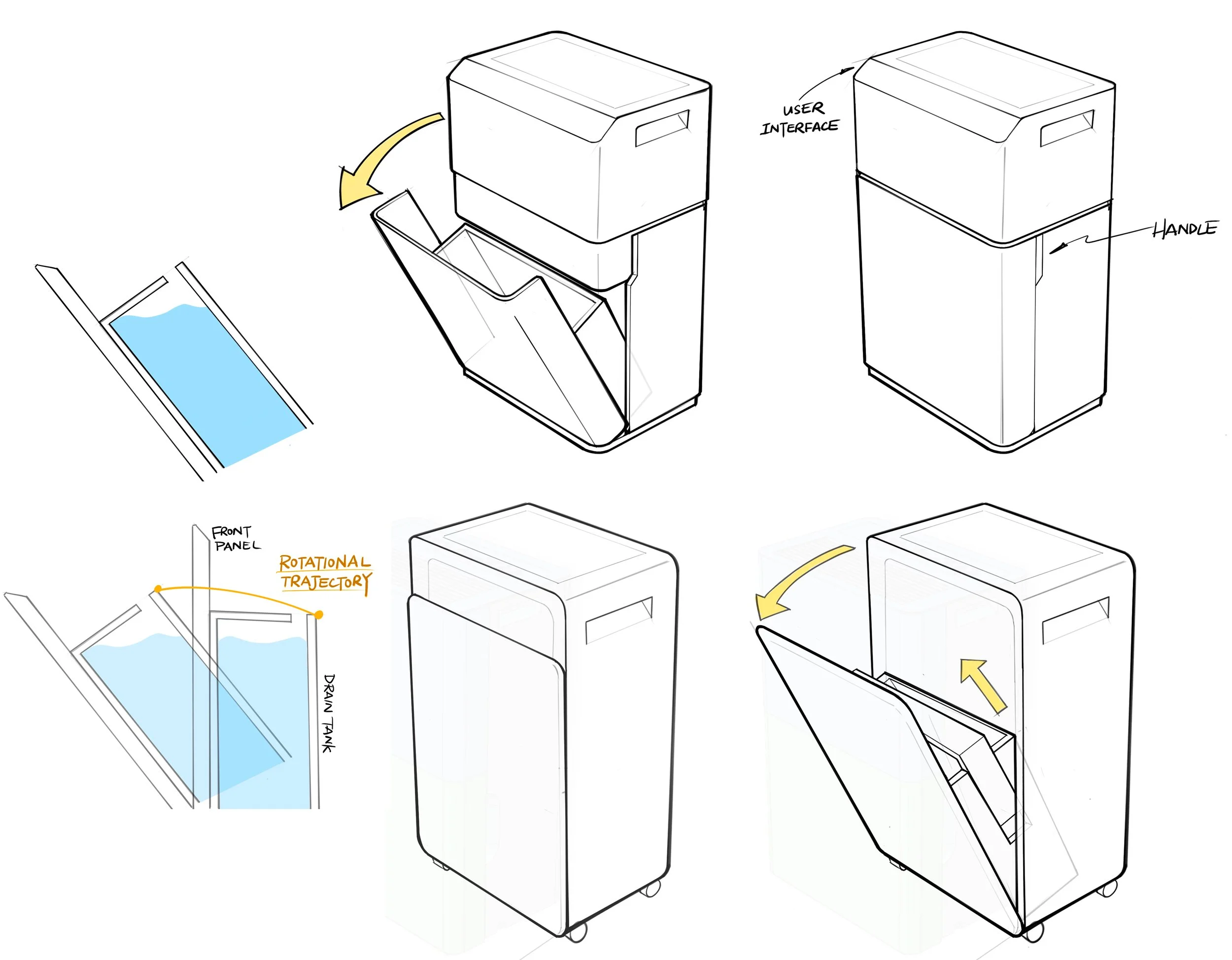
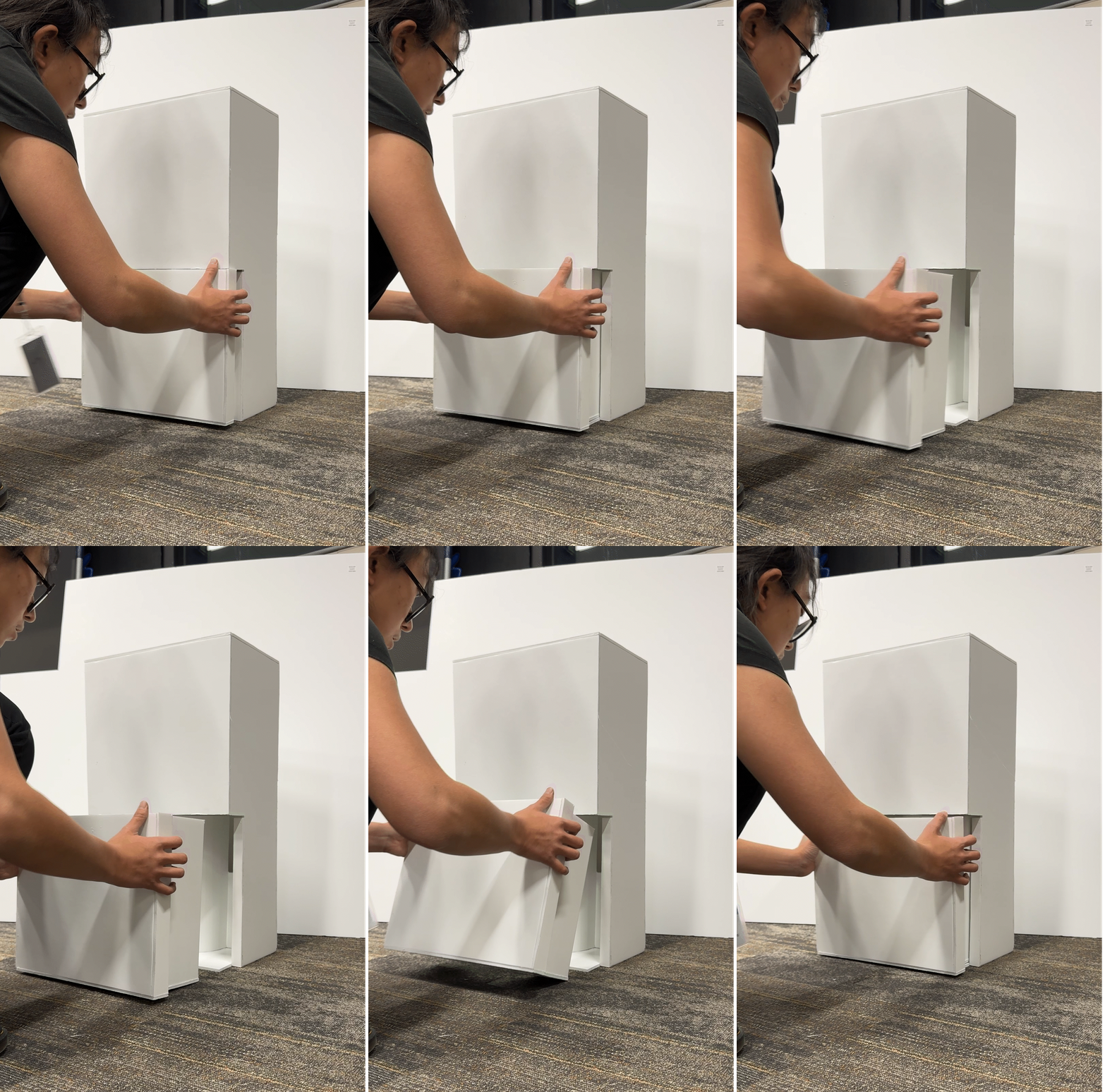
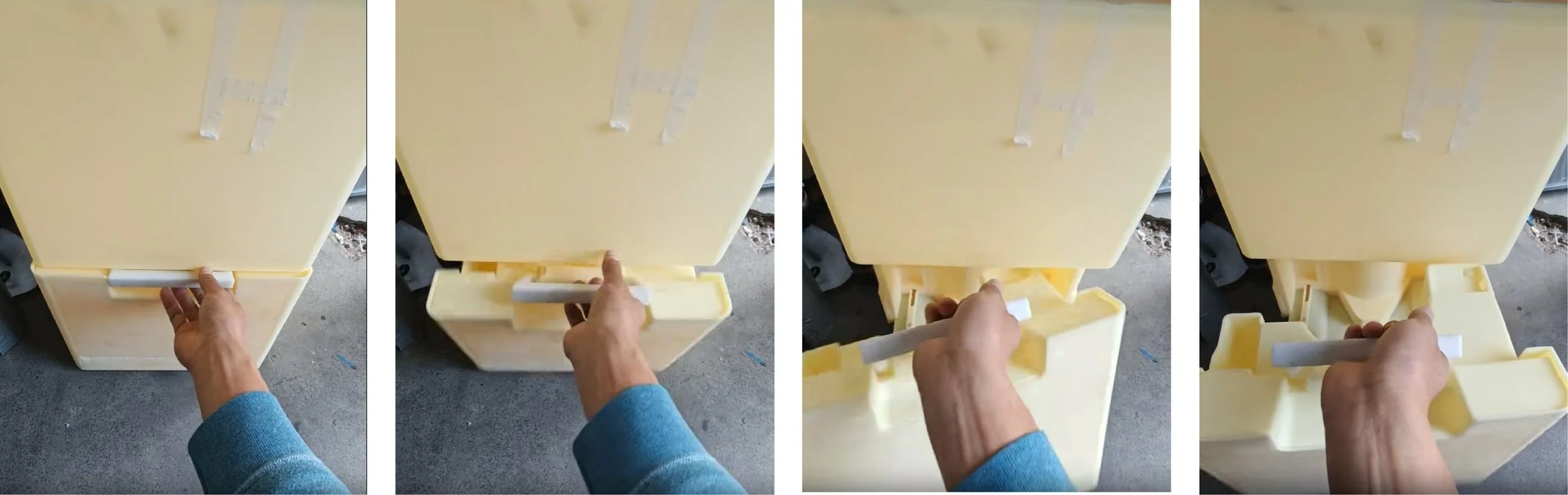
We tested with 14 people around the office who cover a wide range of age, height, occupation, and dehumidifier experience. Due to the foamcore construction of the prototype, the weight of the tank was not simulated, however, participants were reminded of this consideration.

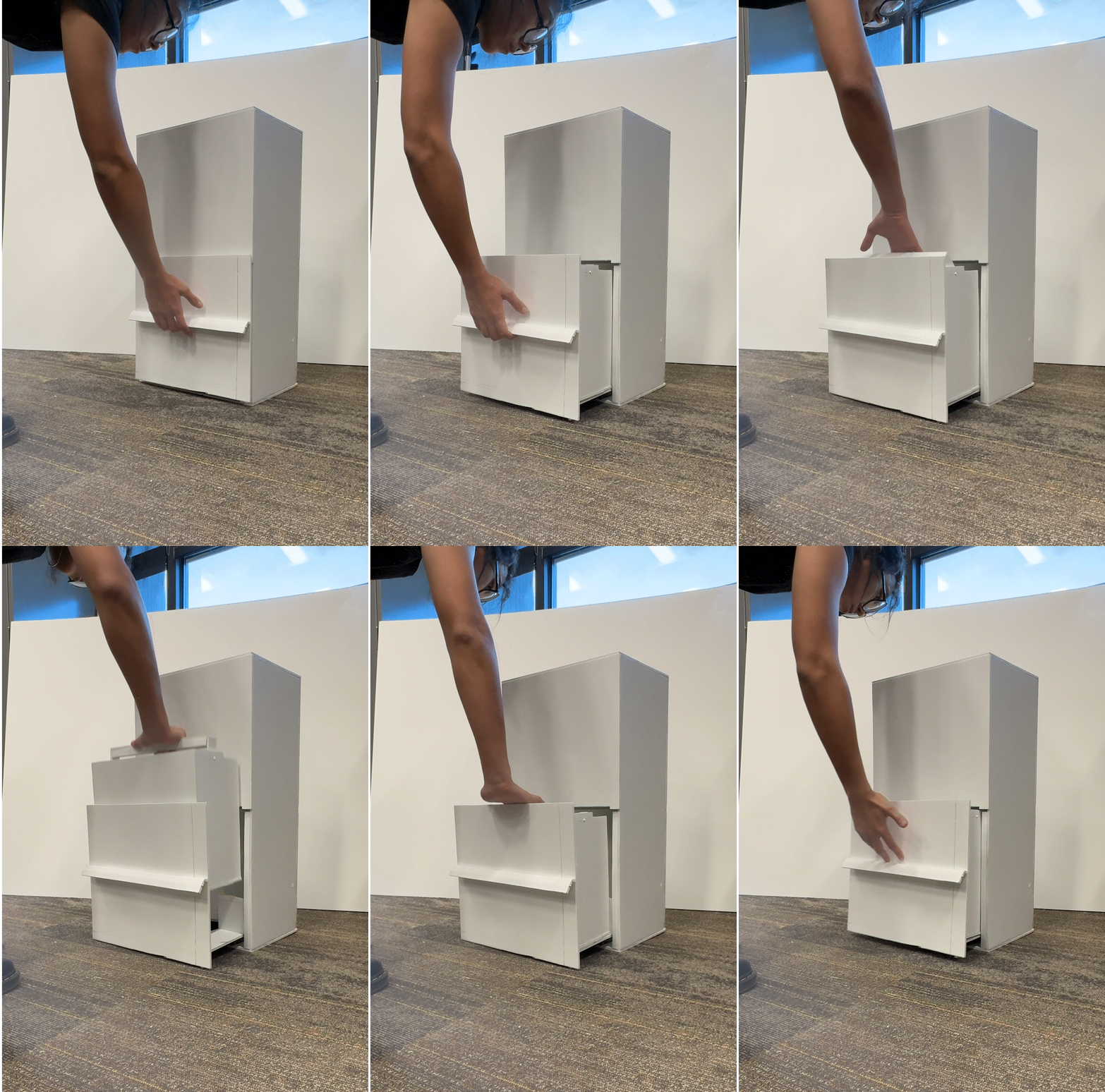
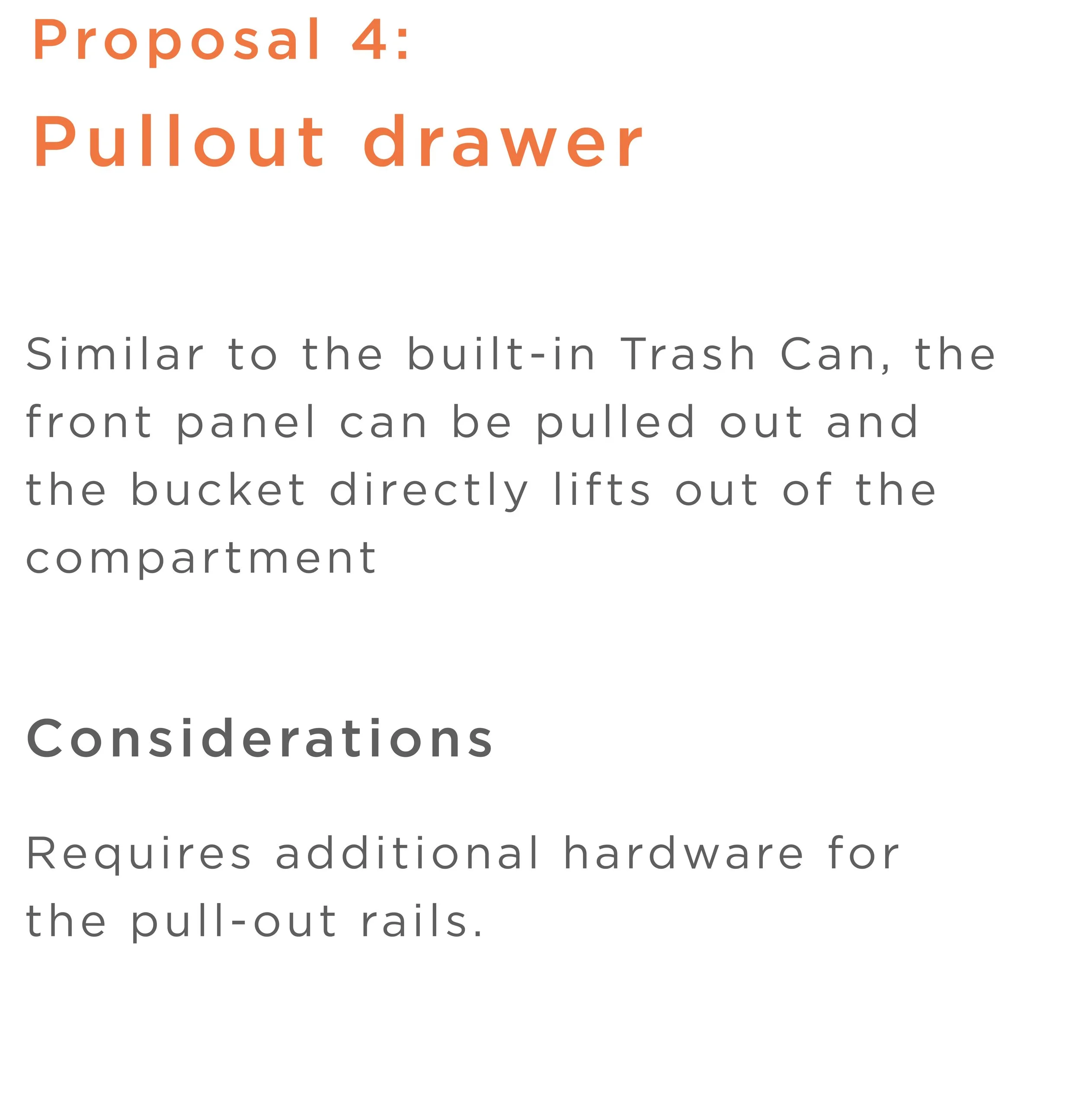
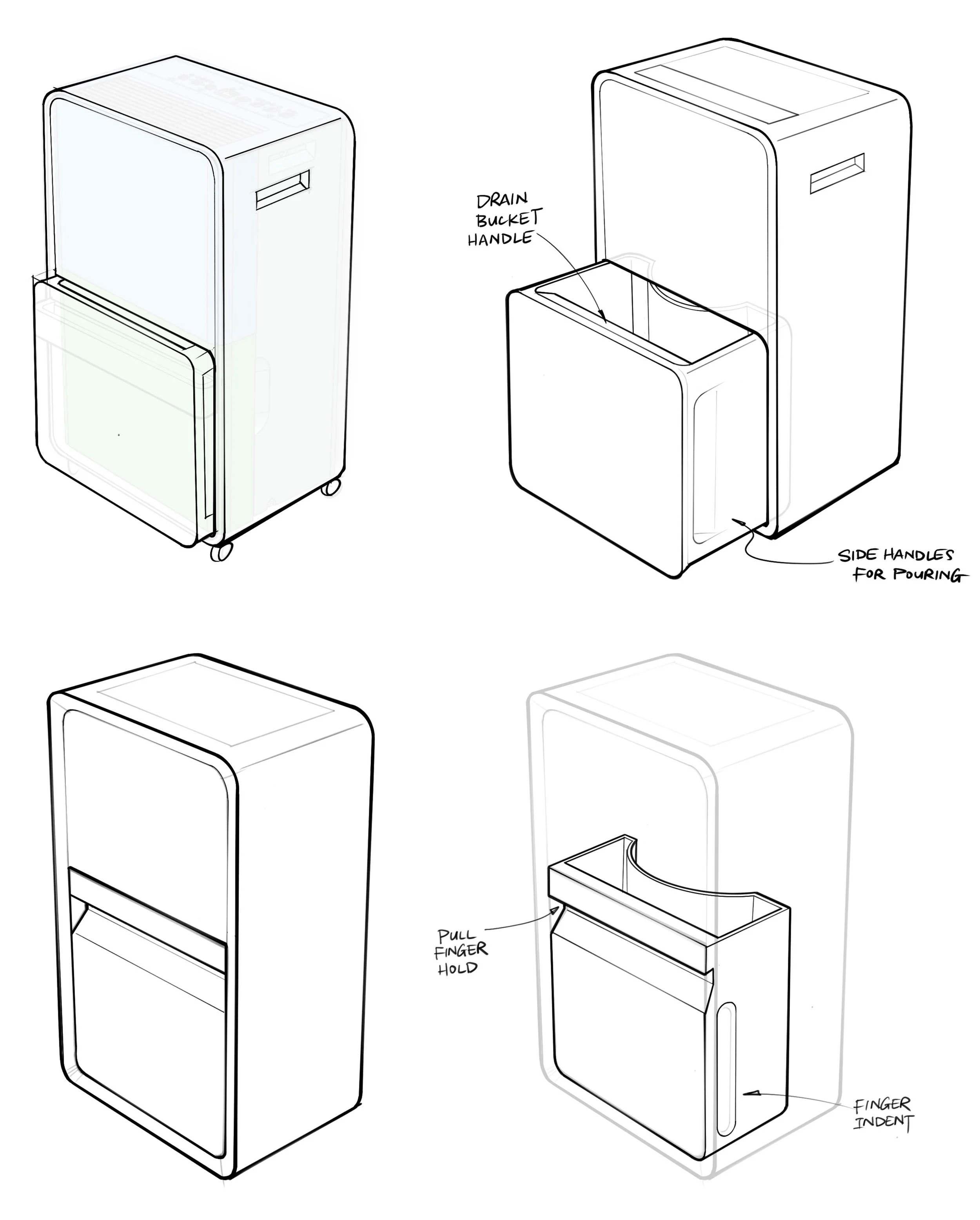
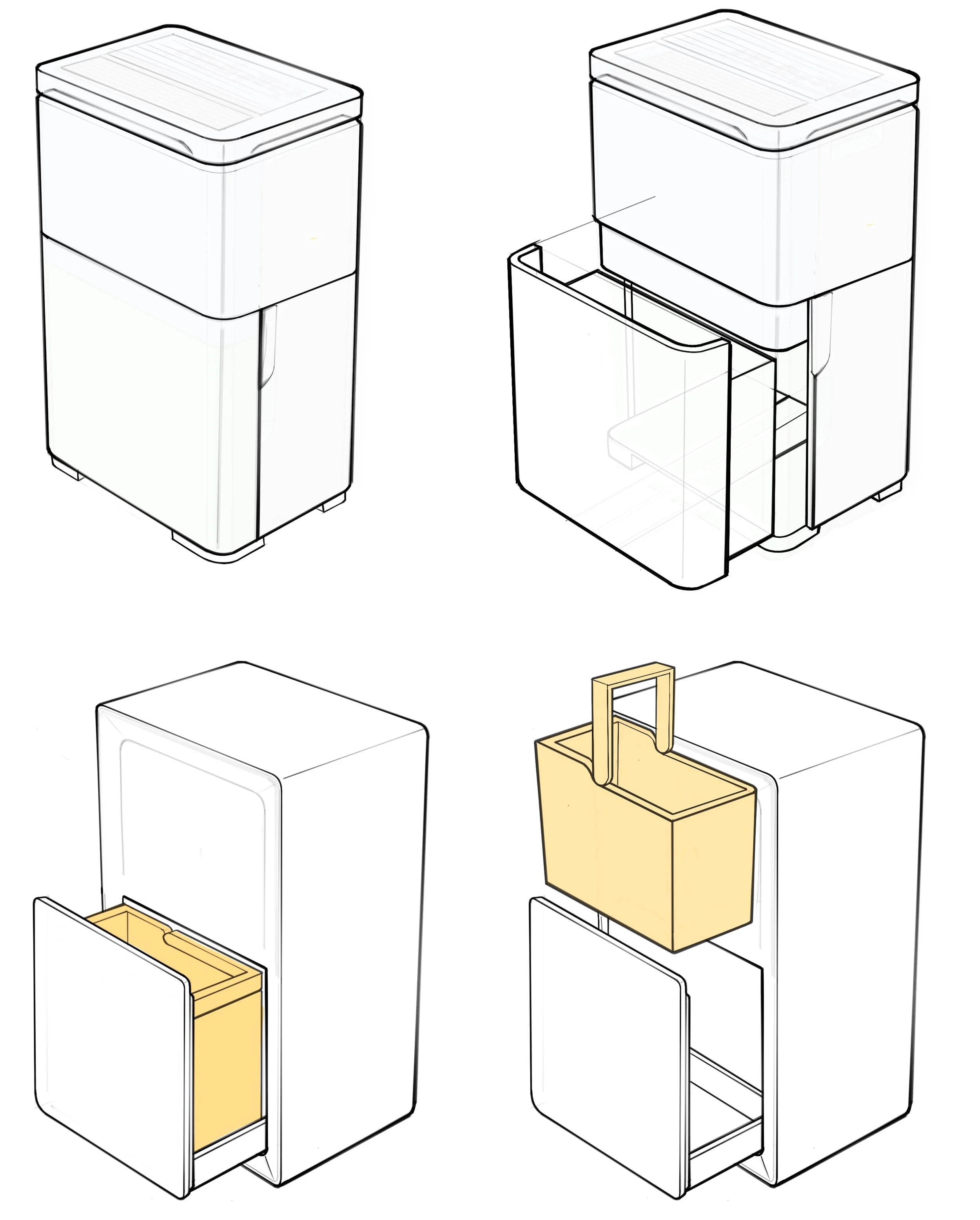
Pullout Drawer
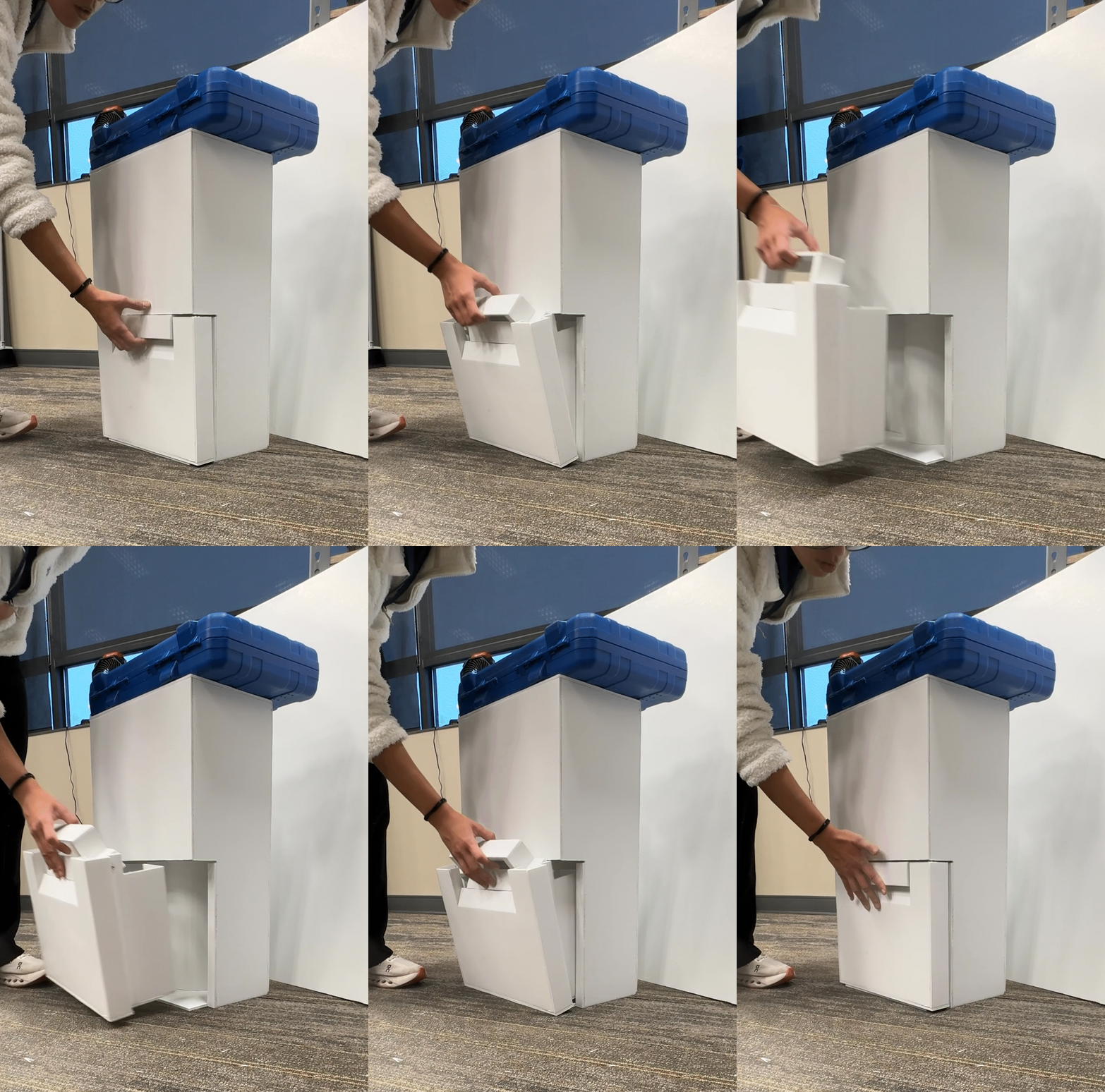
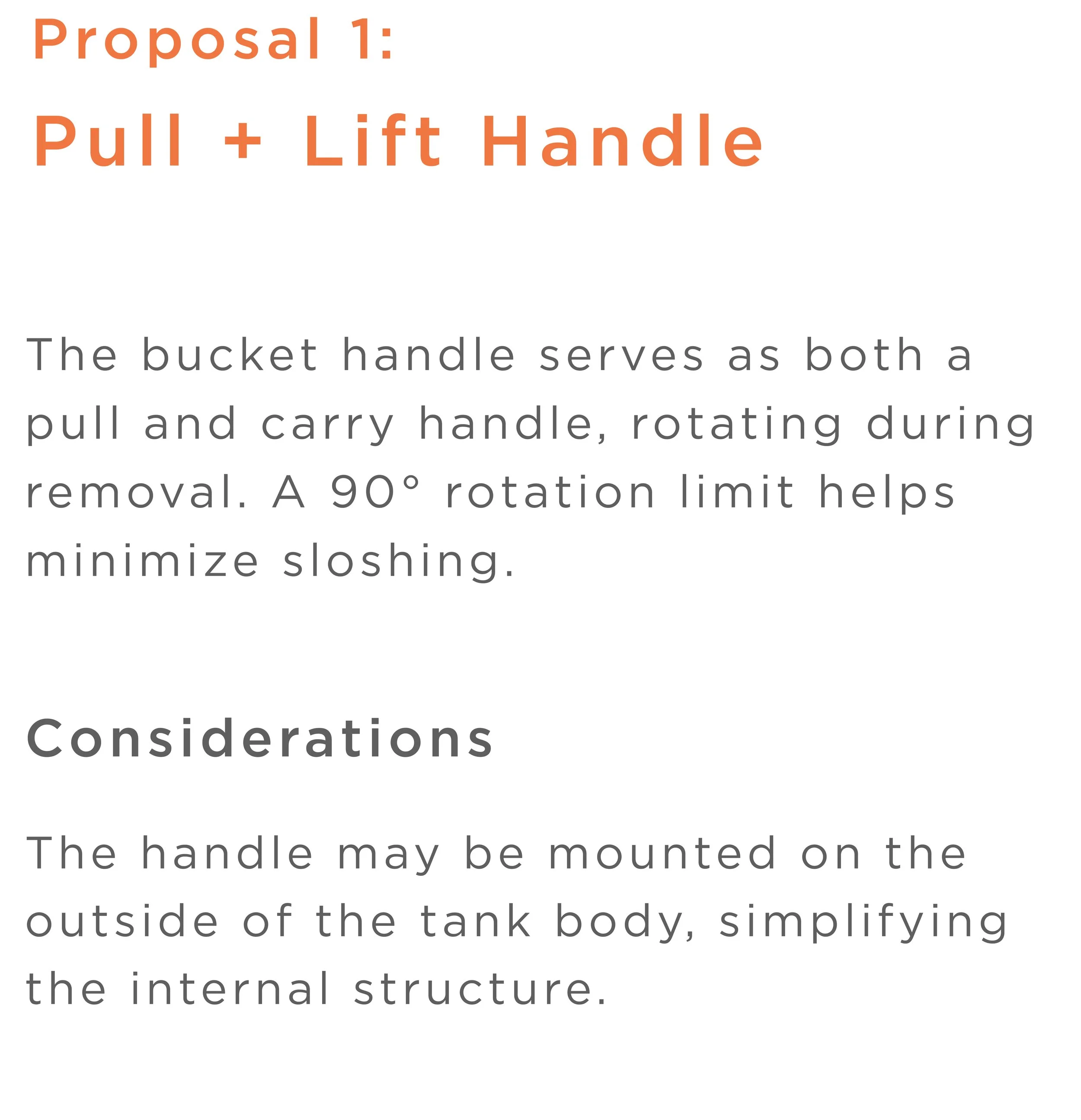
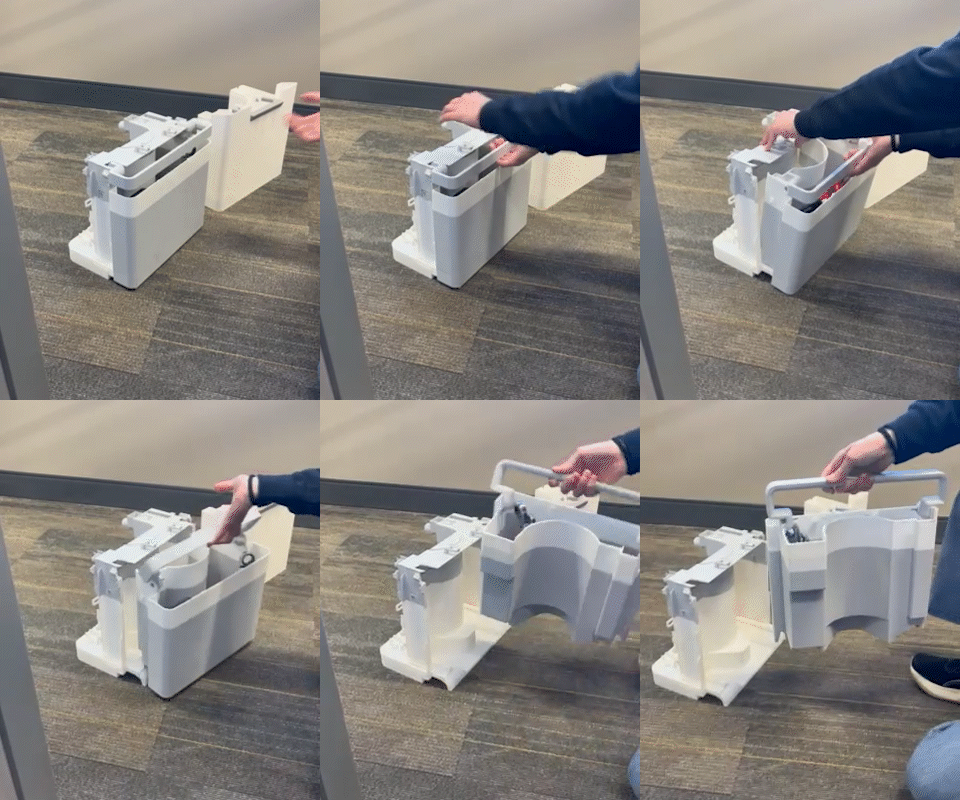
Pull & Lift
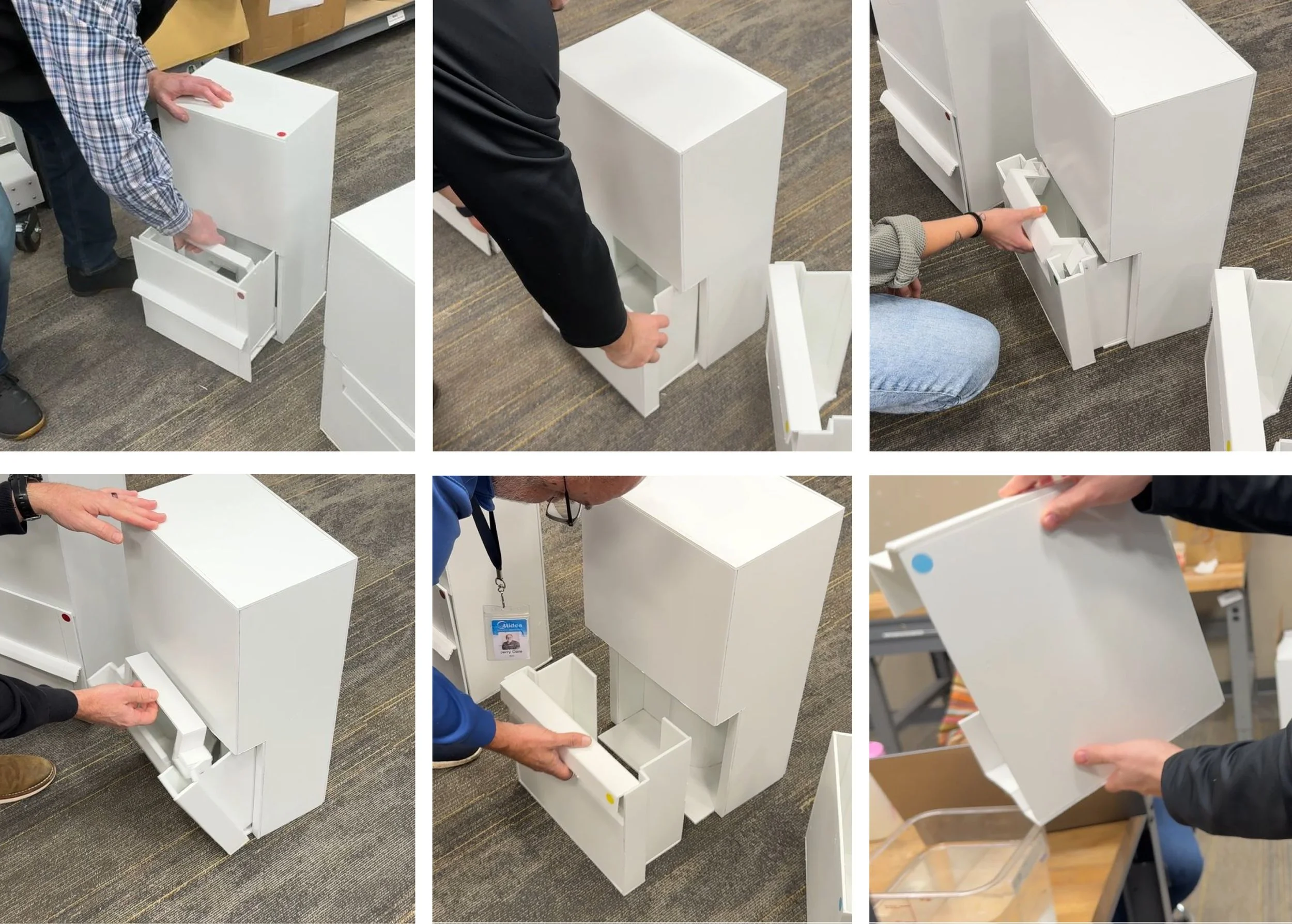

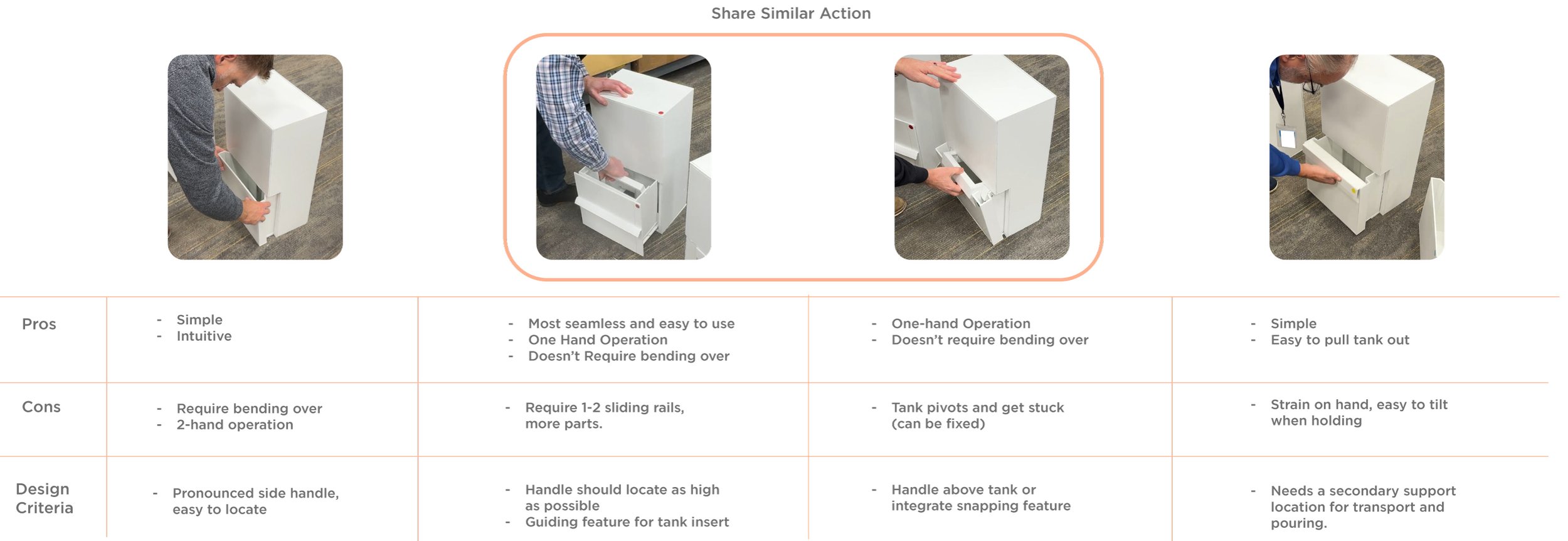
Pullout Drawer (Best Performer)
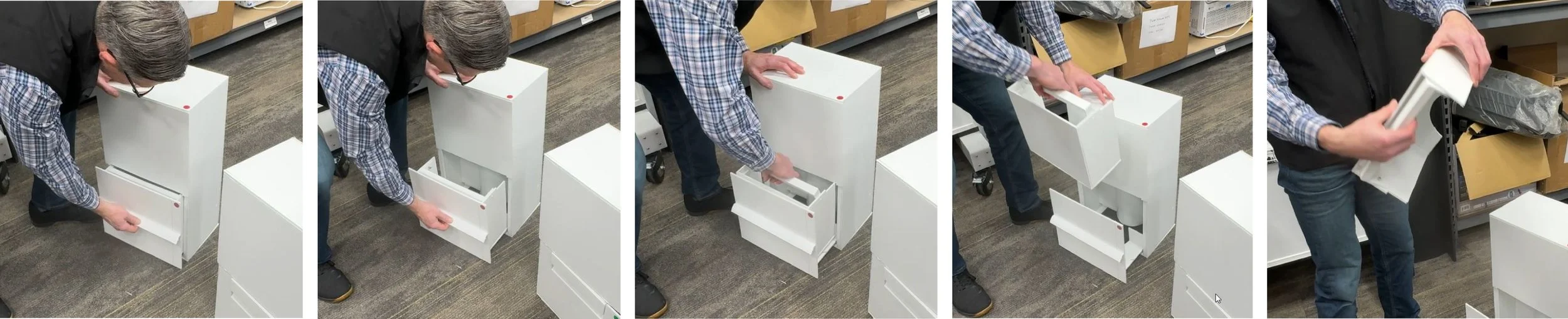
• Many users liked how drawer design separated the pulling and lifting action, eliminating any potential strain.
• They did not mind that it is a 2-step operation and loved the one-handed operation
• Most users preferred the drawer handle to be near the top of the bucket so there is no bending over required.
Pull & Lift
• Most participants liked the bucket style handle, it feels secure and allows user to easily transport it to a sink, even when they need to open doors.
• Many loved the one-handed operation, where they can hold the top of the unit with one hand (stabilize themselves and prevent unit from rolling), and pull & lift the tank with the other hand.
• A lot of users criticized the pulling out motion where the tank would pivot forward and get stuck when pulling out.


Quotes
“smooth process”
“very easy to remove”
“Would like the handle higher up so I don’t have to bend over as far, likes the motion of this one, less force to remove.”
Quotes
“smooth process”
“very easy to remove”
“Would like the handle higher up so I don’t have to bend over as far, likes the motion of this one, less force to remove.”
Ergonomic Refinement
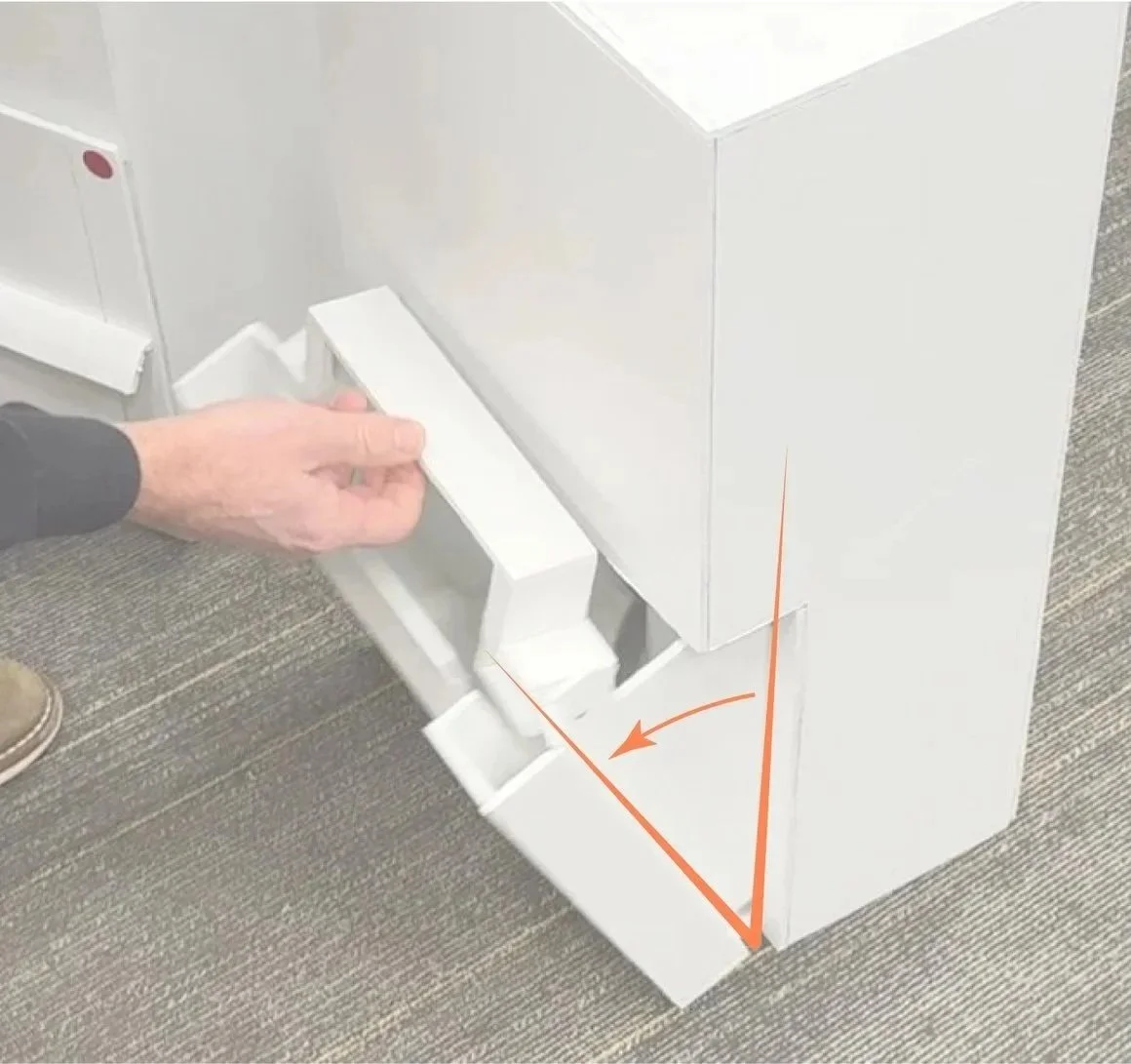
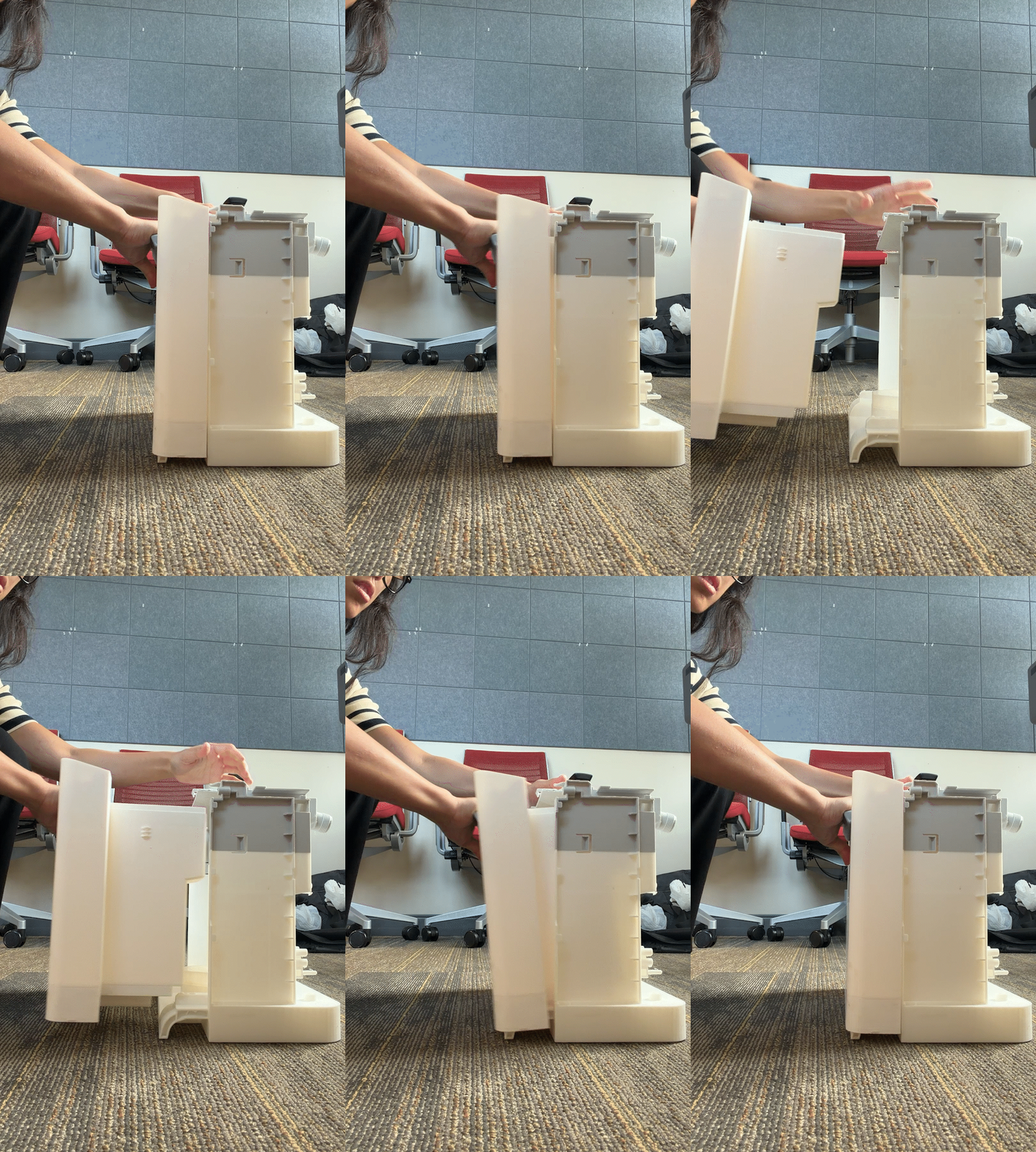
The China team made a prototype using the pull and lift concept. Based on the video and the CAD, I noticed several potential issues:
potential sloshing due to swivel handle
Ribbing structure that obstructs hand access
Any forward pivot due to the weight of the bucket that prevents smooth bucket removal
The Pull & Lift handle was favored because of the simpler hardware and one-hand operation.
However, there are ergonomic issues with this design, including the forward pivot when pulling that can cause sloshing issues. And as user transitions from pulling to lifting, the back corner of the bucket catches onto the unit.
Forward Pivot Causing Sloshing Water
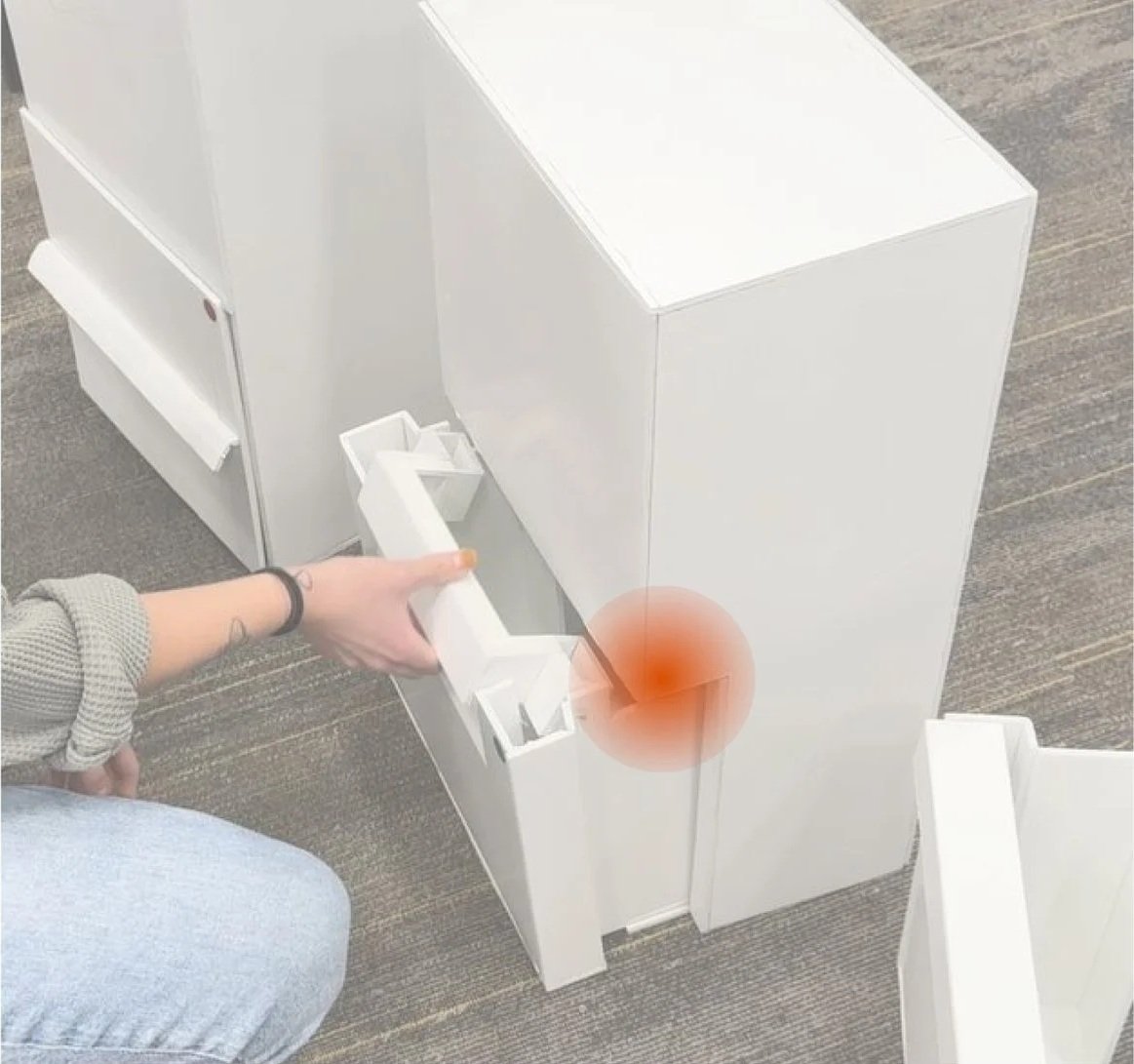
Bucket Gets Stuck During Removal

This handle goes across the entire front face.
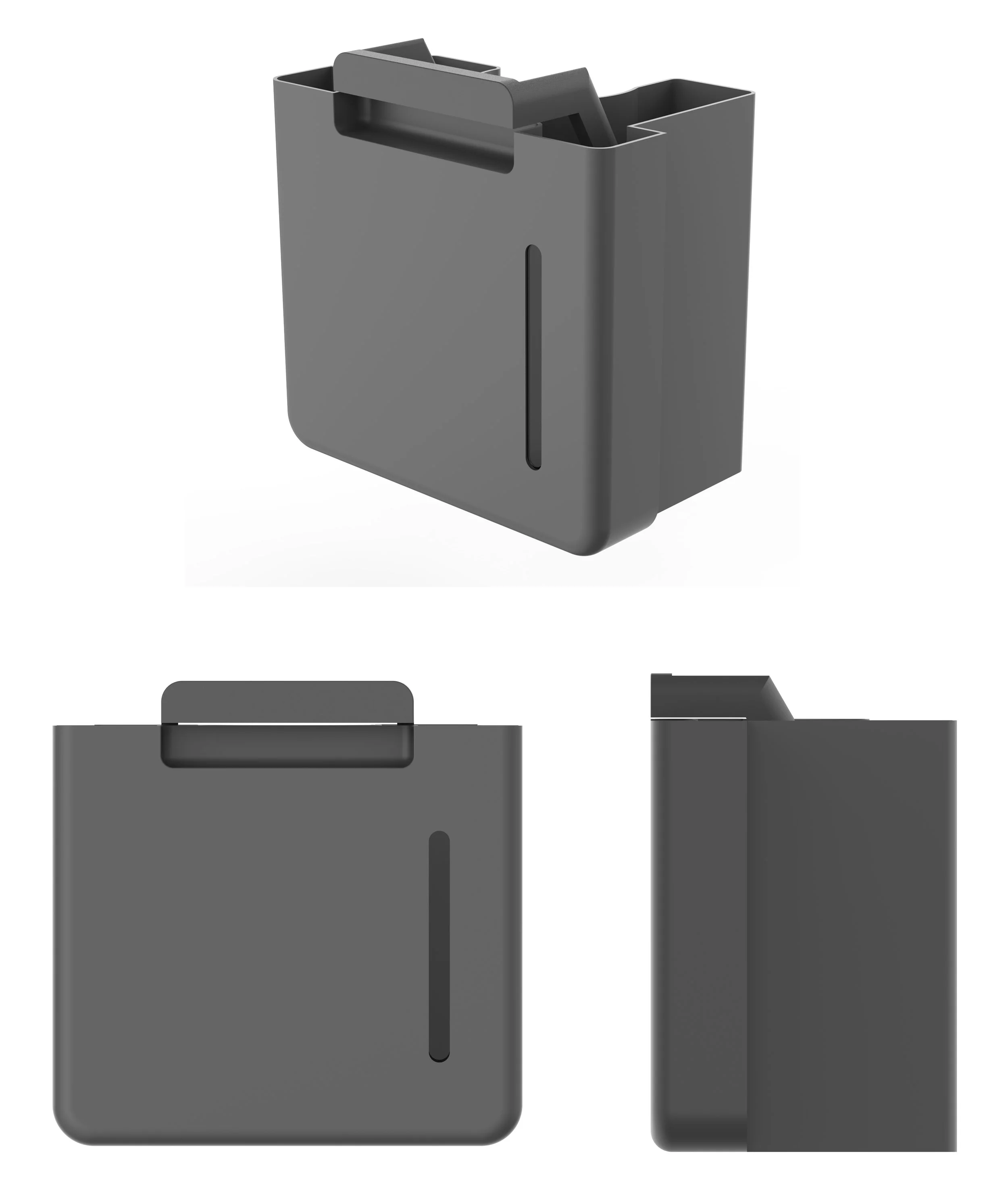
It is mounted onto the side walls of the bucket and does not need ribbing structure, significantly opened up the bucket for easier hand access and cleaning.
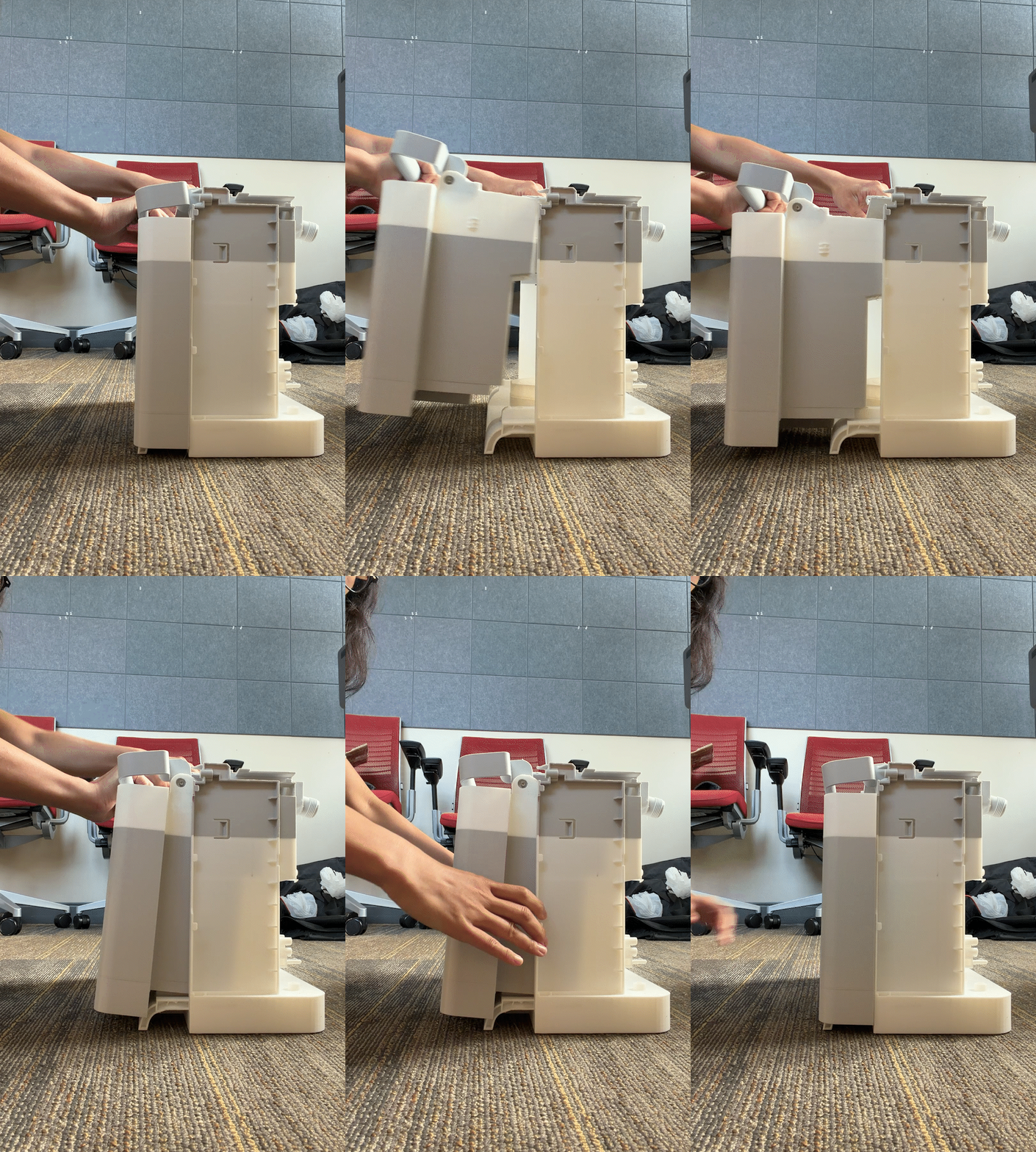
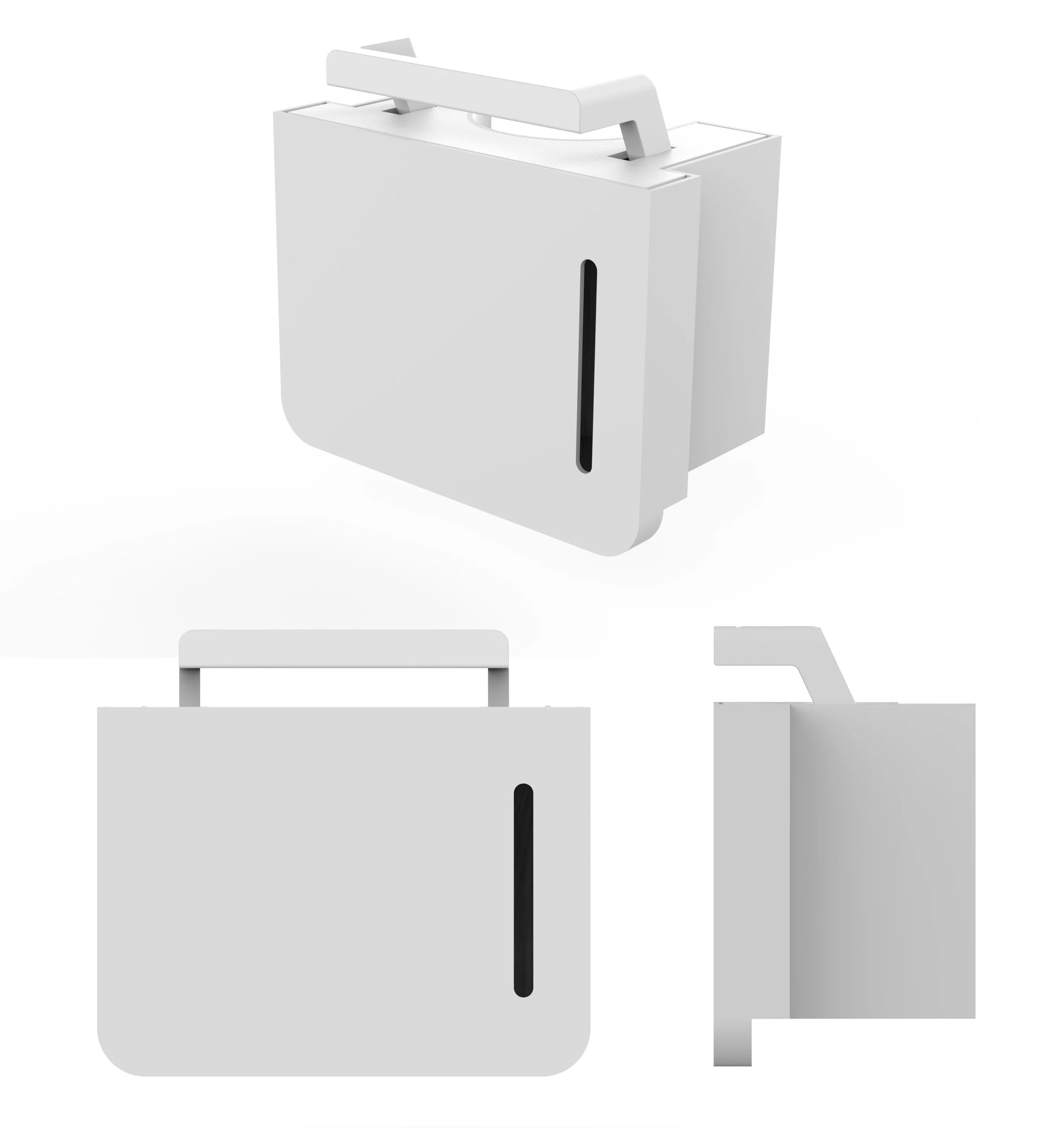
It has snap features that stabilizes the handle in two positions, horizontal for pulling the bucket out, and vertical for carrying the bucket around.
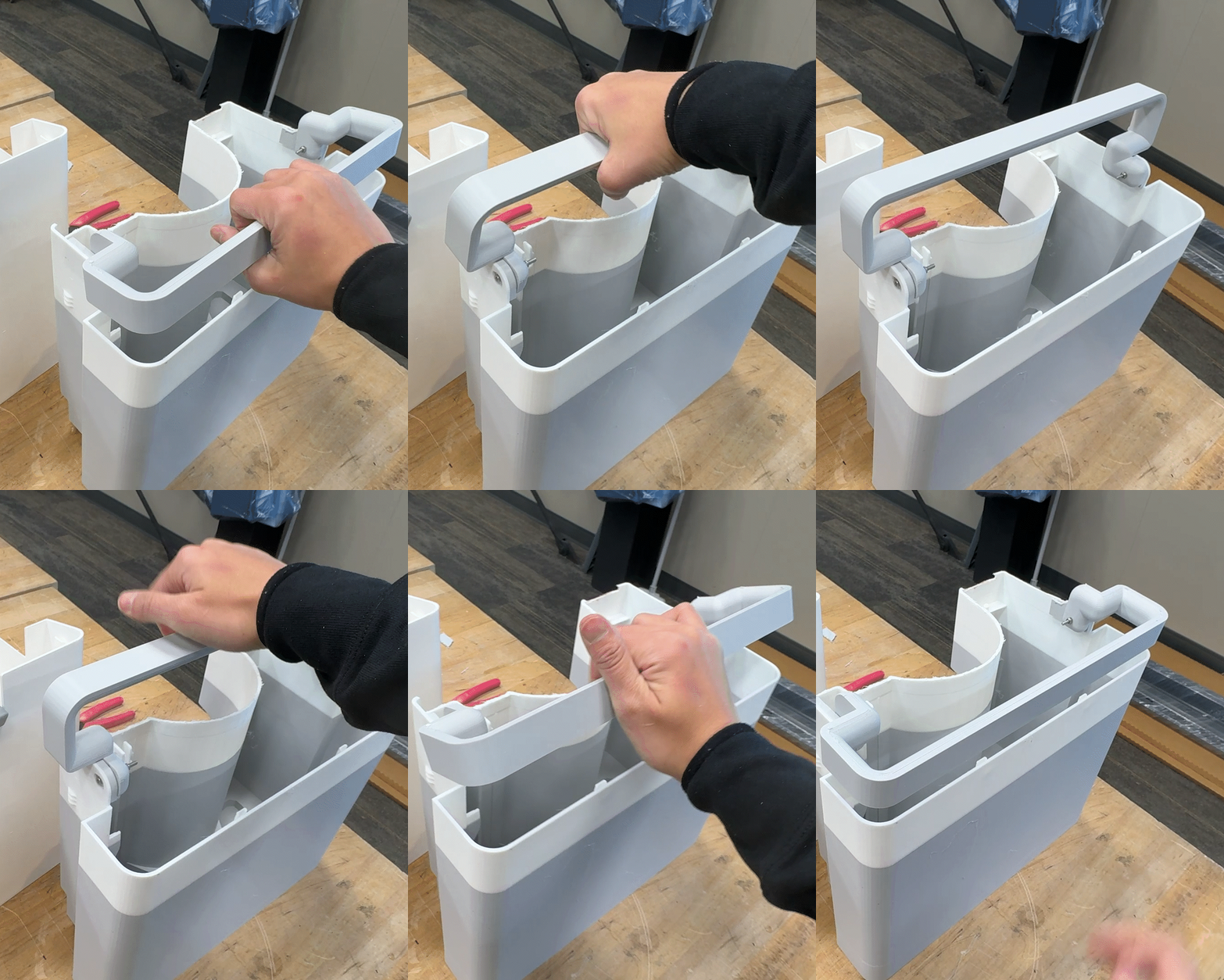

I modified the standard swivel handle by adding a ledge for the user to hold onto when pulling the bucket out. Then the hand raises and grips the handle to lift the bucket.
I also angled the side profile of the bucket to assist with the action of pulling and lifting to minimize catching.

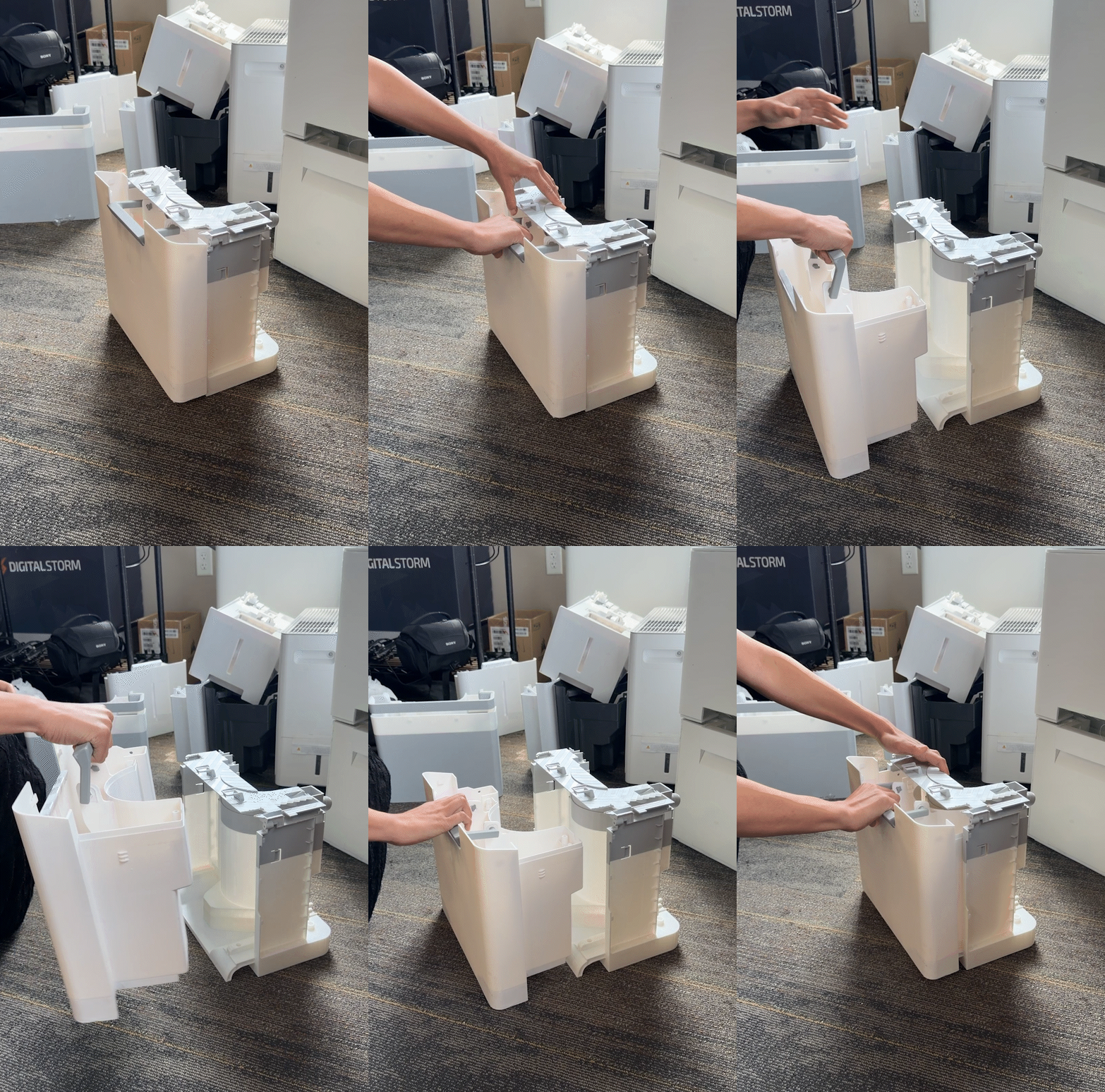
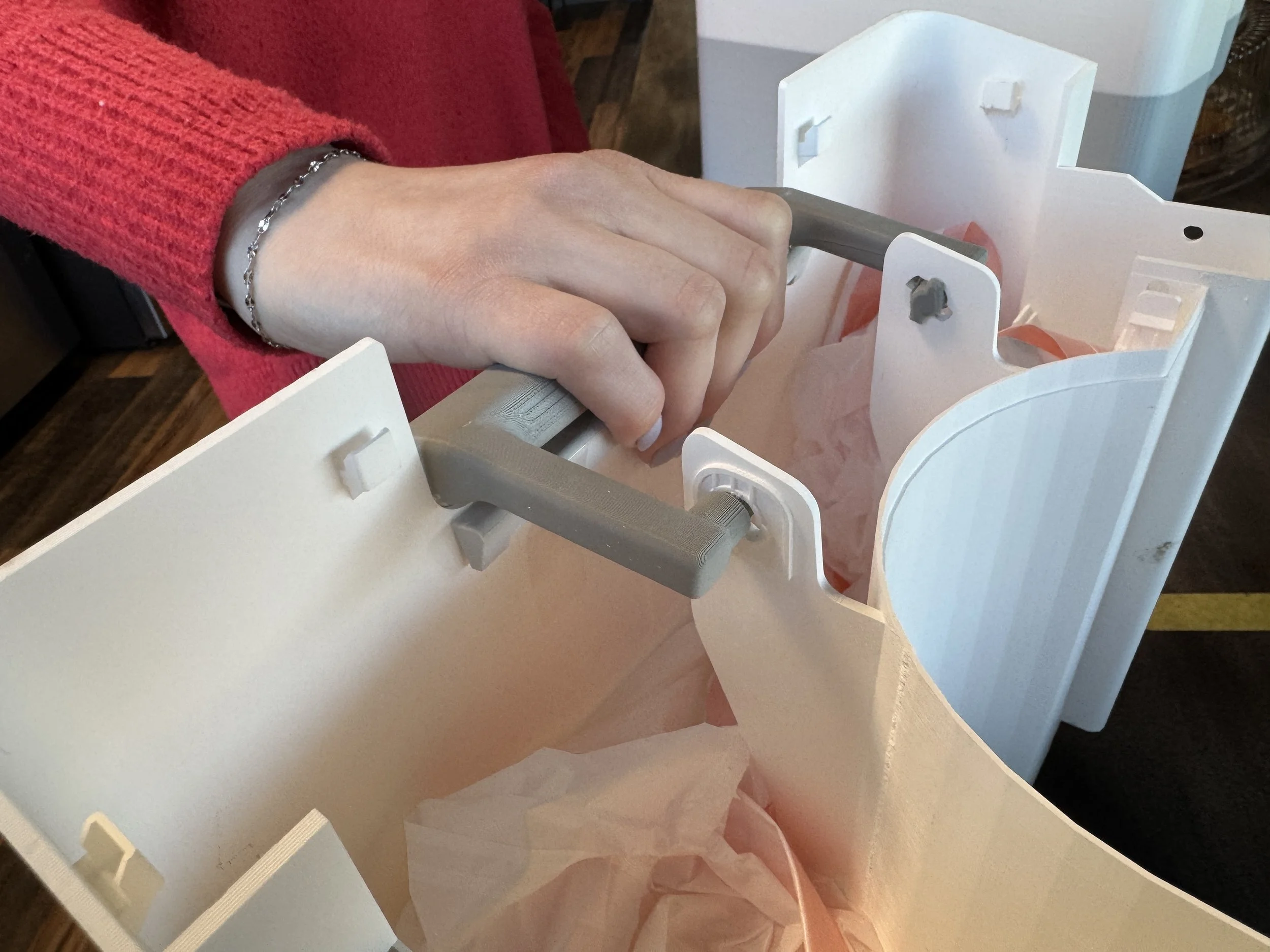

Pouring
The smaller handle is easier to pour than the longer handle, it required the user to pivot their shoulders further
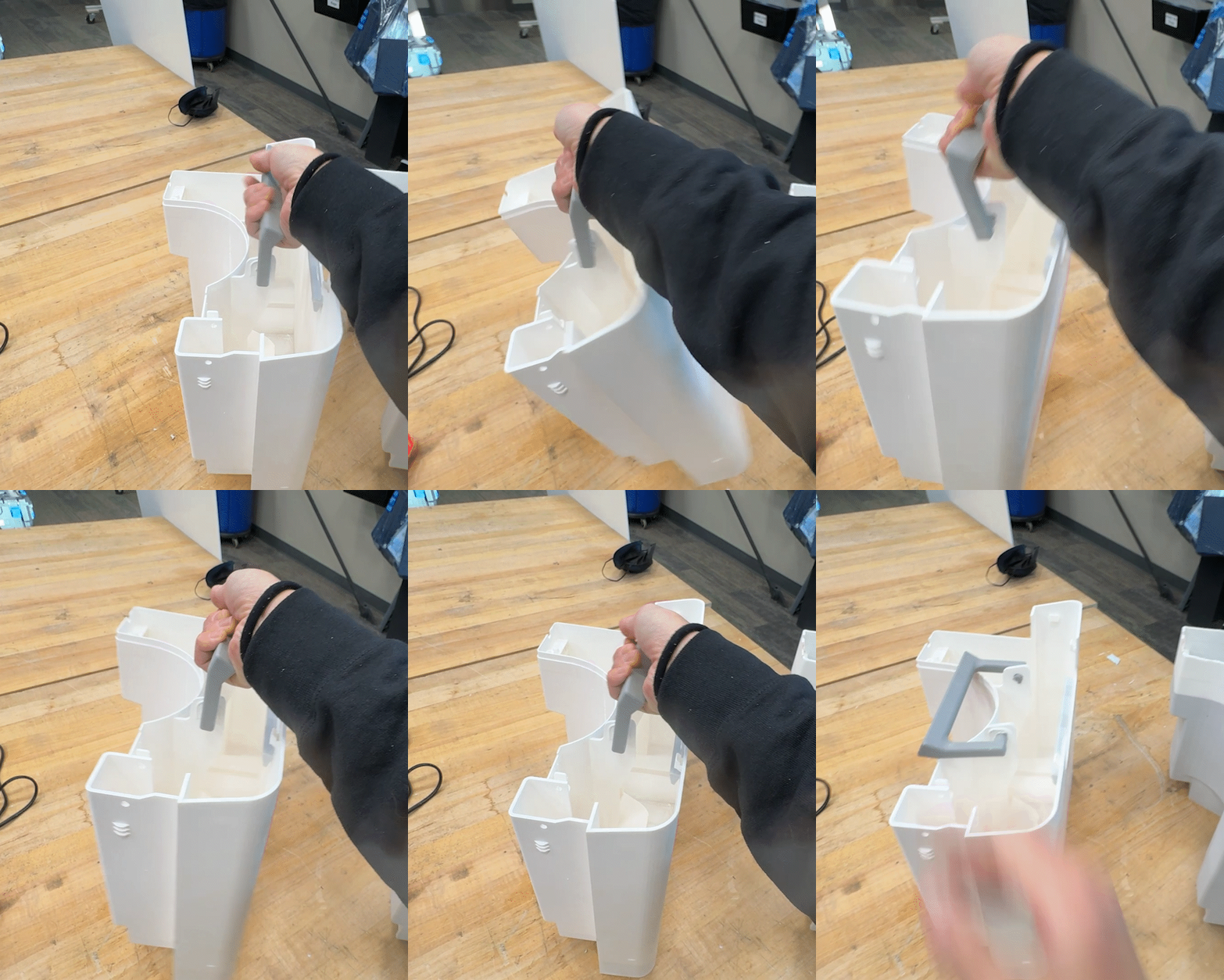
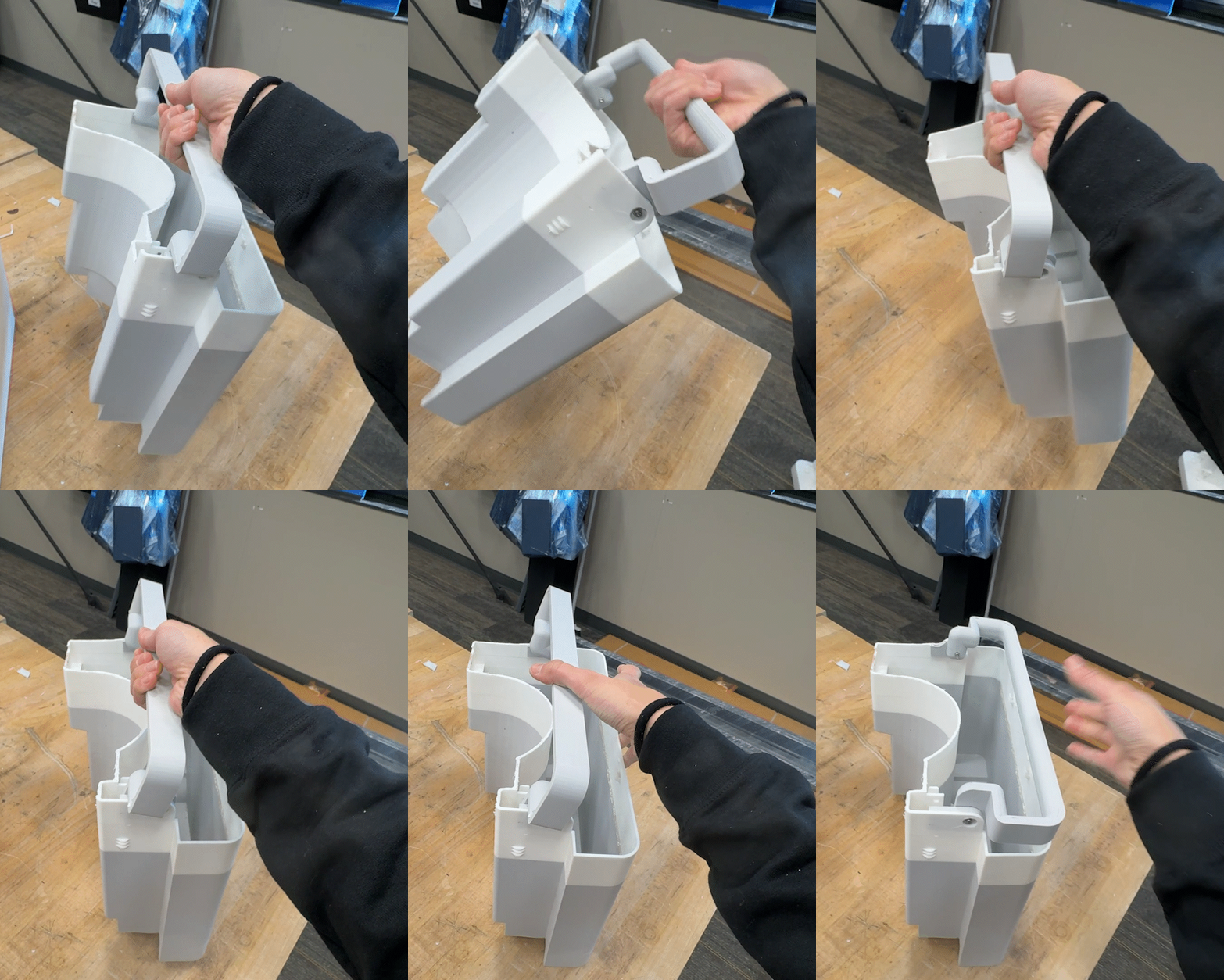
Sloshing
The snap-in handle provides more stability during transport. For the swivel handle, as the user’s wrist rotates, bucket freely pivots, causing sloshing
Forward Tip
Top grip handle provides the least amount of front pivot during removal, as the users grip keeps the bucket perpendicular to the unit.
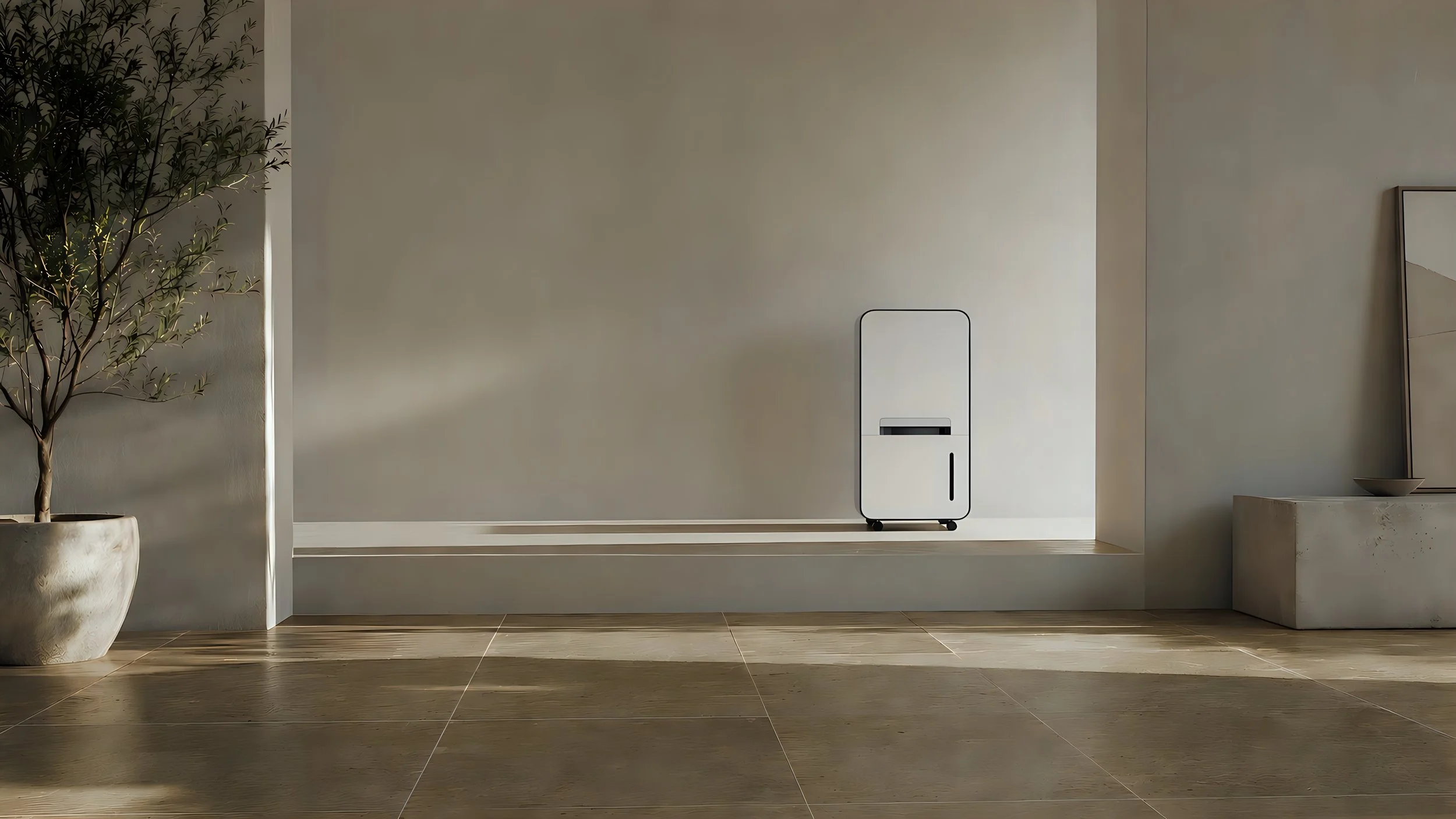
Form Design Objective
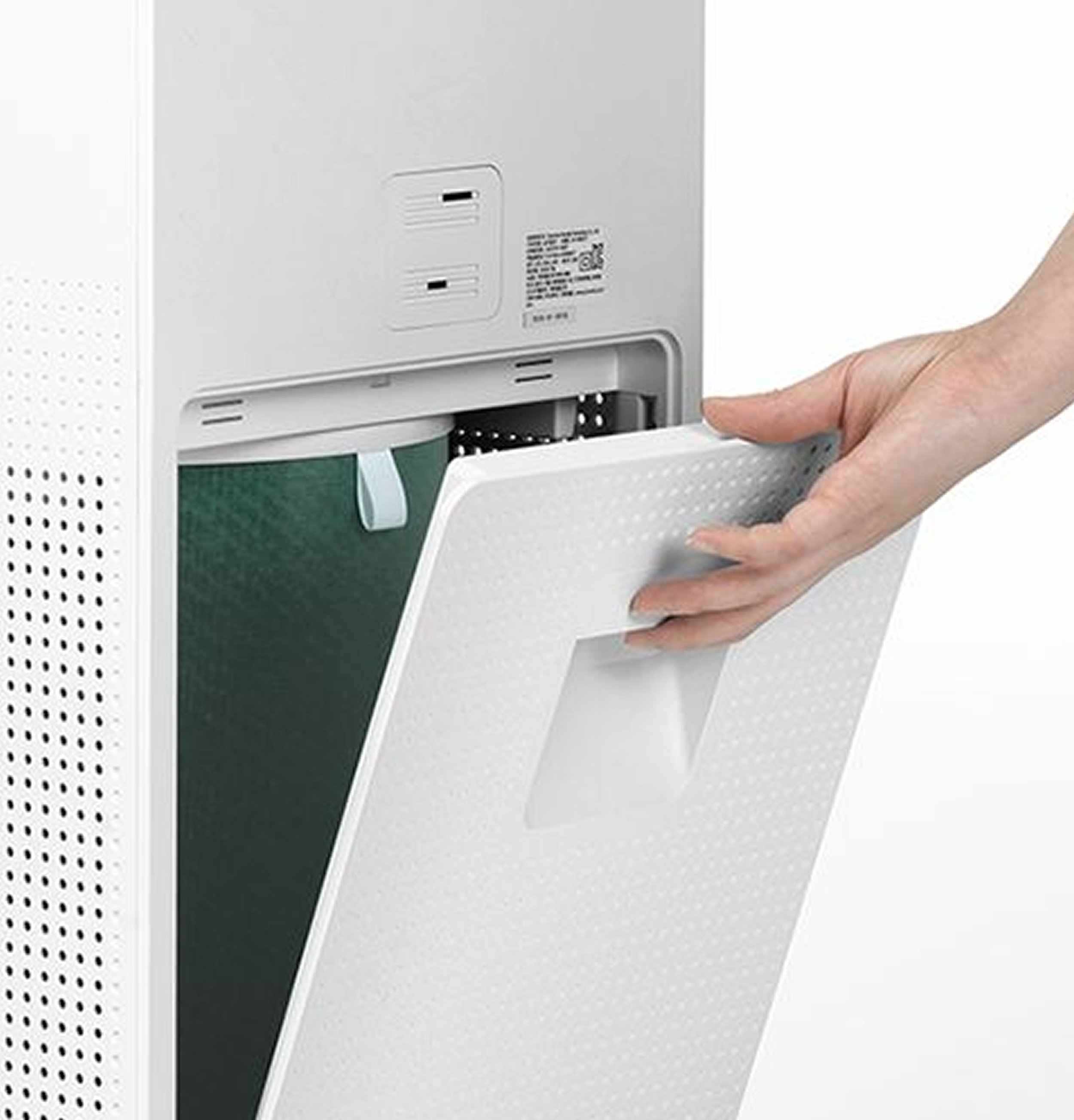
Easy To Differentiate
A more visually modular approach to maximize OEM/OBM differentiation. Minimal tooling change while maximizing number of looks.
Brand Continuity
Integrate notable design features from other Midea platforms in or adjacent to the dehumidifier category. Start building a more visually coherent product family.
Highlight the Interaction Points
Most dehumidifiers has a unibody look. The tank, filter, and drain line setup are often hidden away. However, those are the most interacted parts. Create usability feature.
Break Apart The Form
Dehumidifiers exist in basement as well as people’s living spaces. It is imperative for us to visually minimize its footprint by breaking apart the form with color or form features.
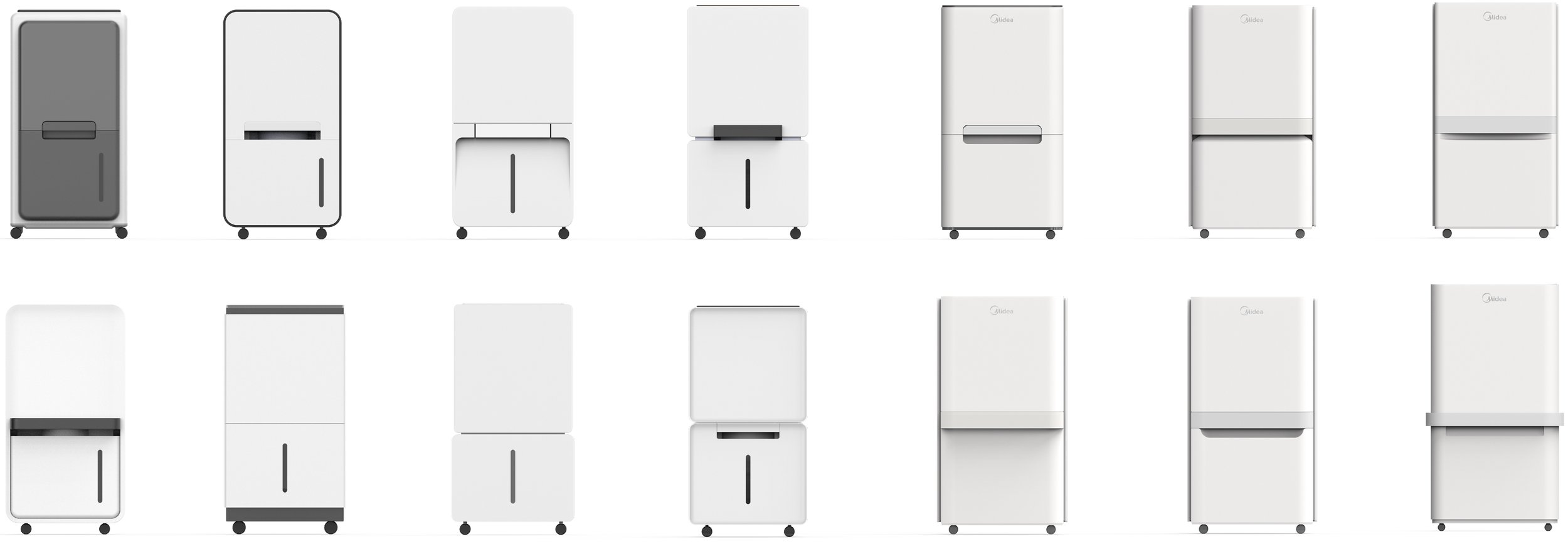
Form Concepts
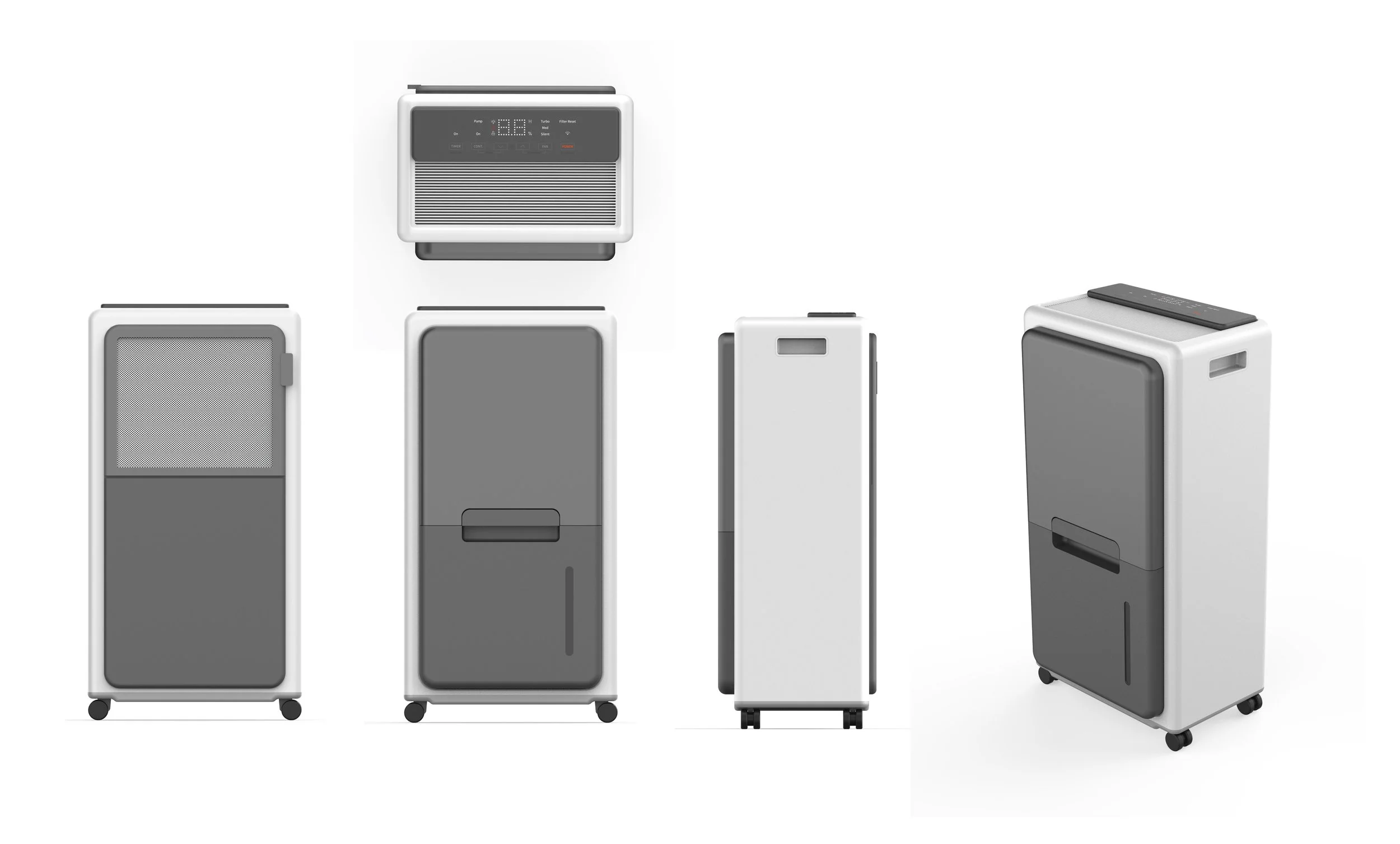
While we are still deciding on the bucket ergonomics, I started exploring several form directions based on the available handle options that would align with the design requirements.

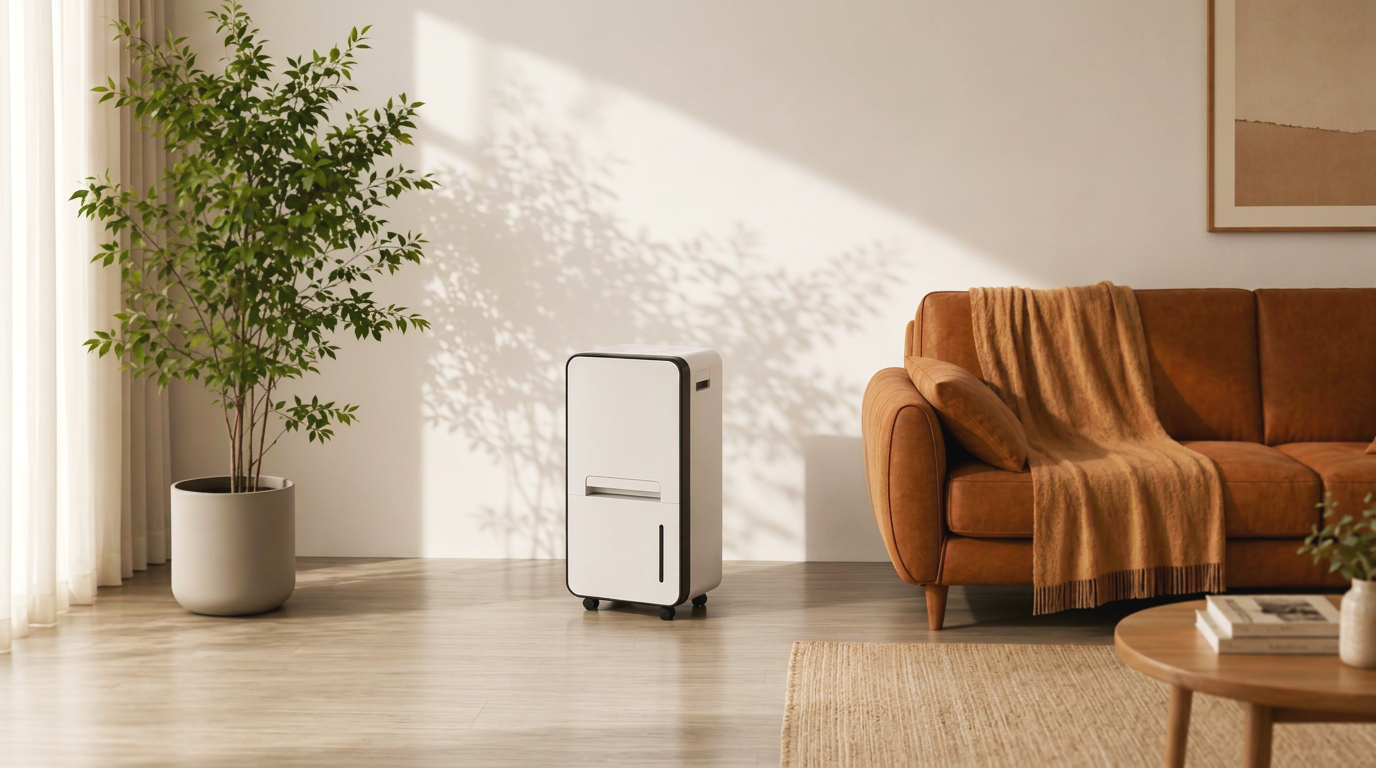
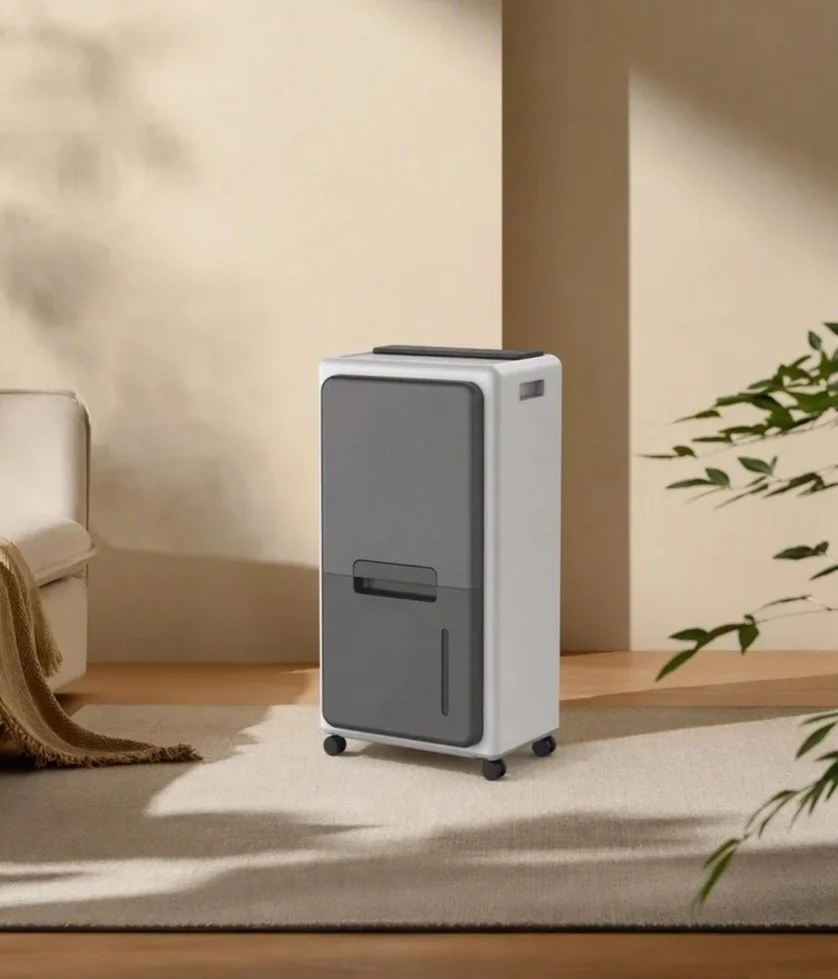
The slight protrusion at the front and back visually connects the front bucket, back filter, and top UI, highlighting all the key interaction points. It also gives a modular aesthetic that make it easy to color block. Compared to most dehumidifiers, it has softer edges, and looks more approachable and different.
Overall Design
Bucket Design

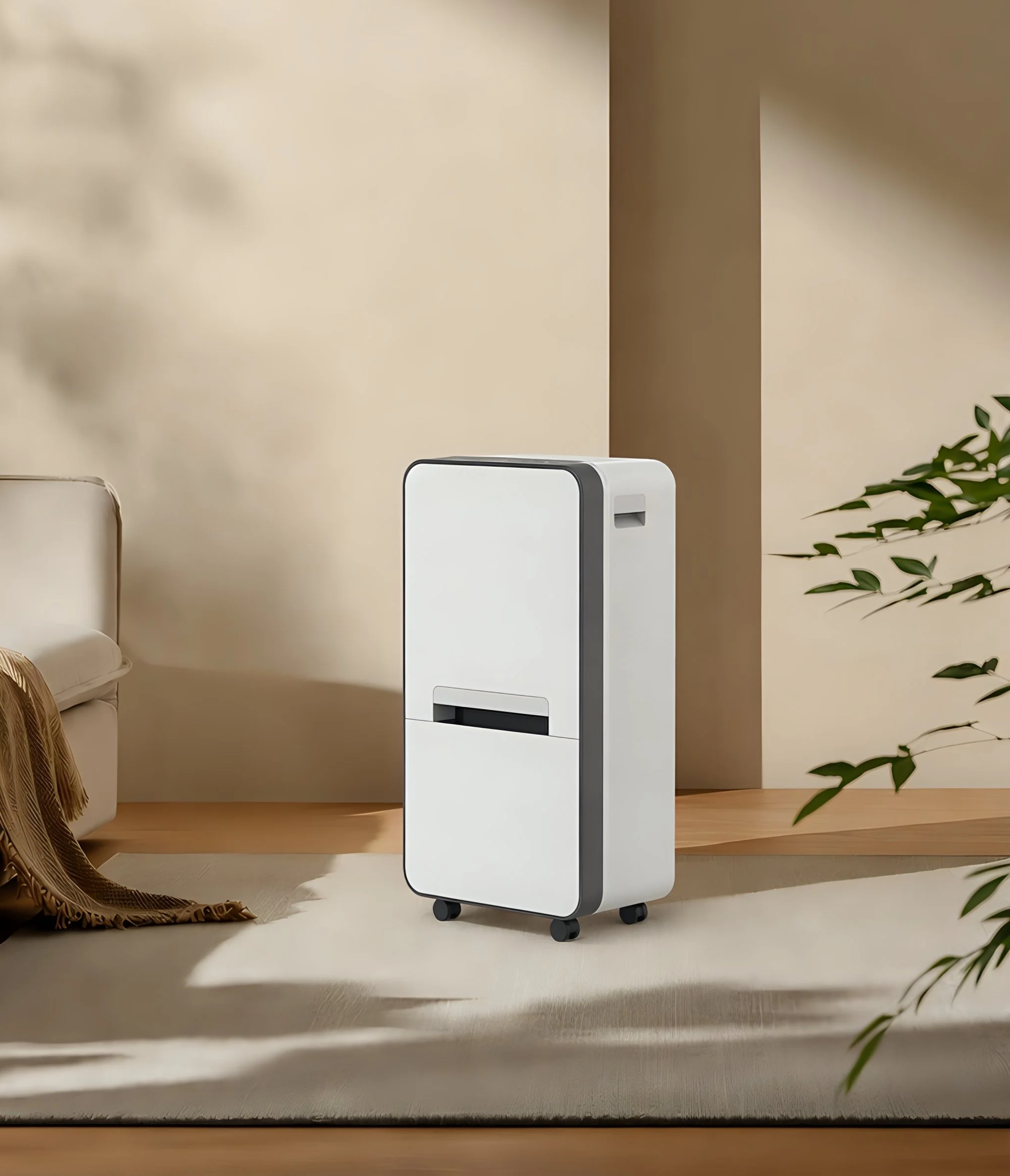
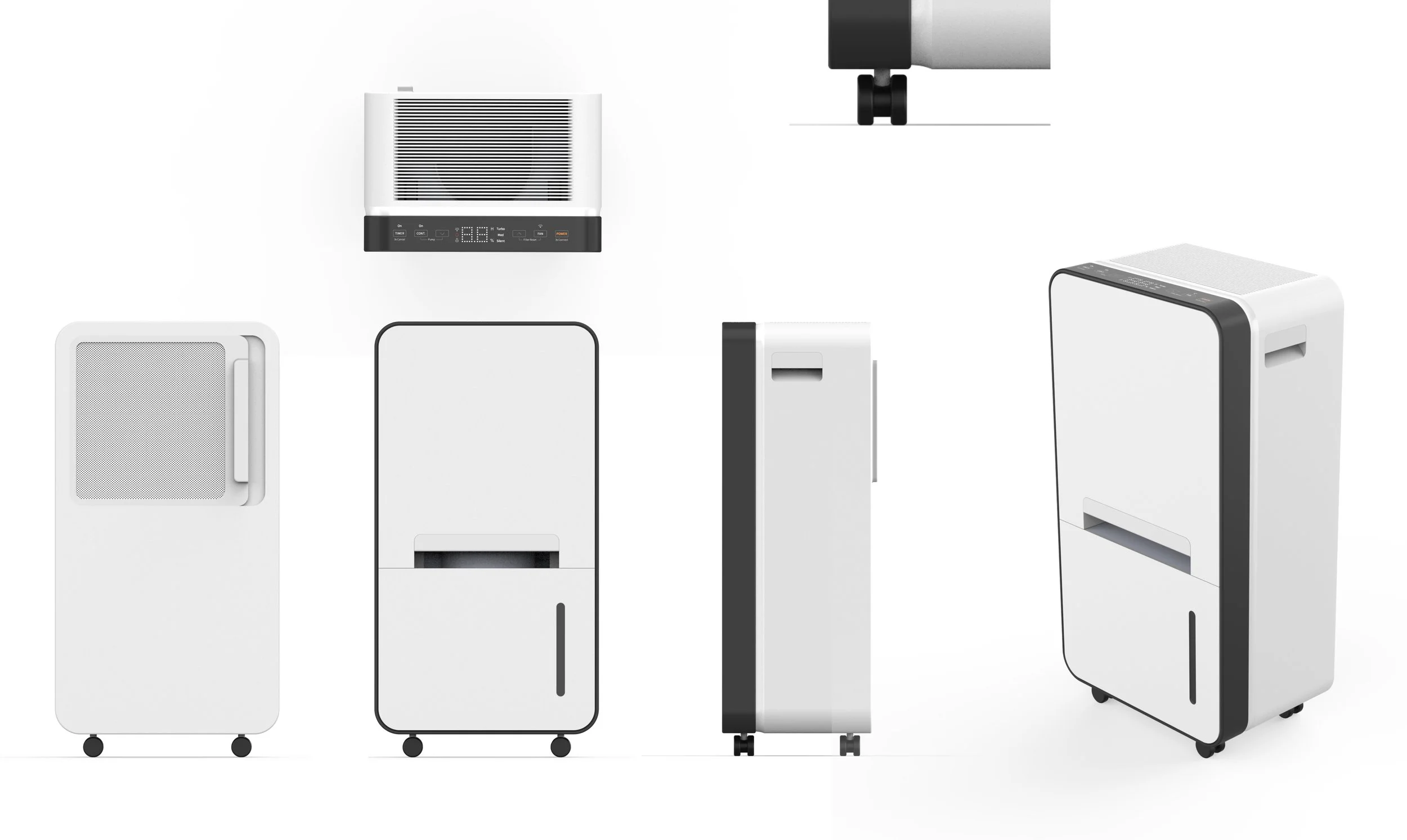
The dark accent band wraps around the front periphery, creating a slim outline that defines the front profile while echoing the design language of Midea's premium window AC series. A horizontal bucket seam divides the front face into two balanced sections, with the integrated handle positioned above the bucket and a recessed gap between them to provide a comfortable, intuitive handhold.
Overall Design
Bucket Design

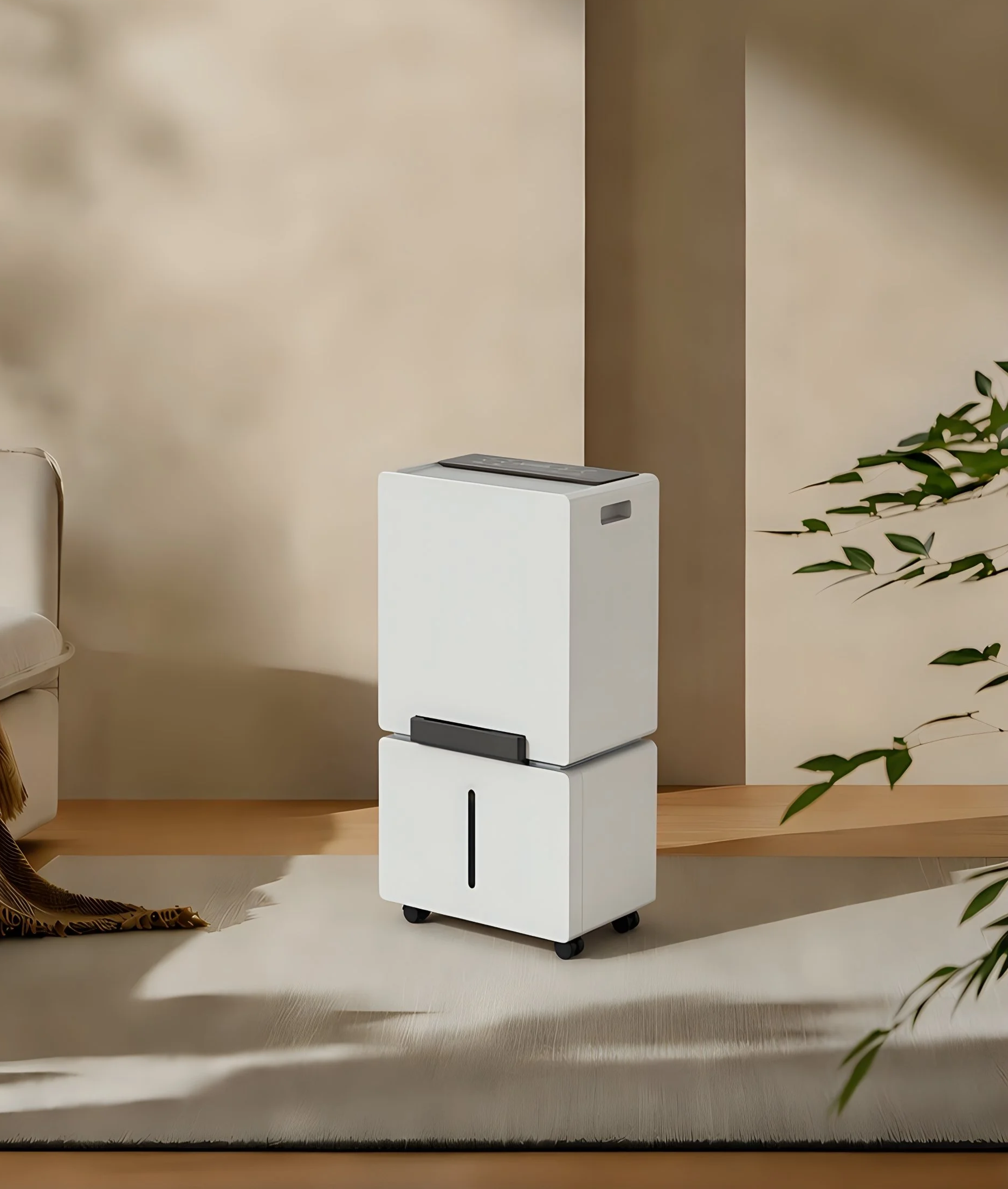
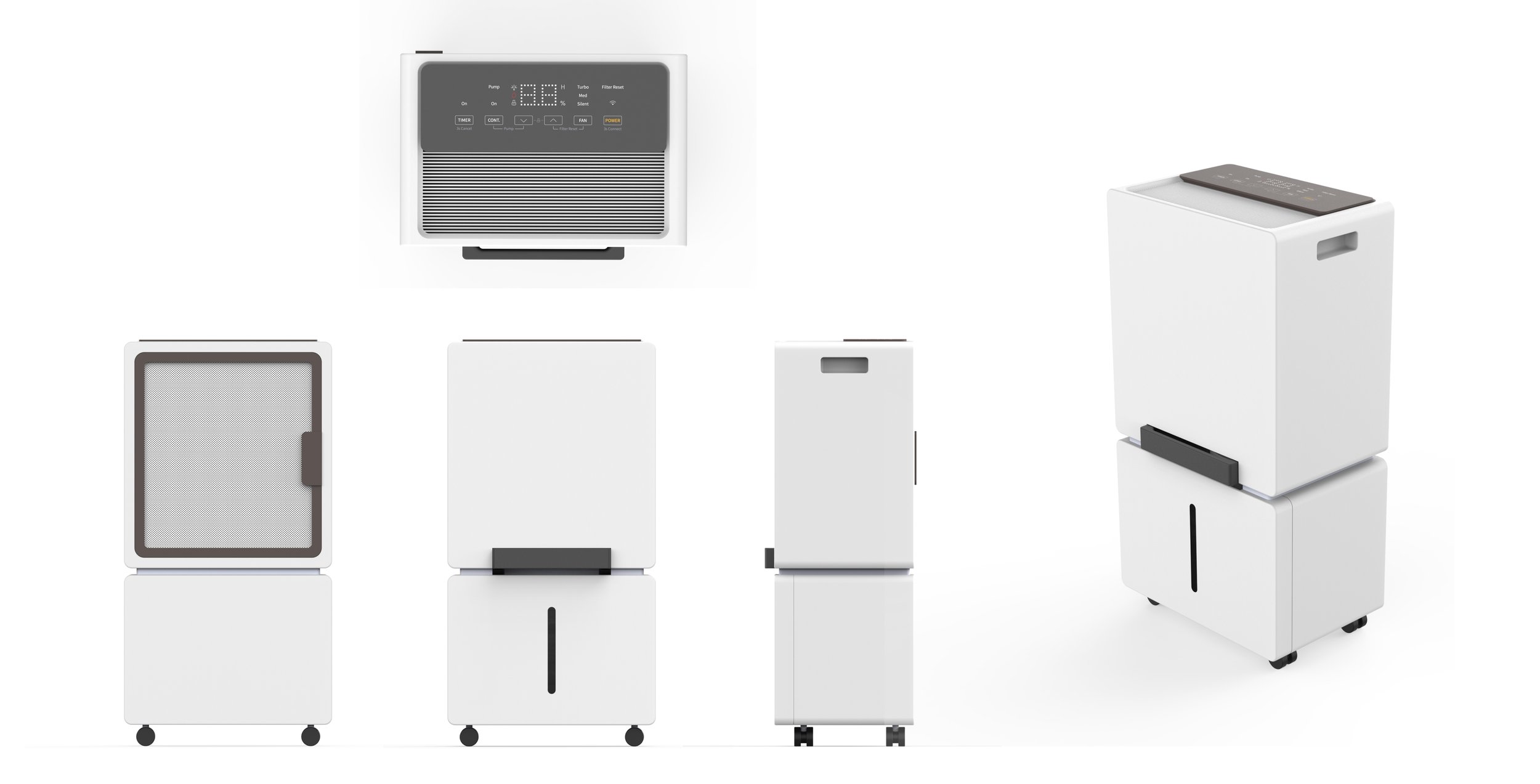
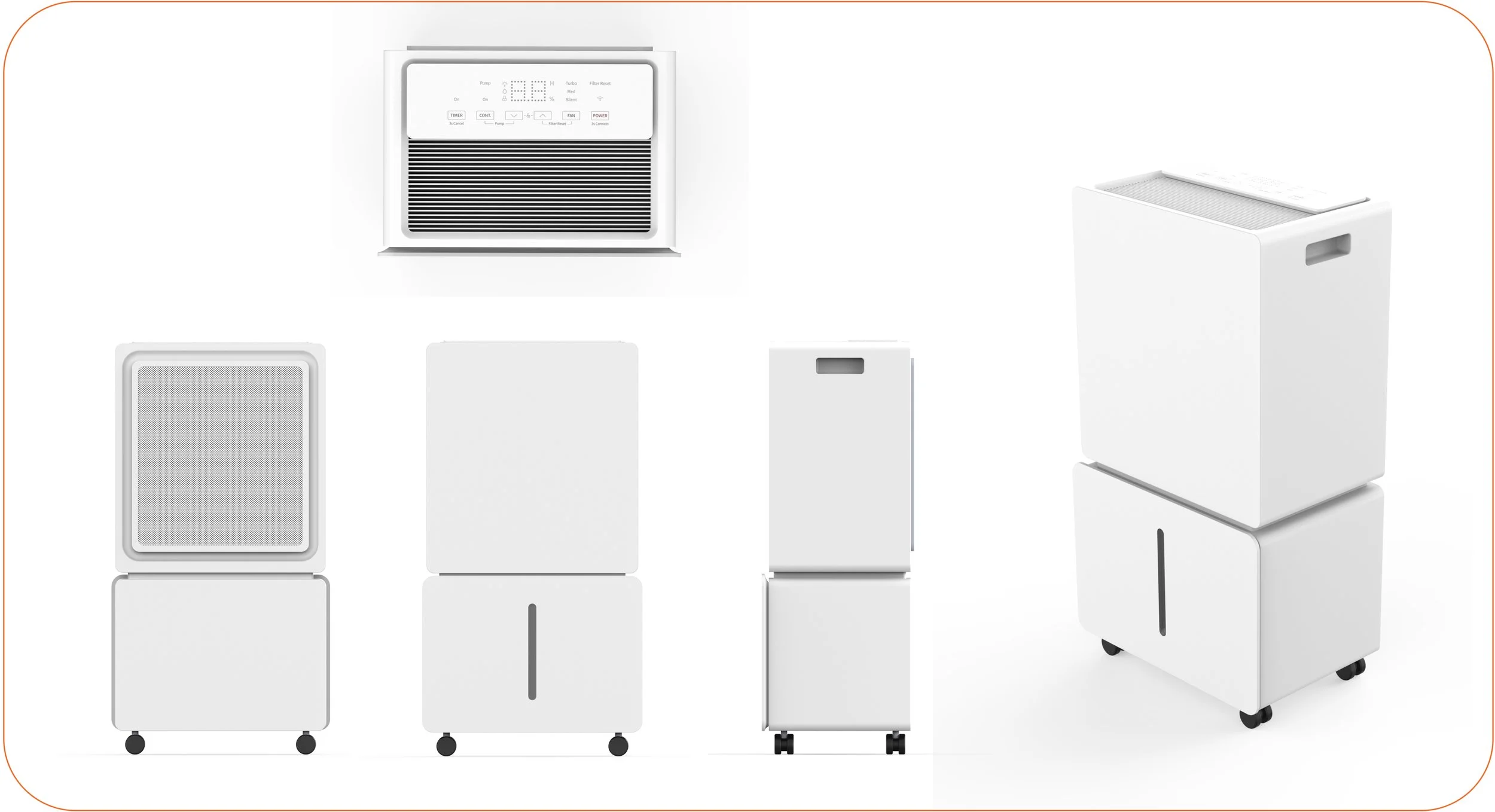
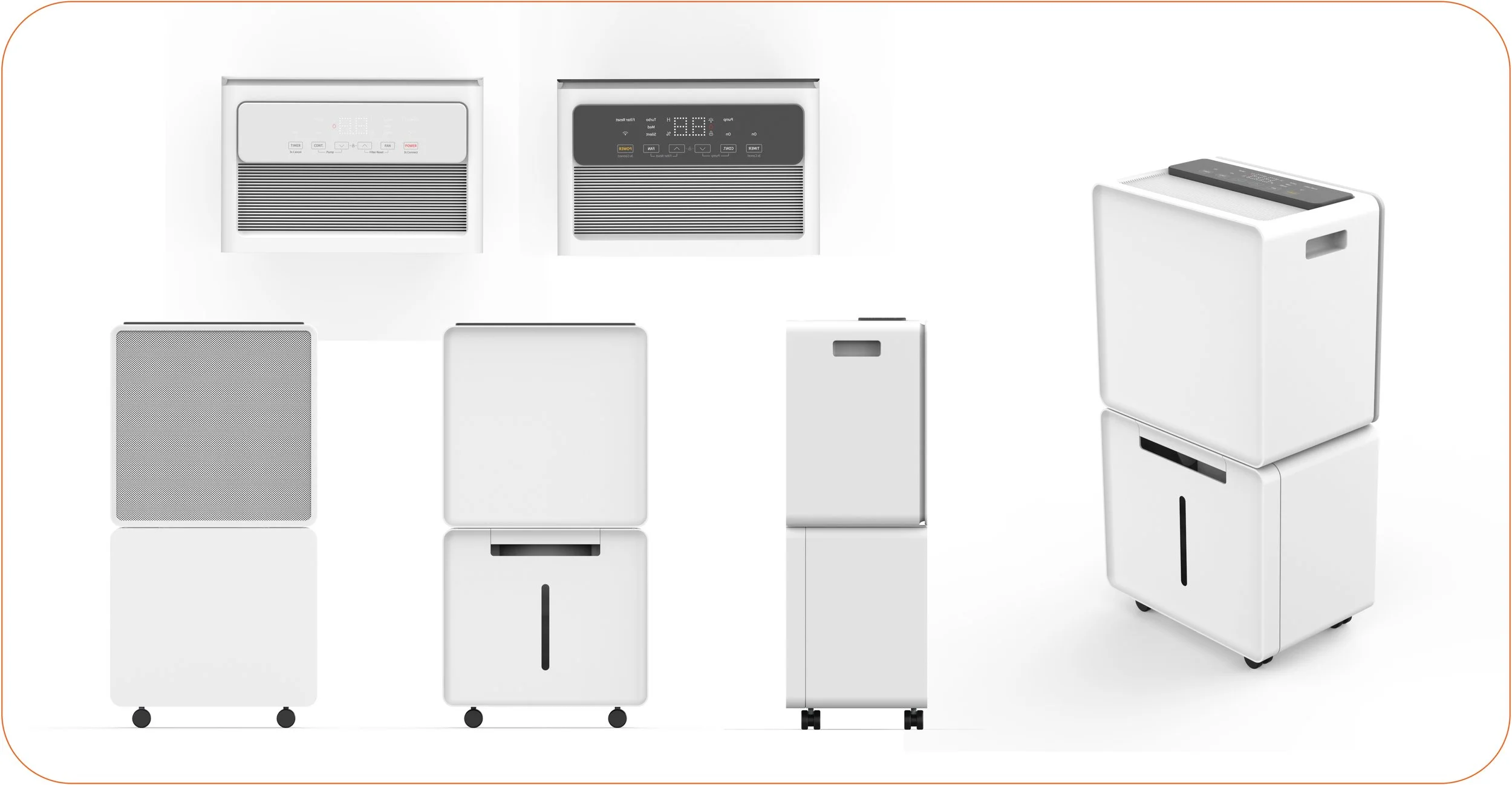
This direction visually separates the body into 2 modular cubes, which connects DT with the iconic Midea Cube dehumidifier. It can work with the pull & lift handle as well as the side pull handle. The Cube division highlights the front bucket and back filter, it also create opportunity for easy color blocking.
Overall Design

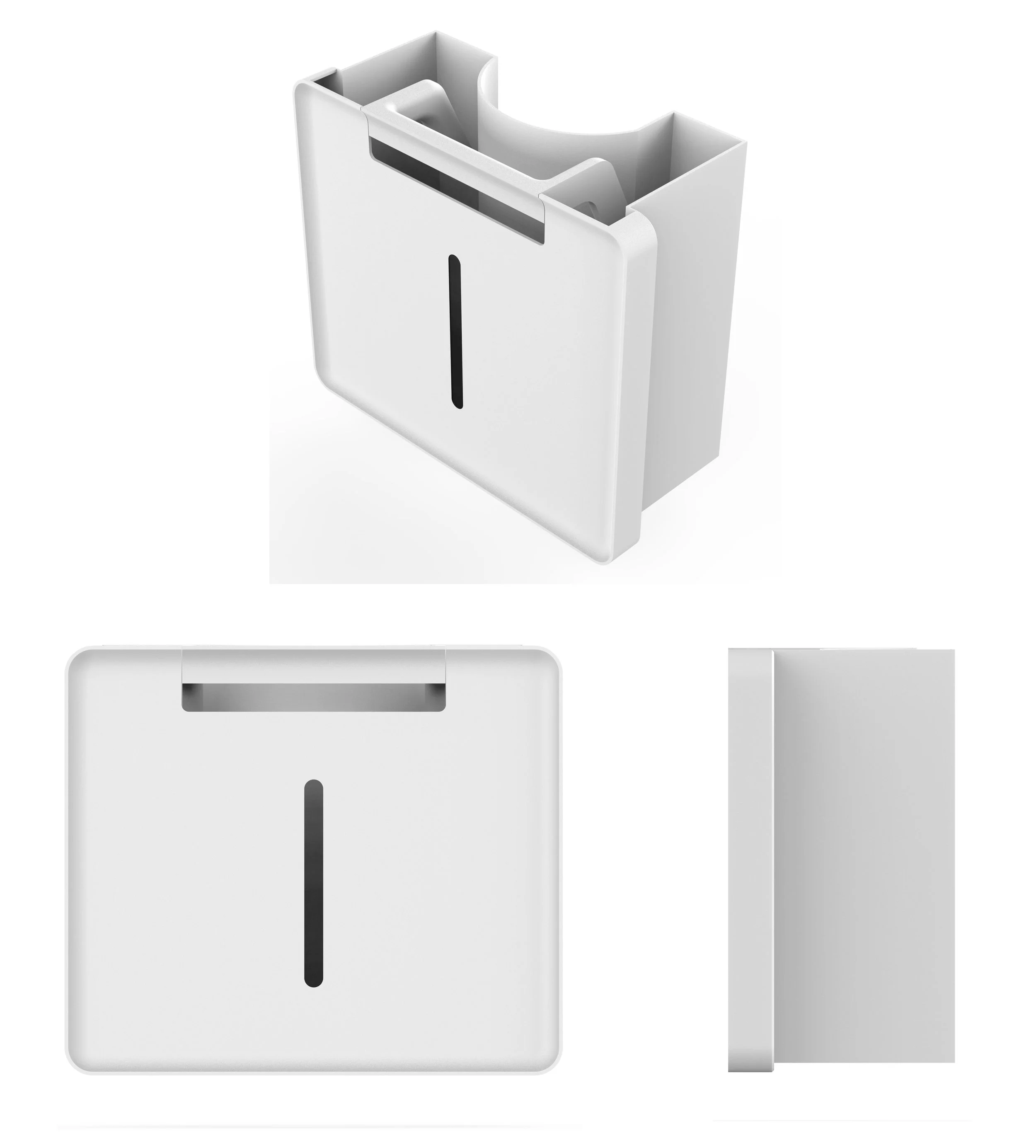
Bucket Design

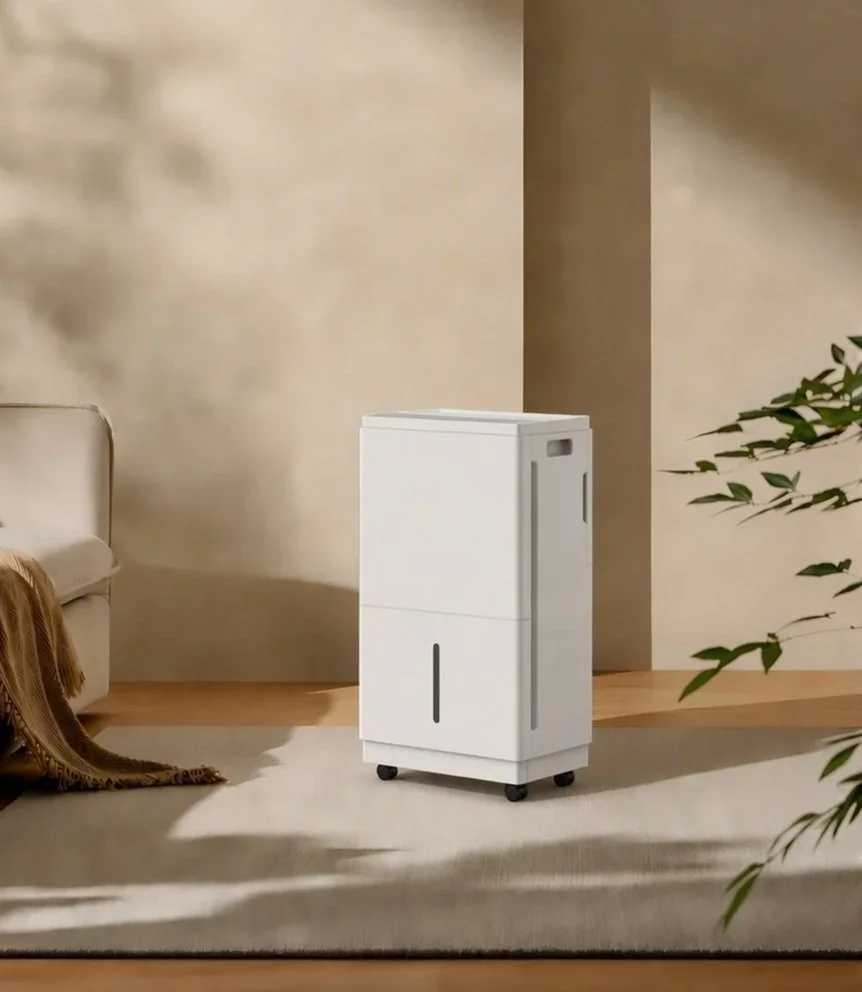
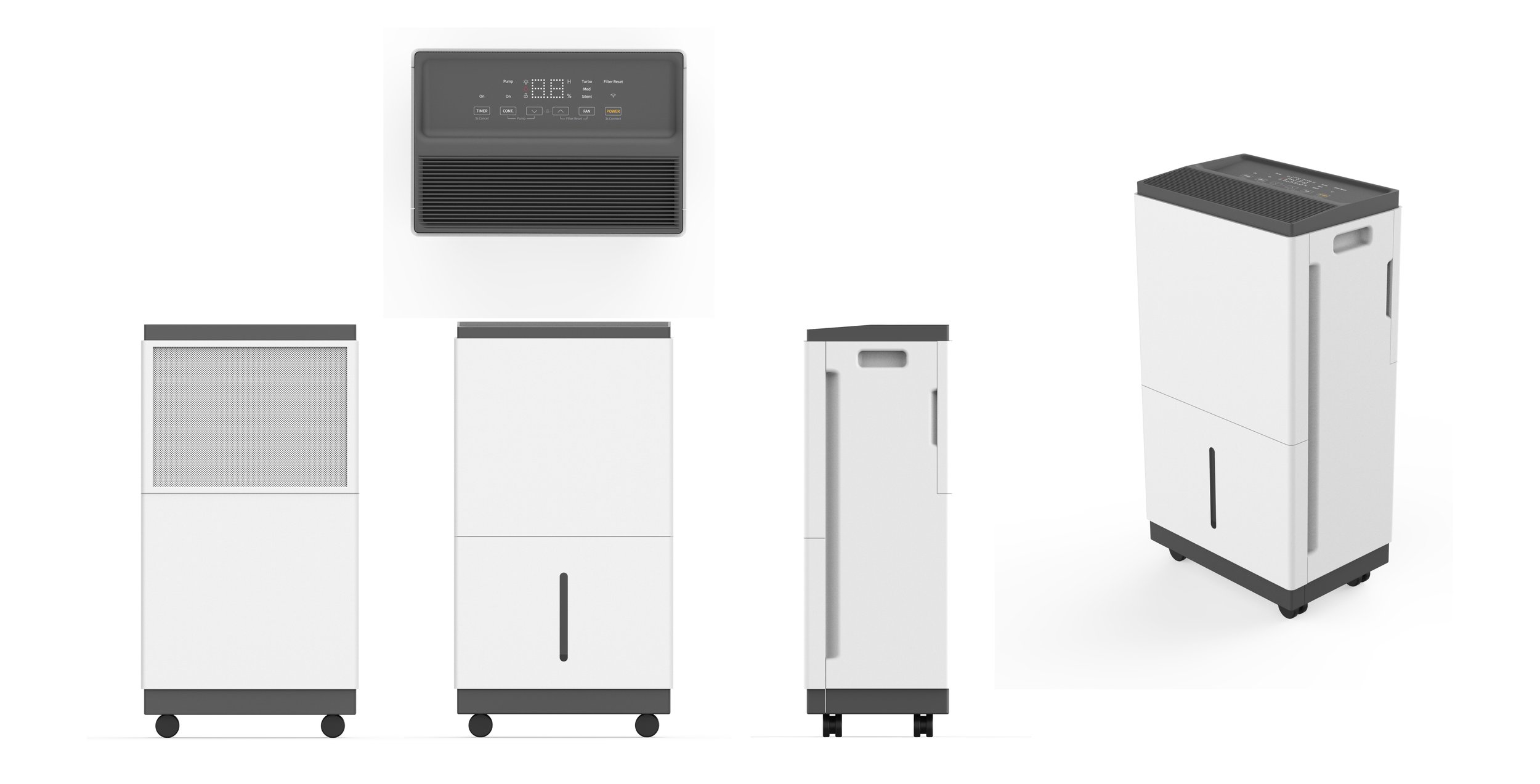
It’s a relatively more conservative design derived from the existing DP platform. It translates the side recessed feature into handholds for the bucket and the filter. The wrap paired with color contrast is familiar to many Midea air conditioners and it effectively creates functional hierarchy for the unit.
Overall Design

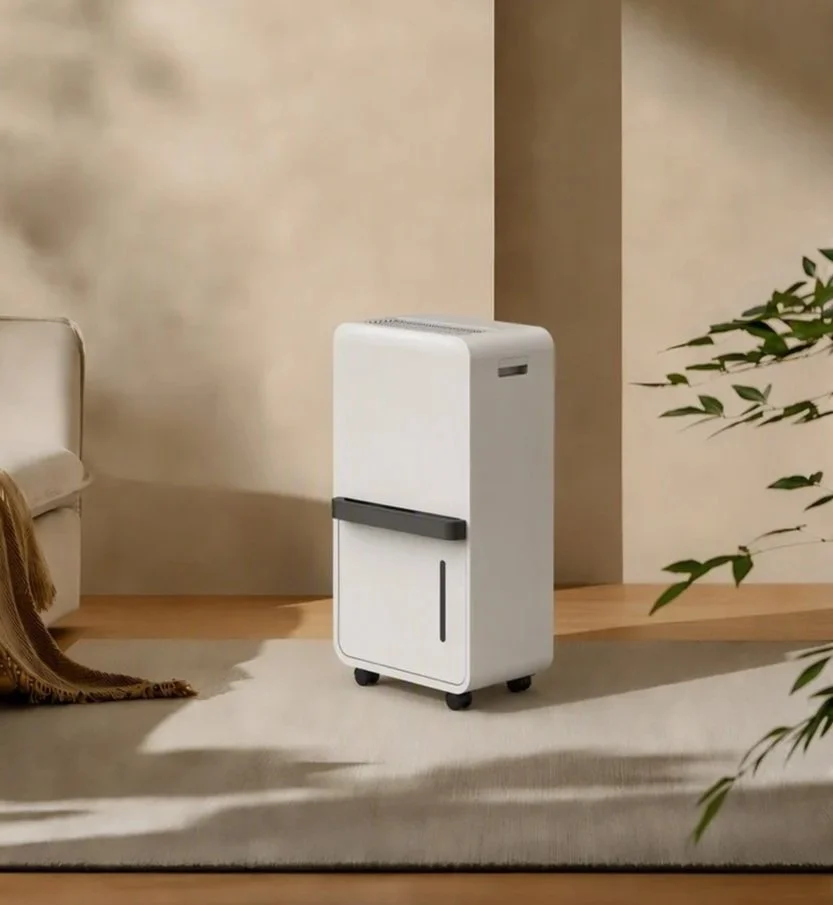
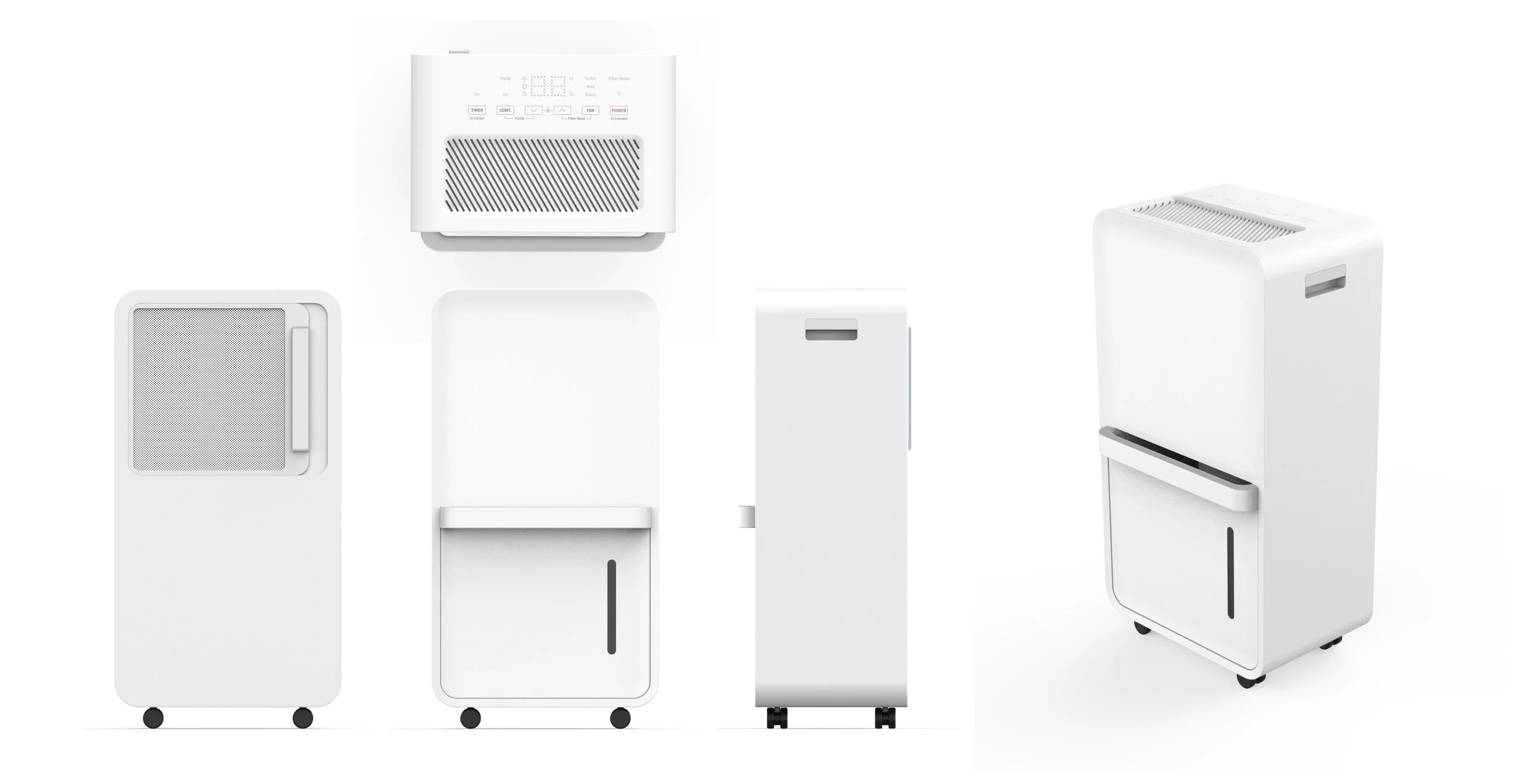
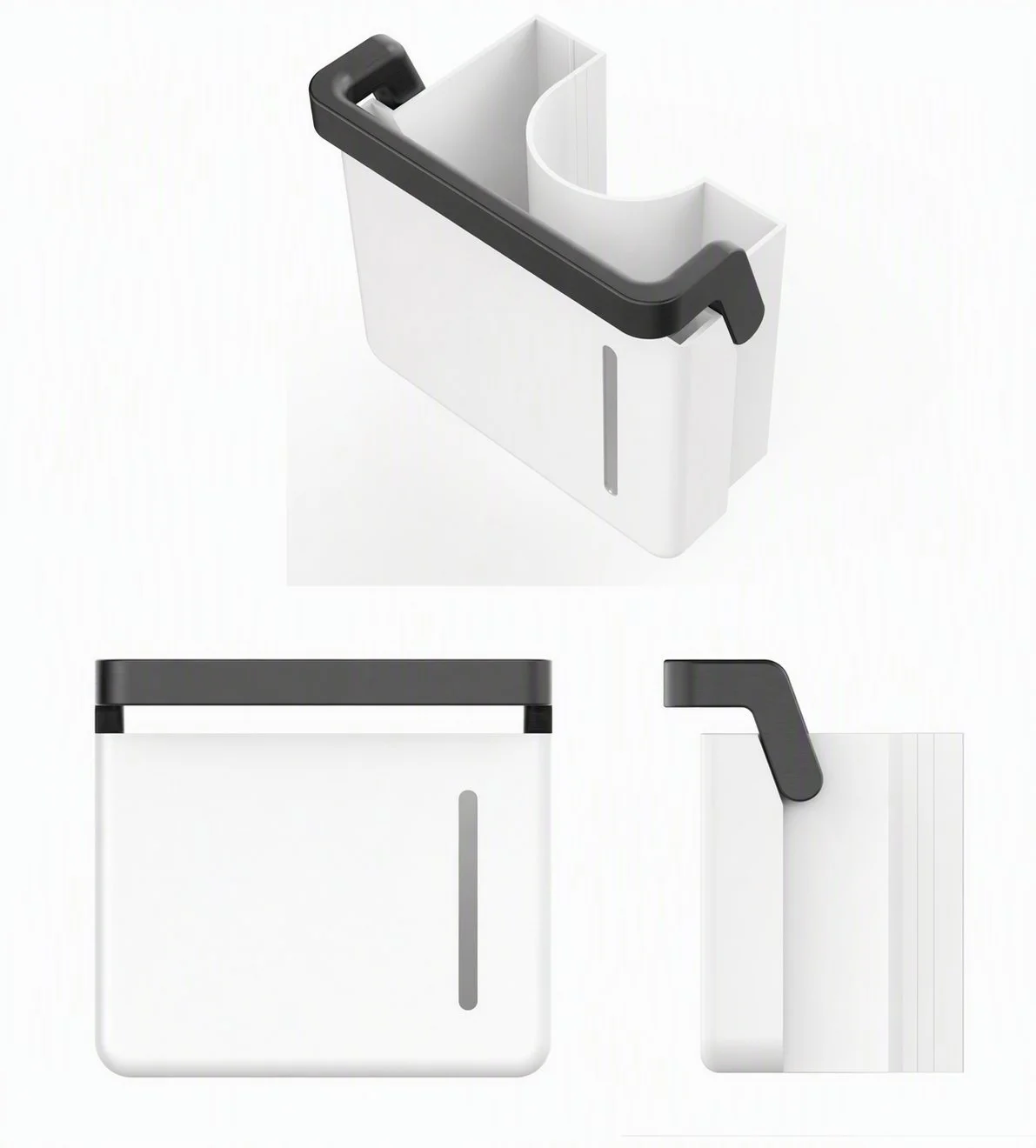
This design emphasizes the bucket handle as a defining element of the overall form. The handle projects outward from the body, intentionally interrupting the otherwise clean rounded-rectangle silhouette and creating a distinctive visual focal point. A continuous curved concave edge flows from the upper body into the bucket, visually connecting the two sections. By breaking the uniform geometry, the handle introduces depth, and a more dynamic appearance from multiple viewing angles.
Overall Design
Bucket Design
Design Recommendations
The main challenge of the project revolves around integrating the ergonomics of the handle design into the overall form without feeling disjointed. A lot of the form concepts are driven by this motivation. We sent our recommendations to the China team for execution. The final design of the product was executed by another team.